
Reviewed · ARASHIYAMA BAMBOO FOREST WALKS
Arashiyama’s Best Vegan Ramen & Gyoza Class
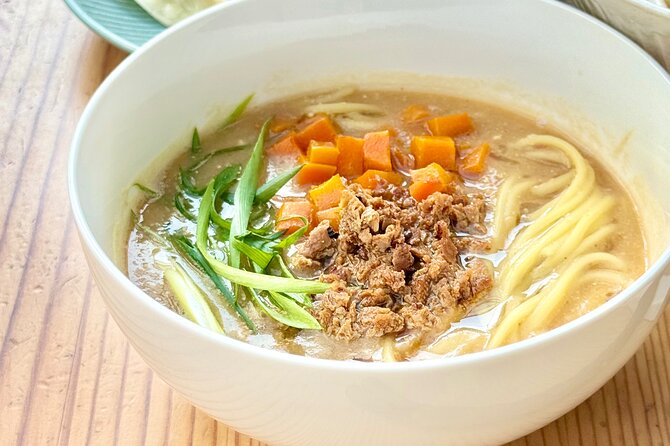
The best ramen starts with plants. In Arashiyama, this class teaches secret umami broth that is 100% plant-based and dashi-free, built with kombu, shiitake, and Kyoto vegetables, so it aims to taste like real ramen, not health food. I love the goal of delivering that deep umami hit, even for meat-lovers, and I love that you get recipes you can use at home. One drawback to think about first, they have a dog in the home, so animal allergies may be an issue.
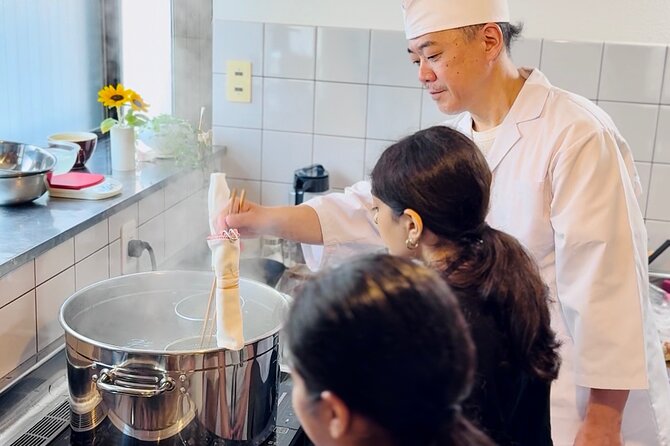
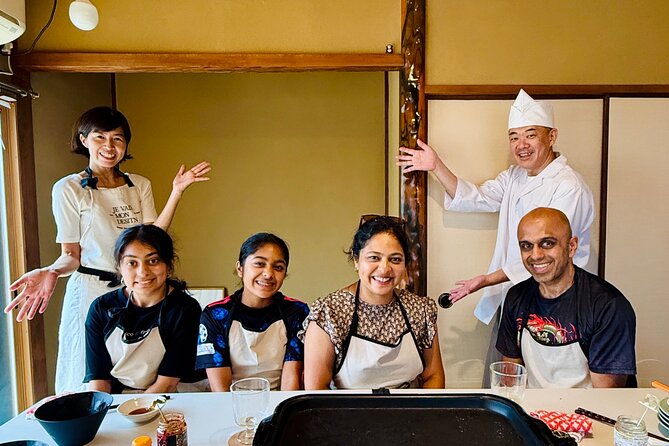
You cook with Kyoto green cuisine instructors Satoru and Akiko, with an English-speaking teaching style and clear steps in a clean home kitchen. I also like the private setup, because you can move at a comfortable pace while you learn to make crispy gyoza and ramen, then eat what you made.
In This Review
- Key highlights you will care about
- Arashiyama ramen, but with a serious umami mission
- The broth strategy: dashi-free, yet still Kyoto
- How the ramen part works in a hands-on 2 hours
- Crispy gyoza: where technique shows up fast
- Eating together in a clean home kitchen (and why it changes the vibe)
- Value check: $65.15 for ramen you can actually reproduce
- Dietary details you should plan around
- Who this Arashiyama vegan ramen class fits best
- Should you book this Arashiyama vegan ramen class?
- FAQ
- Is this ramen class fully plant-based and dashi-free?
- What dishes will I make?
- How long is the class?
- Is this a private class?
- Where do we meet?
- What is included in the price?
- Is a dog present during the class?
- Can I cancel for a full refund?
Key highlights you will care about

- 100% plant-based, dashi-free broth: kombu, shiitake, and Kyoto vegetables layered for depth
- Two ramen broth bases plus gyoza from scratch: hands-on cooking, not a demo
- Private home experience with Satoru and Akiko: clear instruction in a friendly setting
- Built for everyone, including meat-lovers: not just vegan-friendly, it is designed to win over skeptics
- Gluten-free options available: you can request this when it matters most
- Dog in the home: not recommended if animal allergies are a concern
Arashiyama ramen, but with a serious umami mission
Arashiyama is famous for temples, bamboo, and pretty evening scenes. This class fits that rhythm, because you are not just eating somewhere nearby, you are stepping into a real kitchen experience tied to Kyoto flavors.
What really grabs me here is the stated philosophy: they are not claiming to make food that is good for vegan people. They want you to taste ramen that can stand next to meat-based styles. The pitch sounds bold, but it also tells you how they are going to teach. The focus is on building flavor depth on purpose, instead of relying on shortcuts.
You should also know the class is private. That matters more than you might think. In a one-group setting, you can ask follow-up questions as you cook, get timing checks, and adjust for your preferences. It also makes the experience feel more personal, like you are visiting a food-minded household rather than collecting stamps at a factory-tour pace.
The broth strategy: dashi-free, yet still Kyoto
Let’s talk about the heart of the class: broth. This is a 100% plant-based “secret umami broth” built from kombu (kelp), shiitake, and fresh Kyoto vegetables. The key word to keep in mind is dashi-free. That does not mean flavor-light. It means they are not using traditional dashi as a base. They are stacking umami sources directly, so the richness comes from plant ingredients done with intention.
Why this matters for you: if you have only had vegan ramen that tastes thin or one-note, this class is set up to correct that. They spent time trying to create vegan ramen that did not feel like a compromise. Their whole point is to build a broth that delivers the same kind of satisfaction people associate with richer styles, without using animal ingredients.
Also, since it is plant-based, you are learning a broth framework that you can adapt at home. Even if you never make ramen noodles the same way, you can reuse the broth idea. It is the kind of technique that upgrades your cooking for everyday soups, sauces, and noodle nights.
More bowls worth the wait
- Ramen Cooking Class at Ramen Factory in Kyoto
★ 5.0 · 1,937 reviews - Kyoto: Ramen Cooking Class at a Ramen Factory with Souvenir
★ 4.9 · 532 reviews - Kyoto: Ramen, Gyoza, and Onigiri Cooking Class
★ 5.0 · 445 reviews - Kyoto Ramen and Gyoza Cooking Class with Professional Chefs
★ 5.0 · 282 reviews
How the ramen part works in a hands-on 2 hours
The class is about 2 hours (approx.), and it is designed around doing, not just watching. You will make two types of rich ramen broth from scratch. That alone is useful. Many cooking classes teach one method. Learning two different broth approaches gives you a better “flavor map” for what changes the taste most, so you can adjust later when you cook at home.
Here is what you should expect during the ramen portion:
- You work through the broth-making steps with guidance from Satoru and Akiko.
- You learn how they build richness using kombu, shiitake, and Kyoto vegetables.
- You get taught how the broth should feel and taste as it comes together, so you understand what to aim for rather than memorizing a single recipe.
- You finish with ramen you cook and eat with the instructors, depending on whether you booked lunch or dinner.
The class also targets a broad crowd. They explicitly say they aim for everyone, including vegans, vegetarians, and omnivores. That is not just marketing. If you enjoy Japanese food but do not always love meatless meals, the promise is that you will not feel like you are missing out.
One practical tip: come hungry. This is not a light snack class. You are cooking, then eating the results, with water and tea available.
Crispy gyoza: where technique shows up fast
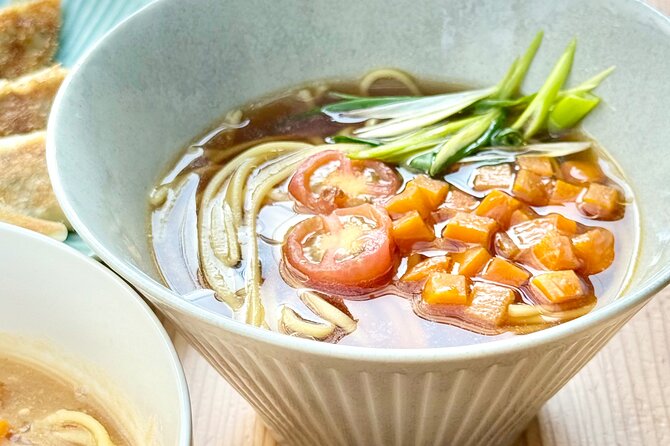
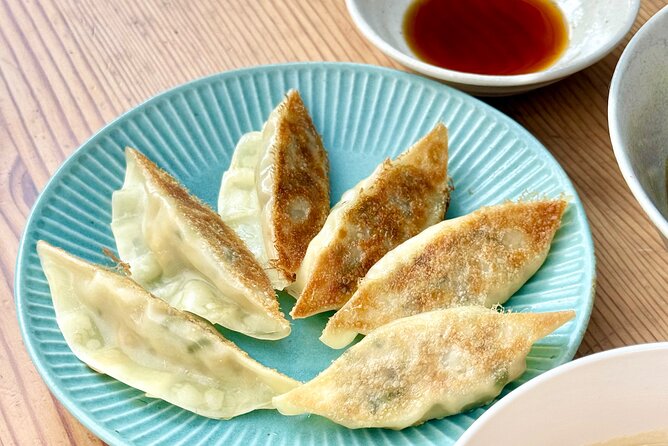
Gyoza is where your hands will learn something immediately. The class includes crispy gyoza from scratch, and that is a great choice if you want skills you can repeat.
In a ramen-focused class, it is easy for gyoza to feel like an add-on. Here, it is treated as a core dish. You are making gyoza with enough attention to texture that “crispy” is part of the promise, not a vague description.
The value for you is twofold:
- You learn a method you can reuse. Pan-frying gyoza is easy to mess up when you do not know the timing. Getting taught in a live kitchen makes that clearer.
- You get a second flavor system. Ramen is all about broth and noodles. Gyoza is about the filling and the crunchy finish. Having both balances your home cooking when you try to recreate the meal.
You also get practical comfort items: aprons and towels are provided free of charge. That means you can focus on the cooking instead of worrying about what to wear.
Eating together in a clean home kitchen (and why it changes the vibe)
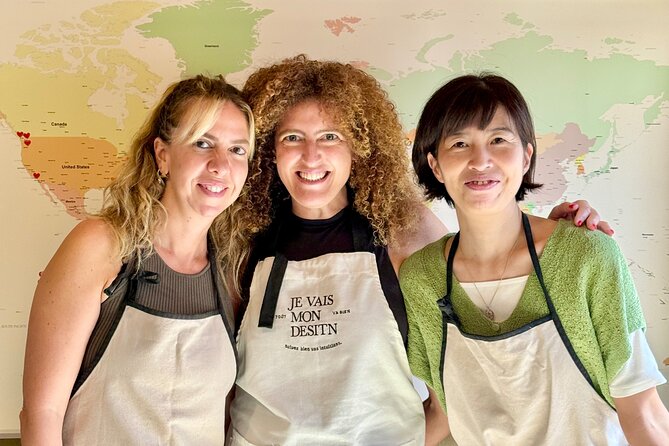
The setting matters. In the best cooking experiences, you feel welcomed, not rushed. This one is described as a beautiful, clean home environment with a well-organized flow and clear instructions. That aligns with why people leave impressed, because you are not just making food, you are learning with less stress.
Satoru and Akiko (Kyoto green cuisine) provide English-speaking instruction. That is a big deal in Japan, where some classes are clear only if you already know culinary terms. Here, the goal seems to be understanding, not just following.
I also appreciate the pacing. The experience is described as fun, friendly, and relaxed, with good timing. That kind of rhythm keeps you from feeling like you are behind, even if you are not comfortable with kitchen work.
And you do not leave with vague advice. You leave with cooking recipes. Having a written starting point is what turns a one-time meal into something you can cook again.
Value check: $65.15 for ramen you can actually reproduce
At $65.15 per person, you are not paying just for a bowl of ramen. You are paying for:
- A private 2-hour cooking and eating experience
- English-speaking instruction
- Bottled water, plus water and tea available freely
- A full meal experience for lunch or dinner (you cook and eat with them)
- Aprons and towels
- Cooking recipes to take home
That is why the price can make sense even if you could buy ramen for less. You are paying for skill transfer. The real “value” is that you learn how to build umami depth with plant ingredients and how to execute gyoza well enough to get that crisp result.
One thing to be honest about: if your only goal is to eat quickly and leave, this is not the cheapest option. But if your goal is food knowledge plus a meal, it becomes more reasonable fast.
Timing-wise, it also helps that it is typically booked around 11 days in advance on average. Kyoto experiences can fill up, so booking sooner usually saves you from having to play calendar Tetris.
Green light through a bamboo grove


Dietary details you should plan around
This class is 100% plant-based and dashi-free. It is also built to be filling and satisfying, not bland.
You can also request gluten-free options. That is important because ramen can be tricky if you assume everything can be adapted. Make sure you communicate your needs ahead of time so the class can handle it properly.
Food allergies are another key point. You are asked to inform them in advance if you have allergies to specific foods. That is exactly what you want from a host kitchen. It lets them adjust, rather than guessing.
Now, the big non-food consideration: there is a dog in the home. The class is not recommended for people with animal allergies. If that applies to you, it is worth thinking carefully, because it is not listed as optional. Plan based on your own sensitivity.
Who this Arashiyama vegan ramen class fits best

This is a great fit if:
- You want Japanese cooking skills, not just restaurant dining
- You are vegan, vegetarian, or simply curious about plant-based ramen that aims for real depth
- You like structured instruction and hands-on work
- You want recipes you can use later at home
- You are excited by the idea of kombu, shiitake, and Kyoto vegetable flavors doing the heavy lifting
It might not be the best fit if:
- You need a fully animal-free environment beyond what is possible in a home with a dog
- You dislike cooking and prefer eating only
- You are looking for alcohol as part of the experience, since alcoholic beverages are not included and soda/pop also is not included
Also, private means it works especially well for couples and small groups who want a quieter, more focused experience around one kitchen table.
Should you book this Arashiyama vegan ramen class?
If your idea of a great Kyoto evening includes cooking, eating what you make, and learning a technique you can repeat, I think you should strongly consider booking. The strongest reason is the teaching goal: deep umami with a broth that is plant-based and dashi-free, designed to satisfy meat-lovers too. Add in the private format, the English-speaking instruction, and recipes provided, and the class becomes more than a one-off meal.
Just take allergies seriously. If you have animal allergies, or you have specific food allergies, message ahead and double-check fit before you commit. If that is handled, this class is an excellent way to connect with Kyoto through food you can recreate at home, not just taste once and forget.
FAQ
Is this ramen class fully plant-based and dashi-free?
Yes. The class focuses on a 100% plant-based approach and it is described as dashi-free.
What dishes will I make?
You will make two types of ramen broth from scratch and crispy gyoza from scratch.
How long is the class?
The duration is about 2 hours.
Is this a private class?
Yes. It is a private tour or activity, and only your group participates.
Where do we meet?
You start at Arashiyama Station. The activity ends back at the meeting point.
What is included in the price?
Included items are water and tea, lunch or dinner depending on your reservation time (you cook and eat with the instructors), aprons and towels, an English-speaking instructor, and cooking recipes.
Is a dog present during the class?
Yes, the host has a dog. The class is not recommended for people with animal allergies.
Can I cancel for a full refund?
Yes. You can cancel for a full refund if you cancel at least 24 hours before the experience start time.
More Workshops in Kyoto



More Food in Kyoto




New This Season
- Koyasan Day Trip by Private Car from Kyoto
- Old Port Town and Ultimate Sake Tasting Private Tour From Kyoto
- Kyoto’s Timeless Charm: 3hr Exploration of History and Peace
- Kyoto: 5 Types of Sushi Making
- Sacred Peak & Ancient Paths: Kurama-Kibune Hiking Experience
- Kyoto: Exclusive ZEN practice at Manpukuji temple in Uji
- Kyoto: Private Seasonal Aroma Yoga Class
- Traversing Kyoto’s Scenic West – Arashiyama to Kinkakuji
Arashiyama Bamboo Forest Walks, compared.

Fushimi Inari, Kinkakuji, Bamboo Grove 1 Day Bus Tour
Read our review →
Kinkakuji,Arashiyama,FushimiInariShrine,NaraPark
Read our review →
Nara, Fushimi Inari Taisha, Arashiyama Bus Tour
Read our review →
Kyoto Arashiyama Walking Tour: Bamboo, Monkeys, Gardens & Secrets
Read our review →
Arashiyama Bamboo, Temple, Monkeys, or Secret Sake Brewery
Read our review →
Arashiyama Bamboo Forest, Monkeys, Matcha & Temple Tour
Read our review →
Arashiyama, Nara & Fushimi Inari Shrine w/Lunch
Read our review →
Nijo, Kinkaku-ji, Arashiyama, Kiyomizu & Fushimi Inari
Read our review →Also filed under