
Reviewed · GION GEISHA QUARTER WALKS
Cycle Kyoto’s Hidden Gems & Gion Stroll
Kyoto feels bigger from a bicycle seat. This 3.5-hour cycle plus a 30-minute walk through Gion makes famous spots like the Imperial Palace feel more personal, with fresh air and calm side streets along the way.
I especially love the patient, kind guides. They keep the pace steady, answer questions clearly in English, and even help families feel comfortable, including kids who are old enough to handle the bike time. I also like how the route mixes big-name landmarks with quieter campus and neighborhood roads, so you get viewpoints you would not stumble into on your own.
One consideration: this is real biking time, not a rolling sightseeing bus. It is not suitable for kids under 9, and you need to be able to ride a bike confidently for the full plan, even if rain changes the balance a bit.
In This Review
- Key Things That Make This Kyoto Bike Tour Worth Your Time
- Getting Oriented Fast At Sanjo Ohashi
- The Bicycle Part: Rivers, Roads, And Real Kyoto Street Life
- A Hidden Shrine Stop And Pure Spring Water
- Imperial Palace: Big Scale, Better Pace
- A Famous Zen Temple Visit
- Riding Through University Campuses And Quiet Neighborhoods
- Shimo-gamo Shrine And The UNESCO Forest Feeling
- What to focus on at Shimo-gamo
- The River Junction And The Lit-Up Return Ride
- Gion Or Pontocho: A 30-Minute Stroll With Context
- Learning about Geisha culture
- Restaurant help during the stroll
- Snacks And Tea: Included, Simple, And Tasty
- Rain Or Shine: How The Plan Stays Flexible
- Price And Value: What $73 Is Really Buying
- Who Should Book This Bike Tour, And Who Should Skip It
- Should You Book This Tour?
- FAQ
- How long is the Cycle Kyoto bike tour plus the Gion stroll?
- Where do we meet for the tour?
- Is the tour rain or shine?
- What is included in the price?
- Is an electric bike available?
- What should I bring?
- What are the age limits and bike requirements?
- Are pets, smoking, and luggage allowed?
Key Things That Make This Kyoto Bike Tour Worth Your Time
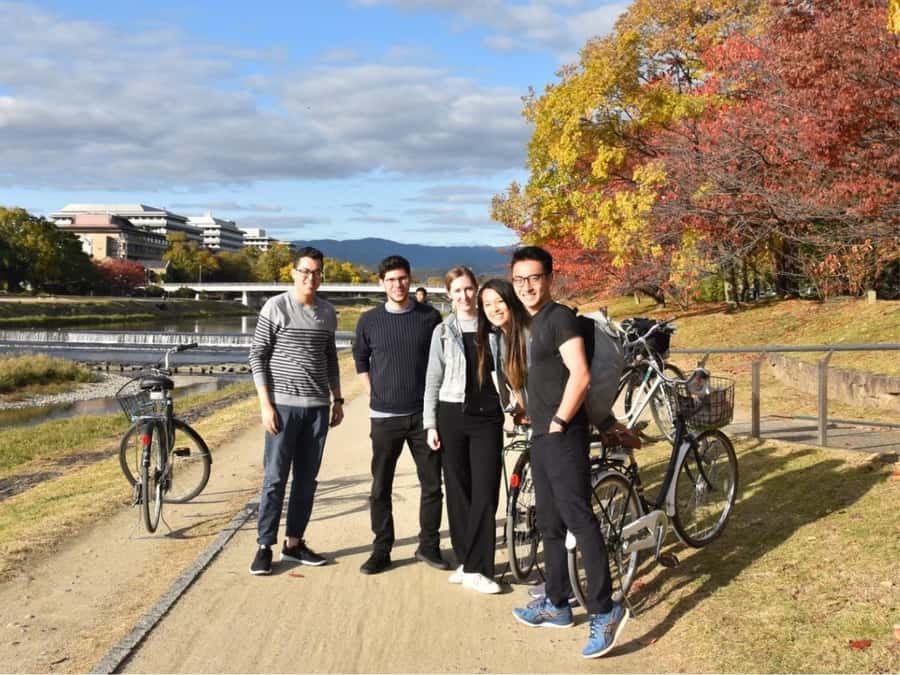
- Riverside start, spring water stop, and a smooth flow that helps you settle into Kyoto fast
- Imperial Palace + Zen temple without the usual crowds and confusion
- Shimo-gamo Shrine (UNESCO) and its peaceful forest setting and beautiful buildings
- Lighted-up river return ride, scenic even when you are tired
- Gion or Pontocho walk with Geisha culture context, plus restaurant suggestions during the stroll
- English-speaking guides named Mr. Go, Benjamin, Ko, and Claire, known for calm explanations and good pacing
Getting Oriented Fast At Sanjo Ohashi
The tour begins at the statue of the kneeling man at the southeast corner of Sanjo Ohashi. Cross the street from the east end of the bridge and look for the statue. If you are coming by subway, it helps to exit to street level first, then find the meeting spot on foot.
This matters because Kyoto can feel like a maze your first day. A well-placed meeting point, right by a major bridge, helps you avoid that awkward start where everyone is late and you are stuck trying to coordinate a group through alleyways.
The plan loops back to the same meeting point. That is a small detail, but it saves you time and makes the day feel tidy.
The Bicycle Part: Rivers, Roads, And Real Kyoto Street Life
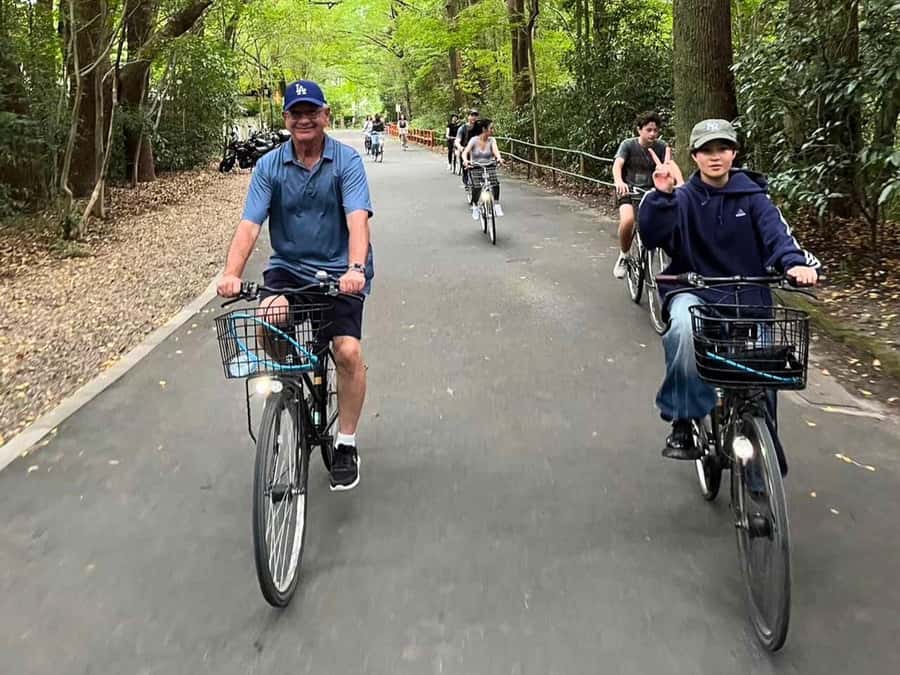
You ride a rental bike for most of the experience, then you get out for a leisurely town walk. The bike portion is designed to be efficient, so you can cover a lot of ground without feeling like you need to power-walk every stop.
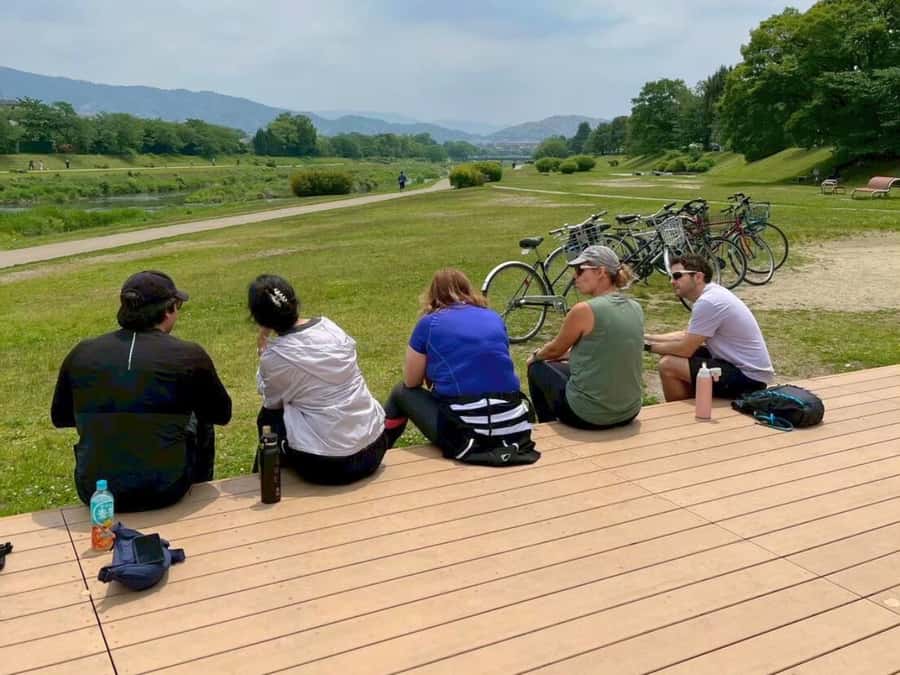
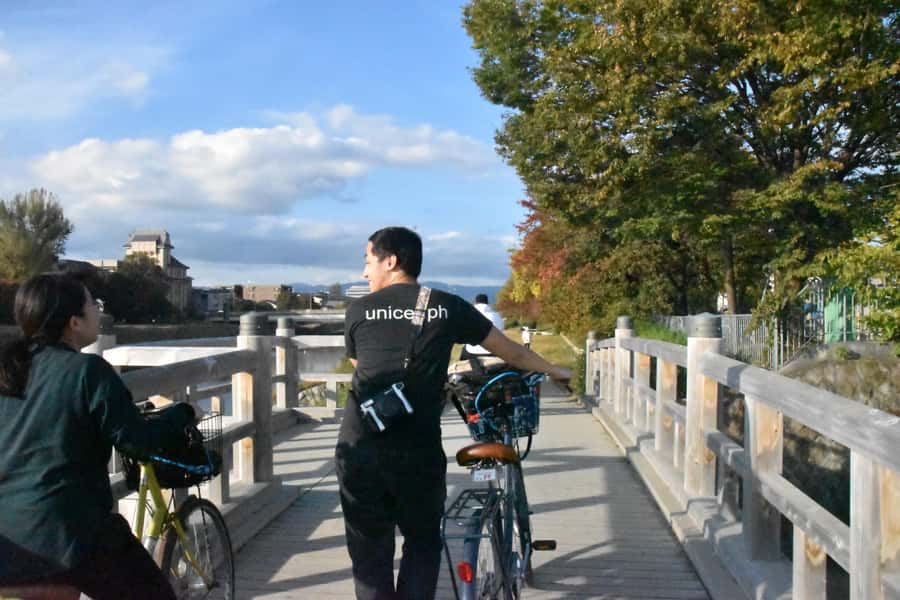
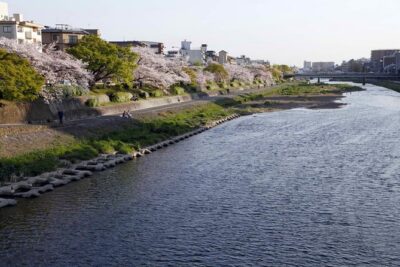
I love that the route starts on a peaceful riverside road. It sets your body clock, gives you open sky, and makes the city feel less locked-in by walls and storefronts. On hot and humid days, having a breezy path along the river is a real comfort.
Lantern-lit streets of the geisha quarter
- Kyoto Geisha Walking Tour: Gion District & Hidden Gems
★ 4.7 · 3,273 reviews - Kyoto: Gion Magical Night Walking Tour with Geisha Trivia
★ 4.9 · 2,393 reviews - Kyoto: Gion Geisha District Walking Tour – Stories of Geisha
★ 4.7 · 2,187 reviews - Best of Kyoto: Gion, Geisha, Pagodas & Cobblestones
★ 4.9 · 2,058 reviews
A Hidden Shrine Stop And Pure Spring Water
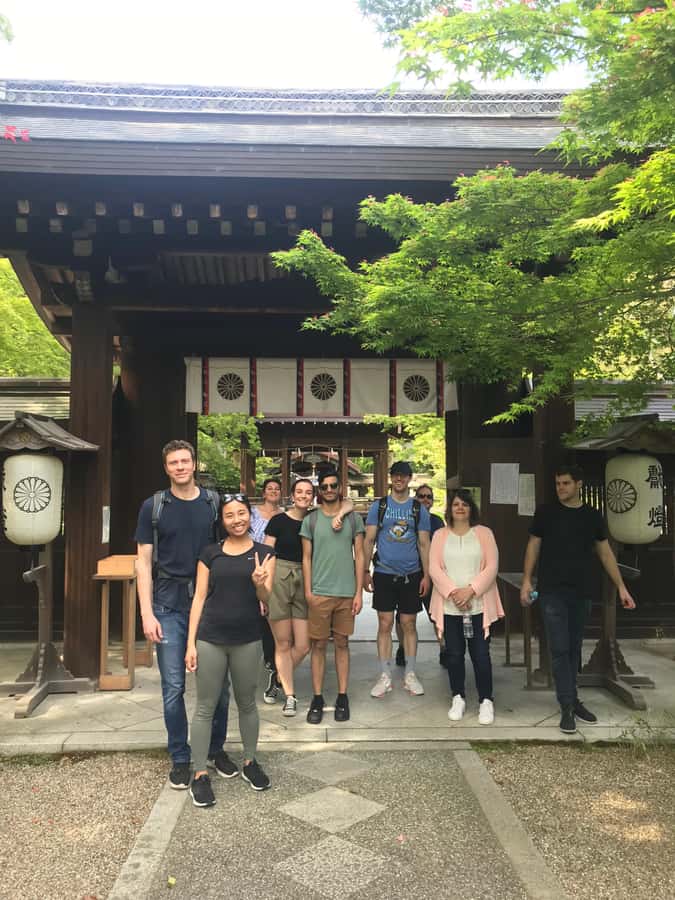
Early on, you stop at a hidden shrine where you can try natural spring water. It is the kind of pause that makes the rest of the day more meaningful, because it is small, local, and quietly Kyoto.
If you like sensory details, this is a good moment. The water stop is not a sales pitch, it is a respectful break that fits the shrine setting.
Imperial Palace: Big Scale, Better Pace
Next comes the Imperial Palace. It is huge, and seeing it in a bike flow helps you appreciate scale without turning the visit into a stressful queue run.
The guide keeps things moving at a human pace. You still get time to look and soak in the atmosphere, but you are not stuck bouncing between far-flung corners.
One perk of this style is how it blends major sights with the surrounding streets. Even if you have seen palace photos, arriving here by bike makes the experience feel more like you are traveling through a living city rather than checking off a postcard.
A Famous Zen Temple Visit
After the palace area, the tour heads to a famous Zen temple. This is where you shift from open-air riding to slower attention.
Zen spaces reward calm behavior. If you treat this part like a quick photo stop, you will miss why it matters. Let your eyes adjust, take in the quiet details, and listen when your guide explains what you are seeing.
Riding Through University Campuses And Quiet Neighborhoods
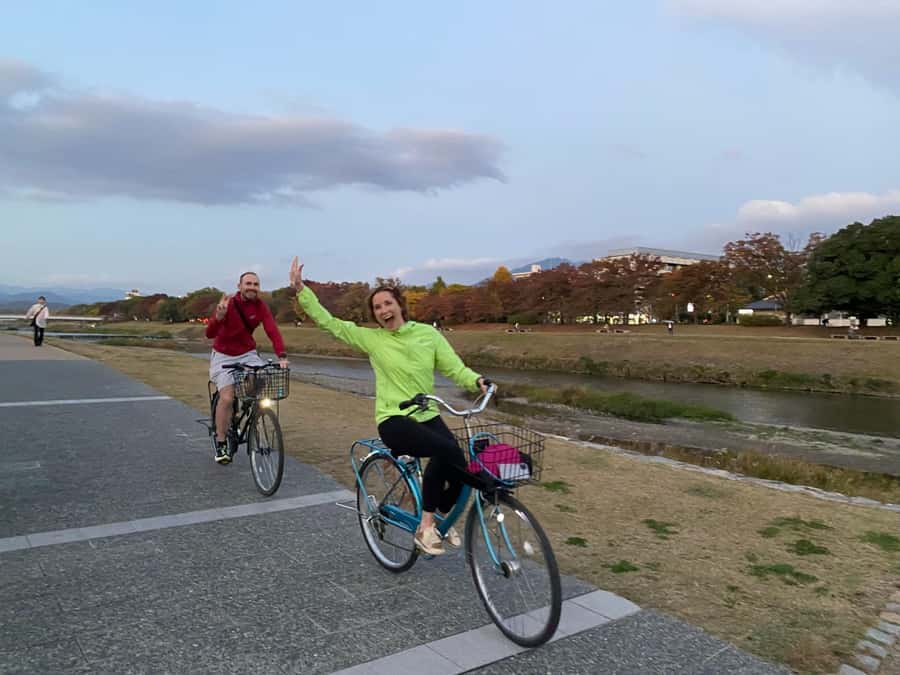
Between the major sites, the route passes through university campuses and peaceful residential areas. This is not filler. It is how you understand Kyoto beyond the headline attractions.
These in-between stretches do two jobs. First, they reduce crowd pressure. Second, they show you how normal daily life fits alongside landmark tourism.
This is also a great section for families who are old enough to bike. Kids get a break from constant stopping, and adults get a break from constant walking.
A quieter way to spend a day in Kyoto

Shimo-gamo Shrine And The UNESCO Forest Feeling
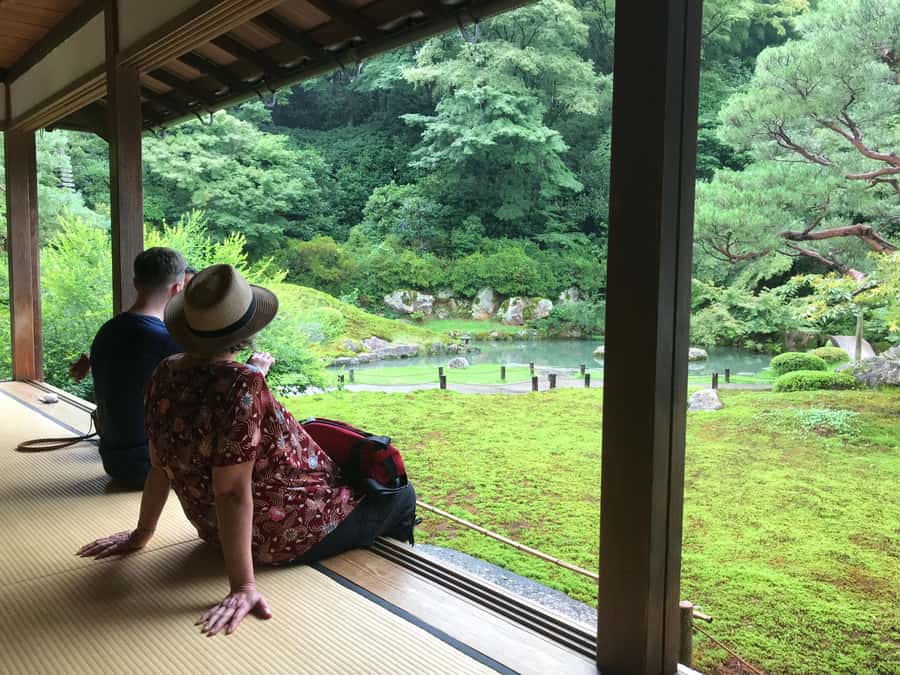
The tour then arrives at Shimo-gamo Shrine, a UNESCO World Heritage site. You spend time here to enjoy the primitive forest and the beautiful buildings.
This stop is a strong reason to choose a guide. Without context, shrine visits can feel like you are just reading signs. With explanations, you notice rhythms, layouts, and the way the space supports quiet movement.
What to focus on at Shimo-gamo
Give your attention to three things: the wooded atmosphere, the placement of key structures, and how the shrine grounds change as you walk. The forest setting is part of the experience, not just scenery.
If you are sensitive to steps or uneven ground, take your time. The tour keeps it relaxed, but nature settings can be slightly irregular underfoot.
The River Junction And The Lit-Up Return Ride
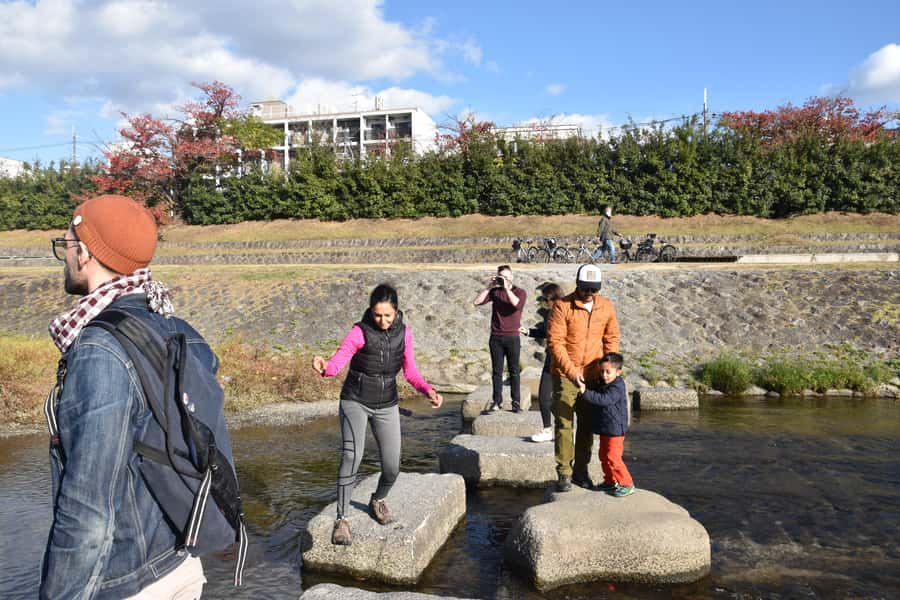
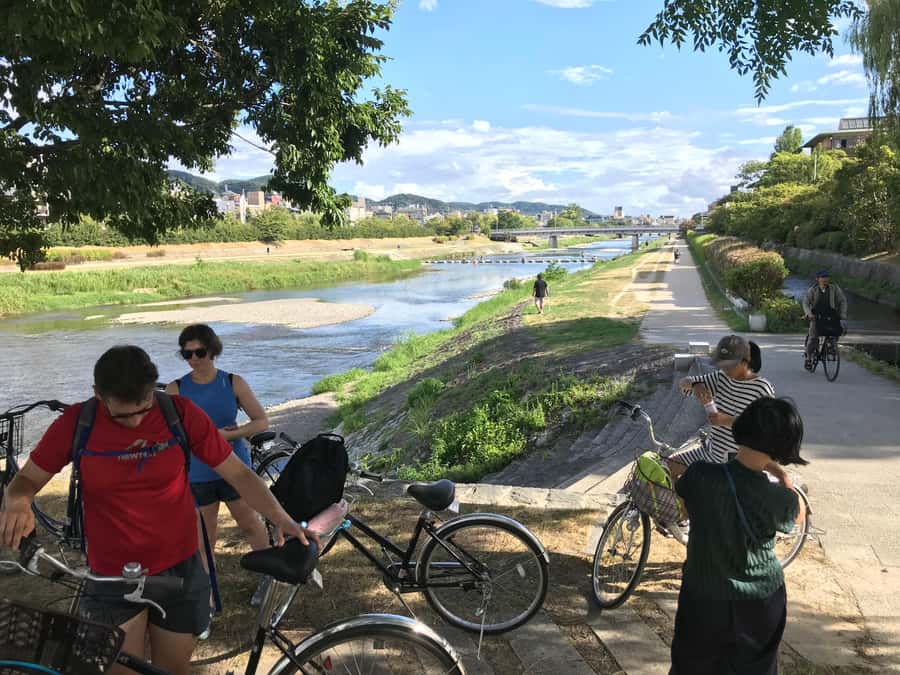
After Shimo-gamo, you ride down to a unique river junction point. From there, you follow a scenic, refreshing riverside route back.
The best detail here is the return scenery. The river ride can feel like a reset after temples and shrines. And if timing works out, you may ride along the lighted-up riverside, which turns a normal evening commute into something special.
This is also where the group stays calm. By then, you have rhythm, you know what the guide expects, and you can just enjoy the motion.
Gion Or Pontocho: A 30-Minute Stroll With Context
Once you return the bikes, you shift to a 30-minute walk through Gion or Pontocho, the entertainment district areas known for traditional culture.
You will visit main Geisha-related streets and places often described as Flower Towns. The key here is what your guide teaches while you walk, not just where you stand for photos.
Learning about Geisha culture
Your guide explains the unique system of Geisha culture. This helps you avoid common misconceptions and makes what you see feel more grounded and respectful.
If you are lucky, you may spot a Geisha. Even if you do not, the streets themselves are photogenic, and the walking pace is gentle enough that you can enjoy the view without feeling dragged.
Restaurant help during the stroll
During the walk, the guide can recommend good restaurants and bars depending on what you tell them you want. This is one of the practical strengths of a tour like this, because it helps you turn the last part of the day into a real meal plan.
Snacks And Tea: Included, Simple, And Tasty
The tour includes Japanese sweet snacks at a traditional snack shop, plus Japanese tea. This is not just a random food stop. It is a cultural breather that ties into the shrine and temple tone of the day.
If you are traveling with kids, this segment can also be a helpful incentive. You get a familiar moment of comfort and a quick sugar or sip break before you head into the final stroll.
Rain Or Shine: How The Plan Stays Flexible
The experience runs rain or shine. The destinations listed include examples, so you should think of it as a guided route framework that can shift based on conditions.
Importantly, entrance fees for temple or shrine visits are included. If rain changes the flow, those entrance stops can become an alternative plan, so you still get meaningful sights instead of the tour shrinking into a short walk.
Price And Value: What $73 Is Really Buying
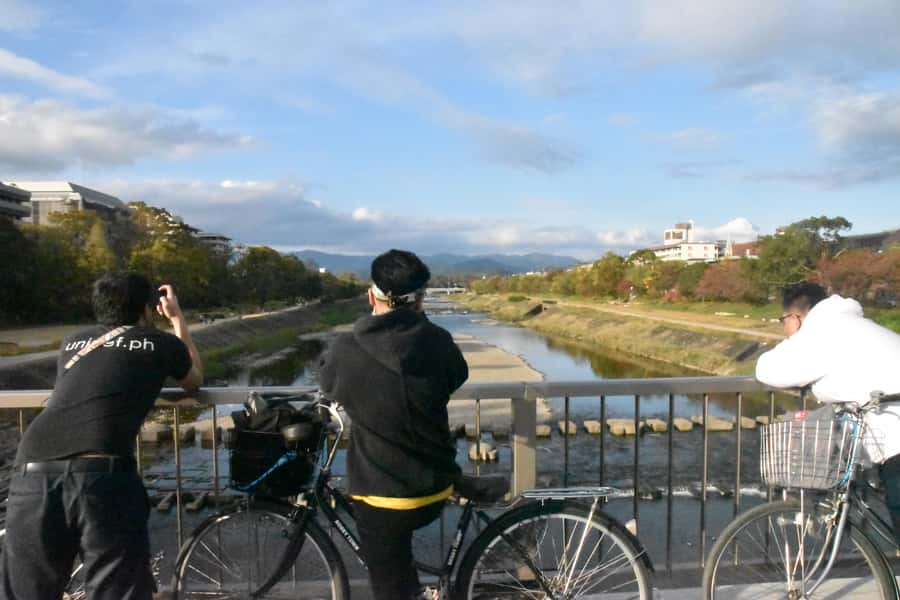
At $73 per person, you are paying for a half-day of guided structure plus transportation you can actually use immediately.
Here is what your money covers:
- A rental bike
- Japanese sweet snacks and tea
- Entrance fees for temple or shrine stops when they are part of the alternative plan in rain
- An English-speaking guide who explains what you are seeing
What is not included:
- An extra fee of 1,000 yen for an electric bike if you request one on the spot
Value is not only about the price tag, it is about how much hassle you remove. If you try to piece this together yourself, you would spend time figuring out routes, bike logistics, and where to stop for meaningful sights in a safe, efficient order. This tour handles the flow so you can focus on the places.
Who Should Book This Bike Tour, And Who Should Skip It
This is a strong fit if you:
- Want to see Kyoto through movement, not just walking in a straight line
- Enjoy quieter streets, campus areas, and riverside scenery
- Appreciate context, especially for shrine visits and Geisha culture
- Are traveling with kids who are comfortable riding a bike (the tour is not suitable for children under 9)
You might want to skip it if you:
- Cannot ride a bike confidently
- Are traveling with luggage or large bags, since luggage or large bags are not allowed
- Are traveling with pets, since pets are not allowed
- Are hoping for a mostly indoor, stroller-style plan
Also, be ready for weather. Even on a good day, Kyoto can run hot and humid, and you will feel that on a bike. Bring water and dress for the day, not for photos.
Should You Book This Tour?
I think you should book if you want a practical Kyoto plan that blends major landmarks with calm, local-feeling streets. The ride structure makes it easier to handle distance, and the guide explanations make the temples and shrines land with more meaning than a quick self-guided stop.
Skip it if biking feels like a hassle or if your group cannot manage the bike time. This tour rewards people who are comfortable staying active for most of the day, then slowing down for Gion.
If you are the kind of traveler who likes being shown where to look, and you prefer fewer crowds with more breathing room, this is a very good match.
FAQ
How long is the Cycle Kyoto bike tour plus the Gion stroll?
The experience is about 3.5 hours of biking plus a 30-minute town walk.
Where do we meet for the tour?
Meet at the kneeling man statue at the southeast corner of the Sanjo Ohashi intersection. From the east end of Sanjo Ohashi Bridge, cross the street and find the statue.
Is the tour rain or shine?
Yes, it runs rain or shine. Entrance fees for temple or shrine alternatives in rain are included.
What is included in the price?
Included are the rental bike, Japanese sweet snacks at a traditional snack shop, Japanese tea at the same shop, and any entrance fee of a temple or shrine you visit as an alternative plan in rainy conditions.
Is an electric bike available?
You can request an electric bike for an extra 1,000 yen, payable on the spot.
What should I bring?
Bring comfortable shoes, a camera, water, and weather-appropriate clothing.
What are the age limits and bike requirements?
Children under 9 are not suitable. People who cannot ride a bike are not suitable.
Are pets, smoking, and luggage allowed?
Pets are not allowed. Smoking is not allowed. Luggage or large bags are not allowed.
More Walking Tours in Kyoto
New This Season
- Koyasan Day Trip by Private Car from Kyoto
- Old Port Town and Ultimate Sake Tasting Private Tour From Kyoto
- Kyoto’s Timeless Charm: 3hr Exploration of History and Peace
- Kyoto: 5 Types of Sushi Making
- Sacred Peak & Ancient Paths: Kurama-Kibune Hiking Experience
- Kyoto: Exclusive ZEN practice at Manpukuji temple in Uji
- Kyoto: Private Seasonal Aroma Yoga Class
- Traversing Kyoto’s Scenic West – Arashiyama to Kinkakuji
Gion Geisha Quarter Walks, compared.
Kyoto Geisha Walking Tour: Gion District & Hidden Gems
Read our review →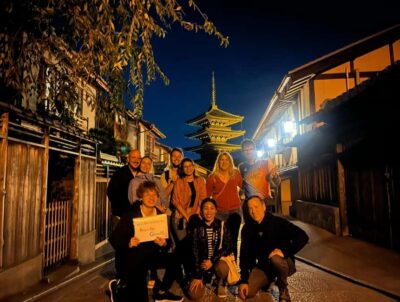
Gion Magical Night Walking Tour with Geisha Trivia
Read our review →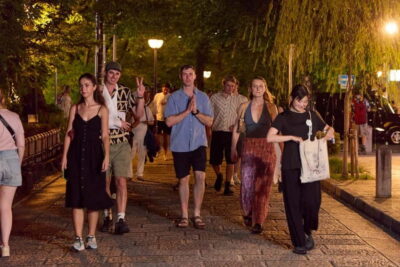
Gion Geisha District Walking Tour – Stories of Geisha
Read our review →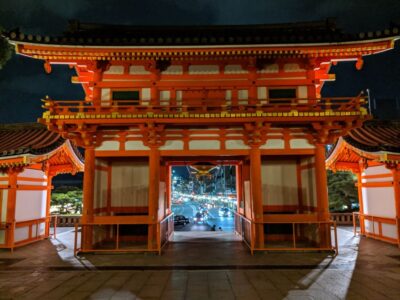
Best of Kyoto: Gion, Geisha, Pagodas & Cobblestones
Read our review →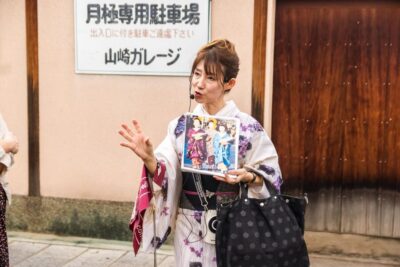
Kyoto Night Foodie Tour in Gion (9+ dishes + 6 Sake tastings)
Read our review →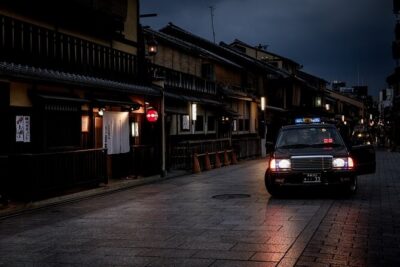
Kyoto Gion Geisha District Walking Tour – The Stories of Geisha
Read our review →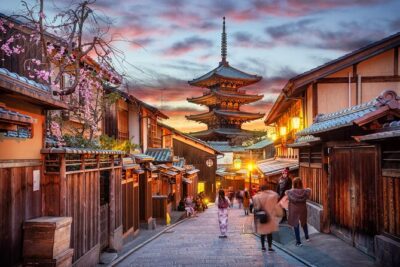
Kyoto Gion: 2-Hour Geisha Culture & History Walking Tour
Read our review →Also filed under