Reviewed · FUSHIMI INARI SHRINE WALKS
Gion and Fushimi Inari Shrine Kyoto Highlights with Government-Licensed Guide
Geisha alleys can overwhelm you. This guided evening route stitches together Gion and Fushimi Inari so you can focus on sights, not directions, and you get real context on geisha history. Two things I really like: the pace works for first-timers because you’re always moving with a licensed local English guide, and the small group size (max 10) makes it easy to ask questions and keep up. One possible drawback to plan for: it’s a lot of walking over about 6 hours, and some temple entry fees are not included (like Kiyomizu-dera and Kennin-ji).
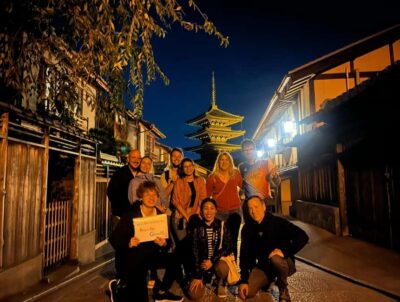
If you want Kyoto highlights in one evening, this is built for that. You start at Tatsumi-jinja Shrine, visit major stops like Yasaka Shrine and Kiyomizu-dera, then spend time in Gion’s street network around Shijo Avenue, Pontocho, Miyagawacho, and the Shirakawa area along the canal. You’ll also get chances to spot traditional street scenes that are hard to reach by car.
In This Review
- Key Highlights I’d Prioritize on This Walk
- Why This Gion and Fushimi Inari Evening Plan Works
- Meeting Point: Start at Tatsumi-jinja and Walk From There
- Fushimi Inari-taisha: Torii Gates First, Then You Learn How to Read the Trails
- Gion After Dark: Shijo Avenue, Pontocho, Miyagawacho, and Shirakawa Canal
- Yasaka Shrine: A Short Stop That Grounds the Evening
- Tatsumi Daimyojin Shrine: Quick Torii Moments Near the Ochaya Streets
- Kiyomizu-dera and Kennin-ji: Temple Time With Tickets Not Included
- Kiyomizu-dera (about 1 hour)
- Kennin-ji Temple (short stop, with dry landscape gardens)
- What the Government-Licensed Guide Changes in Real Life
- Price and Value: Is $154.37 a Good Deal?
- Who This Tour Fits Best (And Who Might Prefer Something Else)
- Should You Book This Gion and Fushimi Inari Tour?
- FAQ
- How long is the tour?
- How much does the tour cost?
- How many people are in the group?
- What language is the guide?
- Where do I meet the guide?
- Is this tour mostly walking?
- Which stops have free admission tickets?
- Which temple admissions are not included?
- Do I get a mobile ticket?
- Can I bring a service animal?
- Is free cancellation available?
Key Highlights I’d Prioritize on This Walk
- Government-licensed English-speaking guide to keep you oriented and explain what you’re seeing
- Car-free alley walking in Gion, plus viewpoints along the Shirakawa Canal
- Fushimi Inari-torii time with a focused visit (about 1 hour, free entry)
- Gion context beyond photos, including Maiko and Geiko basics, with guides like Mari-san calling it out clearly
- Smart shrine stops like Yasaka Shrine and Tatsumi Daimyojin for quick, meaningful breaks
Why This Gion and Fushimi Inari Evening Plan Works
Kyoto can feel like two different cities. One half is temple hills and shrine paths. The other half is narrow streets, teahouse lanes, and canal reflections in Gion. Trying to combine both on your own usually turns into a game of timing and transit anxiety.
This tour solves that by stringing together major landmarks into one flowing evening route. You spend time at Fushimi Inari-taisha, then move into central Kyoto’s most famous geisha district. Along the way, you’re not just collecting checkmarks. Your guide helps you understand how these places fit into Kyoto’s long-standing religious and cultural rhythms, so your photos look better because you actually know what you’re photographing.
The “small group, guided walking” style matters. In Gion, the streets are tight, and sightseeing by yourself can lead to detours you did not mean to take. With a guide, you move with purpose and avoid the dead ends that eat up time.
Meeting Point: Start at Tatsumi-jinja and Walk From There
This is a walking tour with pickup on foot. That means you meet the guide at Tatsumi-jinja Shrine (Tatsumi Dai-myojin) in Higashiyama Ward, Motoyoshicho, address listed as 元吉町5959, Kyoto 605-0087. The tour ends back at the same meeting point.
Why that matters: you do not waste energy figuring out where to regroup at the end. You also avoid a common Kyoto problem, where you go out to a distant site and then have to navigate back with tired legs and a dead phone battery. Here, the route is set up so you’re returning to where you started.
Also note the group size cap: maximum 10 travelers. That sounds small, but in Kyoto it’s a big deal. You can hear explanations, and the guide can adjust the pace without the group feeling herded.
Practical tip from how the tour is structured: wear shoes you can walk in for a long evening. This tour is about “staying mobile,” not a series of long bus rides.
Still climbing through the orange gates?
- Kyoto: Fushimi Inari, Kinkakuji, Bamboo Grove 1 Day Bus Tour
★ 4.8 · 4,316 reviews - Fushimi Inari Hidden Hiking Tour (Private Option Available)
★ 5.0 · 1,750 reviews - Osaka/Kyoto:Kinkakuji,Arashiyama,FushimiInariShrine,NaraPark
★ 4.1 · 1,596 reviews - Kyoto/Osaka: Nara, Fushimi Inari Taisha, Arashiyama Bus Tour
★ 4.7 · 1,275 reviews
Fushimi Inari-taisha: Torii Gates First, Then You Learn How to Read the Trails
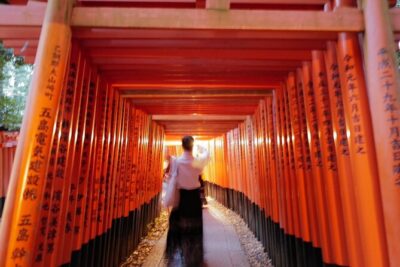
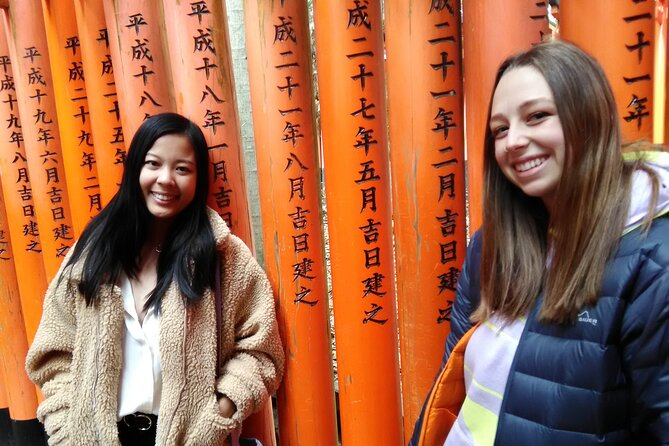
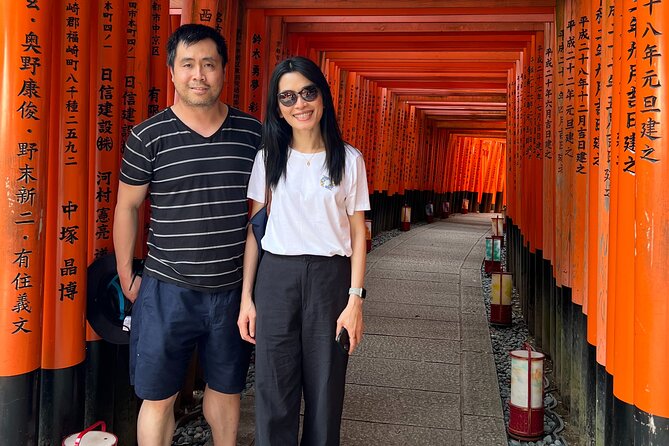
Your tour begins with Fushimi Inari-taisha Shrine, where the big draw is the long network of vermilion torii gates. You get about 1 hour here, and the listed ticket for this stop is free.
Here’s what I love about doing Inari on a guided route: the gates are visually dramatic, but the shrine complex can also be confusing if you’re trying to map it yourself. With a guide, you’re more likely to understand why some paths feel “primary,” while side trails feel quieter and more local. Even if you’re not hiking to the very far end, you still get the main experience: the feeling of walking through a corridor of gates, one after another.
A smart time-saver is knowing what to look for besides the obvious torii rows. A good guide will point out subtle changes in the scene, like where you can pause for photos without obstructing others and where the view lines open up.
If you’ve only ever seen Fushimi Inari in pictures, this is the right moment to see it in motion.
Gion After Dark: Shijo Avenue, Pontocho, Miyagawacho, and Shirakawa Canal
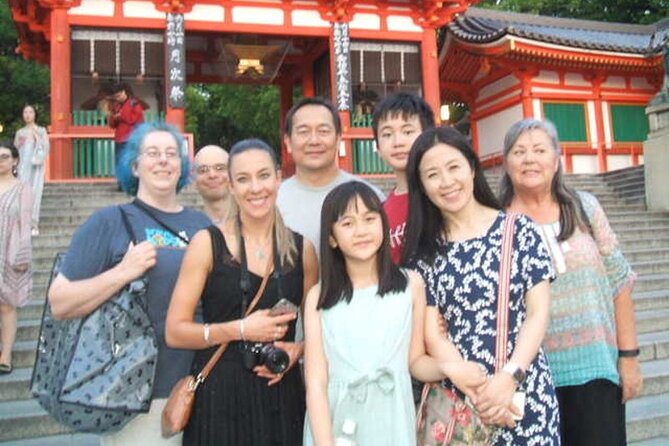
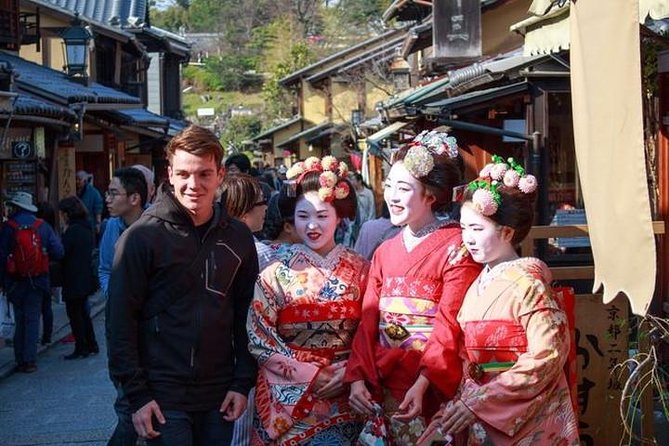
Then comes the part most people come for: Gion. This is Kyoto’s best-known geisha district, centered around Shijo Avenue, between Yasaka Shrine to the east and the Kamo River to the west. You’ll also cover related areas like Pontocho and Miyagawacho during the same evening.
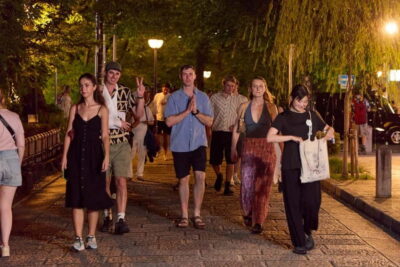
What makes the Gion segment valuable is the guidance. Gion’s streets are photogenic, but they can also make you feel lost fast. The alleys fold and curve, and there are plenty of side lanes that look tempting but lead away from the main sights. A guide keeps you moving through the right corridors at the right pace so you see more and waste less time.
You’ll also spend time in the Shirakawa area along the Shirakawa Canal. The canal runs parallel to Shijo Avenue, lined with willow trees and traditional-style buildings, including high class restaurants and ochaya (teahouses). One of the practical joys here is the visual rhythm: as you walk, you get repeated chances to look down toward the water and catch the canal’s atmosphere in changing angles.
Geisha history gets woven into the walk, too. One guide name that stands out from the experience details you’ll likely hear: Mari-san. In her groups, she’s called out the difference between Maiko and Geiko, and that kind of context turns random street scenes into something you can actually interpret.
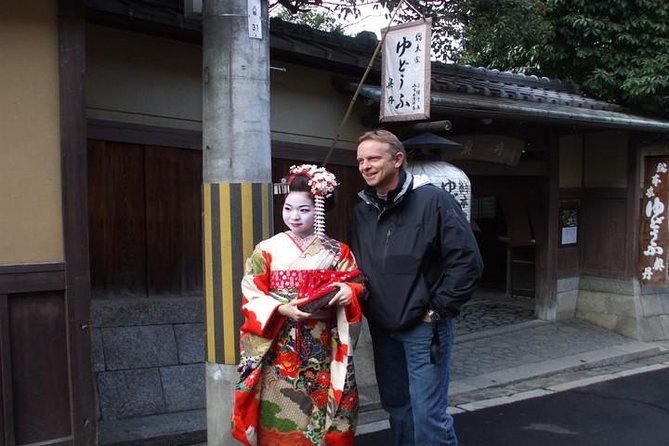
Do you get to see Maiko or Geiko for sure? No. But you do get more “good odds” because your guide can point out where activity tends to show up and how to observe respectfully.
Yasaka Shrine: A Short Stop That Grounds the Evening

Between the street scenes and the canal views, you pause at Yasaka Shrine. It’s about 10 minutes, and entry is free.
This is a small stop, but I like it for two reasons. First, it resets the pace. Gion can keep you in camera mode, and sometimes you forget you’re also in a living religious place. Second, Yasaka Shrine acts like a landmark that makes the neighborhood feel connected, not random.
Even if you only have a few minutes, you’ll get a sense of why this area is so important to Kyoto’s public life. It’s the kind of place where the meaning is bigger than the time you spend there.
Tatsumi Daimyojin Shrine: Quick Torii Moments Near the Ochaya Streets
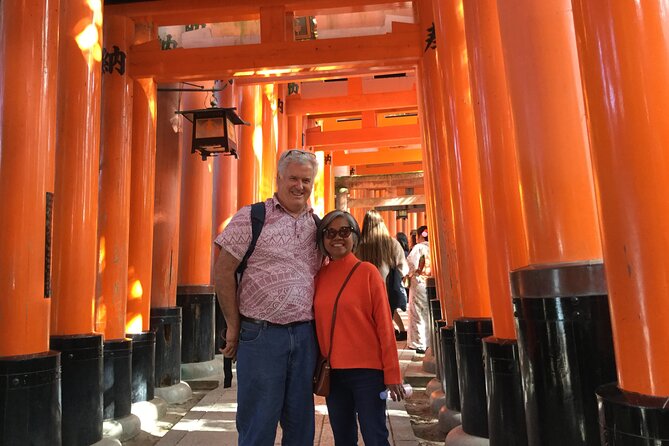
Next up is Tatsumi Daimyojin Shrine in the Gion area. It’s another brief 10-minute stop, with free entry listed for this part of the route. You’ll see the inner torii, and the shrine’s proximity to the Shirakawa area puts it right in the middle of the teahouse corridor atmosphere.
This is the kind of stop that’s easy to skip if you’re self-guiding, because it’s not as famous on the world stage as some Kyoto names. But as part of a guided evening, it adds texture. The experience becomes a layered walk, where you see not just a district sign, but also the small religious sites that sit inside daily neighborhoods.
More rooftops worth a detour

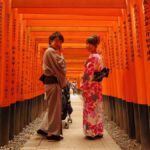
Kiyomizu-dera and Kennin-ji: Temple Time With Tickets Not Included
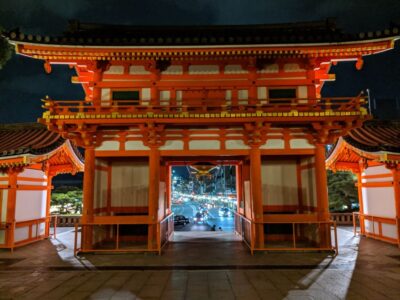
The tour also includes major culture stops in Kyoto’s Higashiyama area, including Kiyomizu-dera Temple and Kennin-ji Temple.
Kiyomizu-dera (about 1 hour)
Kiyomizu-dera is given about 1 hour on the schedule. Entry is listed as not included, so you should budget for the temple admission.
The value here is simple. If your evening already hits Fushimi Inari and Gion, you might not want to spend another separate day adding a big-name temple. This tour gives you that major Kyoto moment without requiring a full day of extra logistics.
The tradeoff is that Kiyomizu-dera is a big place. With limited time, you should treat this as a strong taste rather than a slow, lingering visit.
Kennin-ji Temple (short stop, with dry landscape gardens)
Kennin-ji is close to Hanamikoji and Shijo. The stop time listed is very short, about 1 minute, and admission is also listed as not included. Even with a quick visit, you’ll at least get the entrance moment and the feel of the grounds, including mention of karesansui (dry landscape gardens).
My practical advice: if you’re the type who loves gardens and wants to sit and study them, you might leave wanting more. This tour is not a long Kennin-ji deep study. It’s a “see it, connect it, keep moving” style.
What the Government-Licensed Guide Changes in Real Life
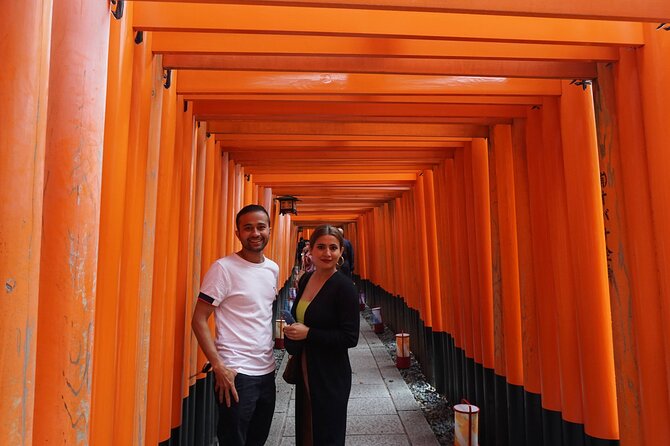
Here’s where a guide earns their keep. In Kyoto, the difference between a good walk and a frustrating walk is often just knowing what to ignore.
On this tour, your guide helps with:
- Geisha district navigation, so you’re not wandering in circles in Gion’s tight street grid
- Cultural context, including geisha history and the basics of Maiko and Geiko
- Photo opportunities, because the guide knows where the streets open up and where it’s easier to frame scenes
The guide also helps you connect stops. For example, after seeing the torii world of Fushimi Inari, you’re not just stepping into “pretty streets.” You’re moving into a neighborhood where tradition and daily life share the same blocks. That makes the evening feel coherent, not like a collection.
One more helpful note: the tour structure is built around walking and sightseeing. It does not describe a geisha show as part of the experience. So if you’re shopping for an evening show with assigned seating, this is not that kind of tour.
Price and Value: Is $154.37 a Good Deal?
At $154.37 per person for about 6 hours, the price can feel high until you translate it into what you’re actually buying.
What you get:
- A licensed local English-speaking guide
- A small group (max 10)
- A long route that links multiple famous areas in one evening
- Time at several free entry sites, including Fushimi Inari-taisha, Yasaka Shrine, and Tatsumi Daimyojin Shrine
- A mobile ticket for the experience
What’s not included:
- Temple admission for Kiyomizu-dera and Kennin-ji
So the value equation is this: you’re paying for reduced stress and better use of limited time. You’re also paying for someone to help you interpret what you see. If you enjoy doing self-guided walks, you might replicate parts of this. But if you want to step out of Kyoto’s maze and have someone steer you through it, the price starts to make sense.
One extra signal of popularity: this tour is typically booked well in advance, with an average booking window of about 89 days. That suggests people like the format and timing, especially for shorter stays.
Who This Tour Fits Best (And Who Might Prefer Something Else)
This is best for you if:
- You’re first-time in Kyoto and want the “greatest hits” without map headaches
- You want both Gion atmosphere and Fushimi Inari’s gates in the same evening
- You like guided walking because you get stories, not just views
- You care about understanding geisha-related details like Maiko versus Geiko
It might not be ideal if:
- You hate walking for about 6 hours on uneven streets
- You want long, sit-down time at major temples like Kiyomizu-dera or Kennin-ji
- You’re only interested in a show format, since this is a sightseeing walk
Should You Book This Gion and Fushimi Inari Tour?
If your goal is a single evening that strings together Kyoto’s signature shrine spectacle (Fushimi Inari), geisha district street life (Gion, Pontocho, Miyagawacho, Shirakawa), and at least two major temple names, I think this tour is a smart booking.
Book it if you want:
- A guide to keep you on track in tight neighborhoods
- More meaning behind the sights, especially around geisha history
- A small group pace that lets you ask questions and take photos without chaos
Consider skipping or switching plans if you want leisurely temple time or you know you’re not great on long walks. Also, plan for the extra cost of temple admissions that are not included.
If you fall into the sweet spot, you’ll leave with an evening that feels like Kyoto, not just Kyoto on a checklist.
FAQ
How long is the tour?
The duration is approximately 6 hours.
How much does the tour cost?
The price is $154.37 per person.
How many people are in the group?
The tour has a maximum of 10 travelers.
What language is the guide?
You get a licensed local English speaking guide.
Where do I meet the guide?
The tour starts at Tatsumi-jinja Shrine (Tatsumi Dai-myojin) in Kyoto, and it ends back at the meeting point.
Is this tour mostly walking?
Yes. It is a walking tour, and pickup is on foot.
Which stops have free admission tickets?
Fushimi Inari-taisha Shrine has a free admission ticket, Yasaka Shrine has a free admission ticket, and Tatsumi Daimyojin Shrine has a free admission ticket.
Which temple admissions are not included?
Kiyomizu-dera Temple and Kennin-ji Temple list admission as not included.
Do I get a mobile ticket?
Yes, the tour includes a mobile ticket.
Can I bring a service animal?
Service animals are allowed.
Is free cancellation available?
Yes, you can cancel for a full refund if you cancel up to 24 hours in advance.
Gion Geisha Quarter Walks
New This Season
- Koyasan Day Trip by Private Car from Kyoto
- Old Port Town and Ultimate Sake Tasting Private Tour From Kyoto
- Kyoto’s Timeless Charm: 3hr Exploration of History and Peace
- Kyoto: 5 Types of Sushi Making
- Sacred Peak & Ancient Paths: Kurama-Kibune Hiking Experience
- Kyoto: Exclusive ZEN practice at Manpukuji temple in Uji
- Kyoto: Private Seasonal Aroma Yoga Class
- Traversing Kyoto’s Scenic West – Arashiyama to Kinkakuji
Fushimi Inari Shrine Walks, compared.
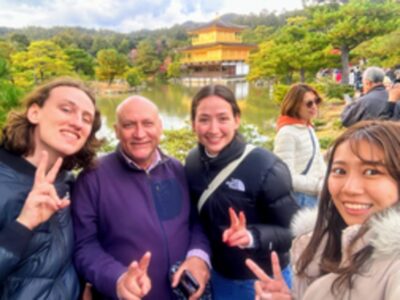
Fushimi Inari, Kinkakuji, Bamboo Grove 1 Day Bus Tour
Read our review →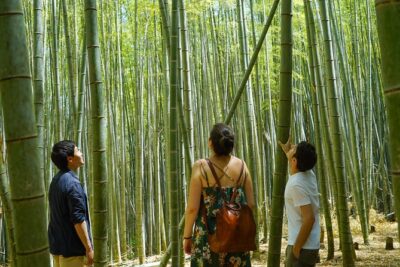
Fushimi Inari Hidden Hiking Tour (Private Option Available)
Read our review →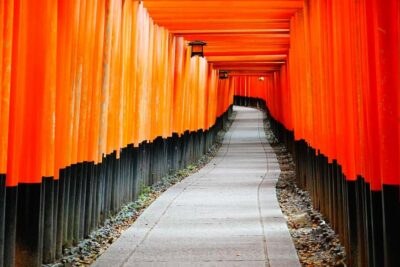
Kinkakuji,Arashiyama,FushimiInariShrine,NaraPark
Read our review →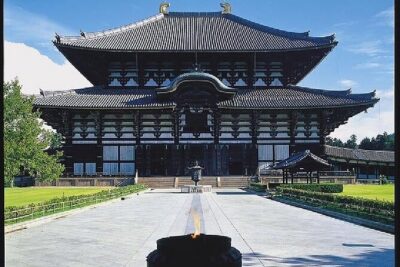
Nara, Fushimi Inari Taisha, Arashiyama Bus Tour
Read our review →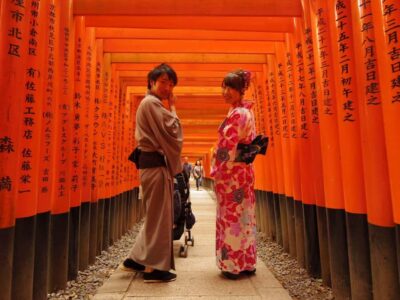
Arashiyama, Nara & Fushimi Inari Shrine w/Lunch
Read our review →
Nijo Castle, Kiyomizu & Fushimi Inari Guided Tour
Read our review →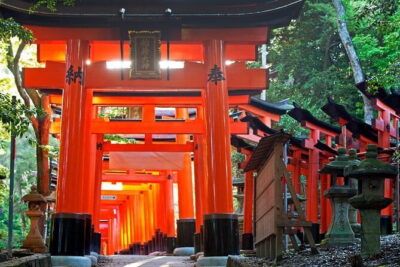
Nijo, Kinkaku-ji, Arashiyama, Kiyomizu & Fushimi Inari
Read our review →