Reviewed · GION GEISHA QUARTER WALKS
Kyoto 4 hr Gion Private Guided Tour & Maiko or Geisha Dinner
Kyoto magic happens in small rooms and side streets. This private 4-hour Gion experience pairs a licensed guided walk with a sit-down Kaiseki dinner and time with a Maiko or Geisha, in a setting that aims to feel like Kyoto, not like a themed show.
I love that you get two different beats of the evening: first you learn how to read Gion, then you slow down for food, conversation, and classic games called ozashiki asobi. One thing to keep in mind is the practical side of dining on the floor, so if you have back issues, tell them when you book.
In This Review
- Key highlights you will actually care about
- Where you meet in Kyoto Station, and how the timing really works
- Gion on foot: what a guide helps you notice
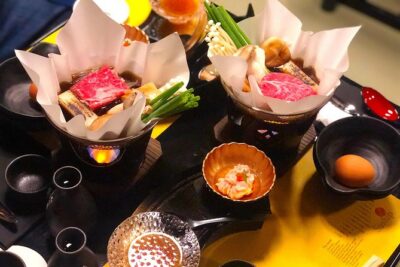
- The Kaiseki dinner at Gion Hayakawa: calm pace, careful presentation
- Maiko or Geisha time: questions, ozashiki asobi, and real conversation
- Drinks and local custom: what is included, what costs extra
- Price and value: what $578.56 per person is really buying
- Who this private Gion experience fits best, and who should reconsider
- Should you book this Kyoto Gion private tour?
- FAQ
- How long is the Kyoto Gion Private Guided Tour and Maiko or Geisha dinner?
- Where do I meet the guide?
- Does pickup work if my hotel is outside Kyoto City?
- How much of the tour is spent walking in Gion?
- What kind of dinner is included?
- Are drinks included with the dinner?
- Will I be able to choose whether I meet a Maiko or a Geisha?
- Is there live music during the performance?
- What seating should I expect during the meal?
- Is the tour refundable if I cancel?
Key highlights you will actually care about
- Gion District walk (about 90 minutes) with a licensed, English-speaking guide who can point out details you would likely miss on your own
- Kaiseki dinner at Gion Hayakawa with a set meal and a clear, unhurried two-hour window
- Maiko or Geisha time, with Q and A and traditional ozashiki asobi instead of a staged performance
- Practical culture expectations like a prerecorded music track, and a local custom to buy a drink for your host
- Private format so it is your group only, not a packed tour bus experience
Where you meet in Kyoto Station, and how the timing really works
This tour starts in Kyoto Station or at your hotel near Kyoto Station. The key point for planning is that the pickup is only within Kyoto City, so if you are basing yourself outside Kyoto, you may need to make your own way to the meeting area.
The schedule is built around a smooth flow, not a rushed checklist. Your total time is about four hours, and the tour description notes that the guide arrival timing can vary, with the guided sightseeing clocking in at roughly 90 minutes from the start time. I like this approach because it means you are not constantly waiting around with nothing to do. You can also plan dinner beforehand by keeping your earlier day a little lighter.
You do not need to worry about crowds in the group sense, since it is private. That matters for two reasons: you can ask questions without feeling like you’re competing for attention, and the guide can adjust how much time you spend on the parts of Gion that genuinely interest you.
Gion on foot: what a guide helps you notice
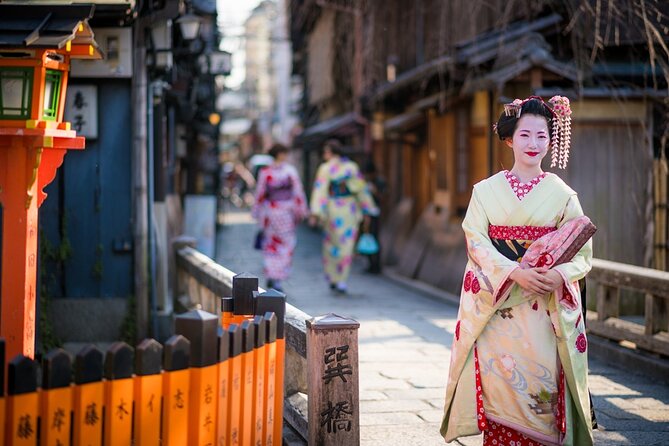
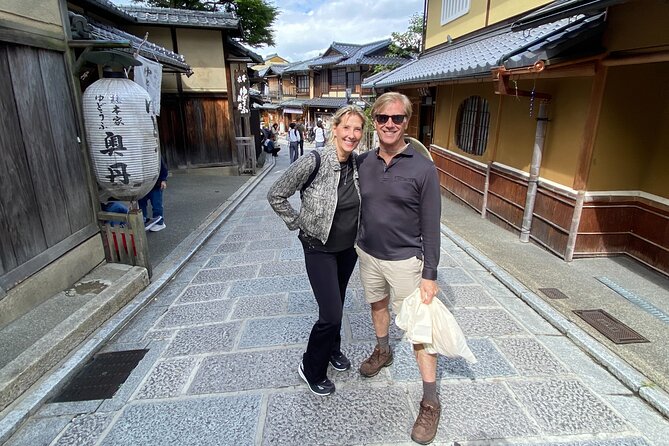
The Gion portion is a walking look at the district, led by a licensed local guide. This is the part where the tour is at its best if you are the type of traveler who likes to understand what you are seeing, not just take photos.
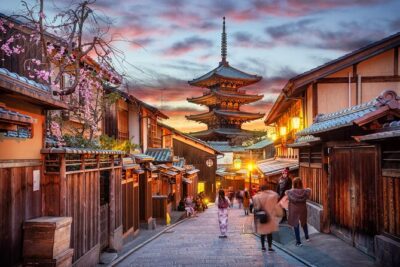
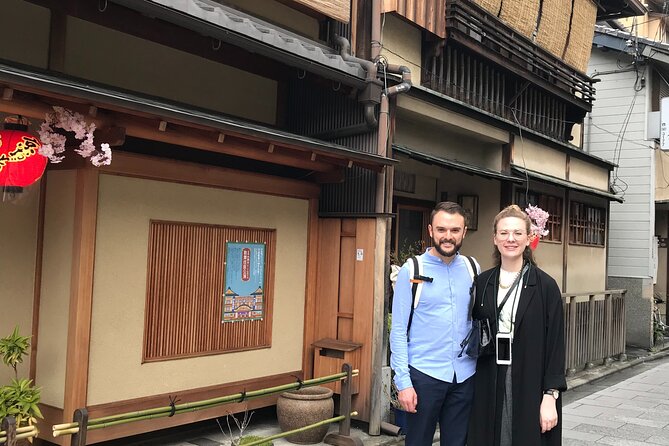
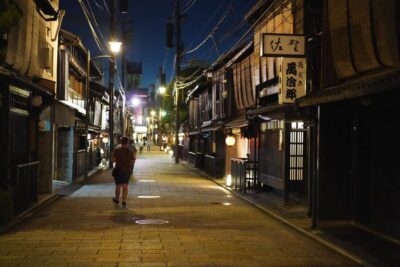
Gion is famous for its historical geiko and maiko culture, but it is also full of quieter details. Your guide is there to explain the history of the geiko district of Gion and point out areas that would be hard to find if you are relying on maps and luck. Think of it like getting a translation for the streets: you start to recognize what the neighborhood is about beyond the obvious postcard scenes.
A smart travel move is to pay attention to your guide’s pacing. On a walking tour, the timing between stops can make or break your experience. Here, you have around 90 minutes, which is enough time to get context without turning into a sprint. If you want better photos, this is also the portion where you can ask questions about where to stand, how to time your walking across street crossings, and what to observe up close.
One more practical note: the tour is described as a guided walk that is likely easiest if you are comfortable on city sidewalks for a couple of hours total. If you have mobility limitations, you’ll want to check your comfort level for both walking and later floor seating.
Lantern-lit streets of the geisha quarter
- Kyoto Geisha Walking Tour: Gion District & Hidden Gems
★ 4.7 · 3,273 reviews - Kyoto: Gion Magical Night Walking Tour with Geisha Trivia
★ 4.9 · 2,393 reviews - Kyoto: Gion Geisha District Walking Tour – Stories of Geisha
★ 4.7 · 2,187 reviews - Best of Kyoto: Gion, Geisha, Pagodas & Cobblestones
★ 4.9 · 2,058 reviews
The Kaiseki dinner at Gion Hayakawa: calm pace, careful presentation
After the walk, you transition to dinner at Gion Hayakawa. Kaiseki is not just food, it is a whole rhythm. You get a set meal, beautifully presented, and you are given about two hours to enjoy it. For me, that two-hour window is a big part of the value, because it gives you time to eat without feeling like you’re on a tight clock, and it creates room for conversation.
The dinner format is designed for an experience, not just a restaurant visit. The guide accompanies you to the meal, and the program includes a Maiko or Geisha performance element as part of the evening. You should expect a more formal flow than casual dining, including the traditional seating setup.
Here is the detail you need to plan around: you will be seated on the floor for the meal. That is common in traditional settings, but it can be a dealbreaker if your back or knees are touchy. If you book and you know this could be an issue, inform them at booking time. Doing that early is one of the simplest ways to protect your comfort.
If you are curious about what makes Kaiseki feel special, it is often the way each dish arrives, the balance of flavors, and the sense that every course has a purpose. The program description also emphasizes wabi-sabi, the idea of finding beauty in simplicity and imperfection. In practical terms, this means the evening is built to feel quietly meaningful rather than flashy.
Maiko or Geisha time: questions, ozashiki asobi, and real conversation
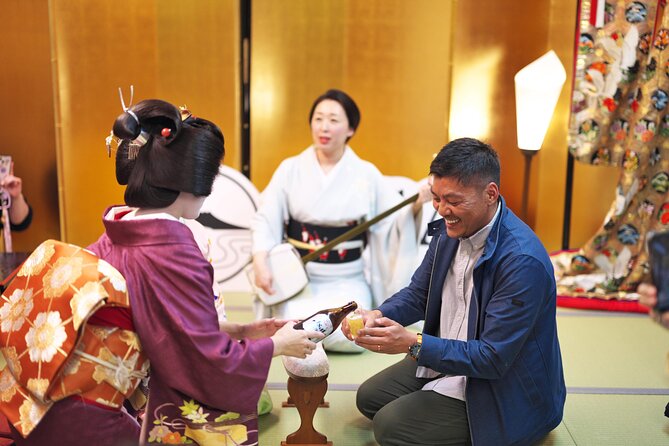
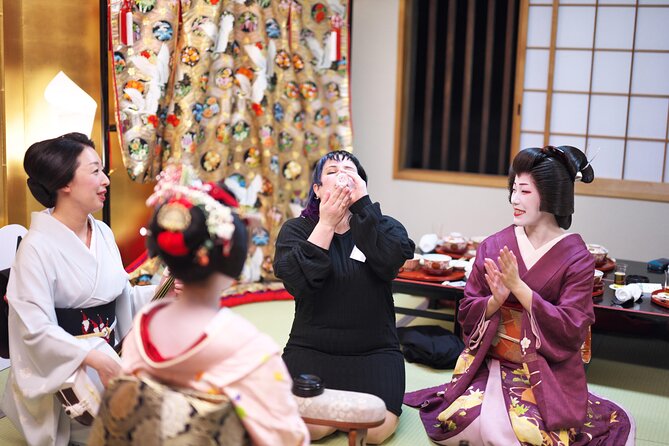
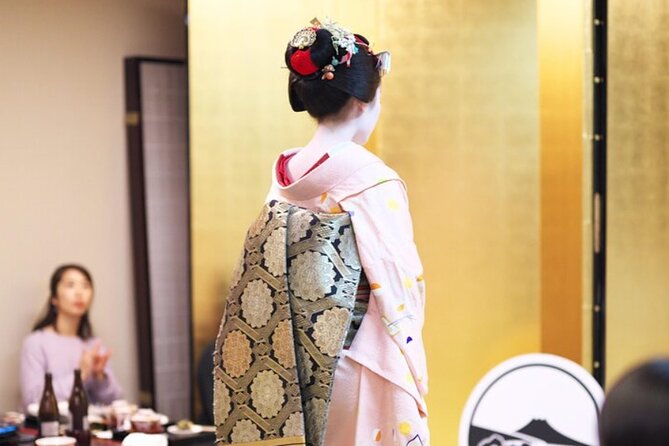
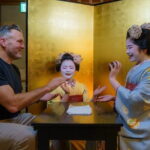
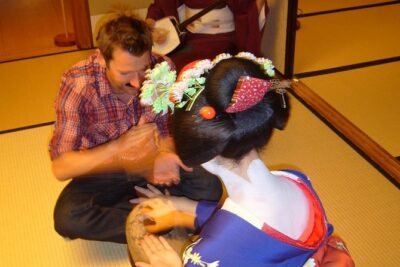
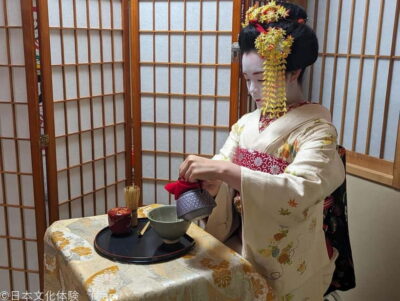
The centerpiece is the Maiko or Geisha time during dinner. The important thing is this is not portrayed as a big overseas-style show. Instead, you are meant to spend time with your host, ask questions, speak with them, and join in ozashiki asobi games.
That word matters because it signals the format. Ozashiki asobi are traditional indoor games tied to Geisha culture, and the program is set up so you are not just watching from the sidelines. You might learn how the games work, you might play, and you will almost certainly leave with more context than you would after a short performance clip.
There is also a key expectation to set upfront: the music is prerecorded, not performed live. That does not automatically make it less enjoyable, but it does help you calibrate your expectations. You are there for conversation, presence, and the traditional atmosphere more than for a live concert moment.
You also do not choose whether you meet a Maiko or a Geisha. Only one is arranged for your experience, and selection is not available. This is worth knowing because it affects your mindset while booking. If you have a preference, plan to appreciate whoever you are matched with, rather than treating the outcome like a customization request.
In past experiences connected to this program, guides like Shun and Anne have been mentioned, and guests have spoken warmly about meeting a Maiko named Yuki and a Maiko apprentice named Maya. Those are individual stories, but they hint at what the experience is aiming for: friendly, human interaction, plus a meal and culture moment you remember.
Drinks and local custom: what is included, what costs extra
This part is where many people get surprised, so I’ll lay it out clearly. The tour description says that the first two drinks are included. On top of that, there is a local custom where guests are asked to purchase one drink for the Maiko or Geisha.
So you should think of the program as including some drinks for you, with additional responsibility for the host drink following local etiquette. Any drink beyond the first two is a charge.
If you want to handle this smoothly, do it before you reach the moment. Decide what you will order for your own drinks so you are not making decisions under pressure in a traditional setting. And remember the drink custom is part of the social rhythm, not a trap. If you are willing to follow the etiquette, the whole evening feels more respectful and natural.
Price and value: what $578.56 per person is really buying
At $578.56 per person for about four hours, this is not a casual add-on. It is priced like a private, high-touch cultural experience, and the value comes from several stacked elements that normally cost separate money.
You are paying for:
- A private format (your group only)
- A licensed English-speaking guide for the Gion walking time (about 90 minutes)
- Kaiseki dinner at Gion Hayakawa (including drinks as specified)
- Time with a Maiko or Geisha, including ozashiki asobi interaction
- Pickup within Kyoto City from Kyoto Station or a nearby hotel area
Also, the average booking window is listed as 88 days in advance. That usually signals two things: demand is steady, and the experience can fill up because it is not something vendors run in massive quantities. If you want this when your schedule is fixed, you’ll have an easier time locking it in early.
Is it worth it? It tends to be worth it if you want more than a generic sightseeing day. If you care about culture, etiquette, and spending real time with a host, the combination of guided street context plus a formal dinner experience is the point. If you mainly want great photos and do not care about the cultural interaction, you might find other options more cost-effective.
One more value detail: group discounts are listed as a feature. If you are booking with others who share your interest in this type of experience, that can soften the cost. But the experience description still emphasizes a private setting, so you should expect the interaction to remain personal.
Where to eat once the sun sets

Who this private Gion experience fits best, and who should reconsider
This tour fits best if you want an evening that feels intentional. You will walk Gion with context, then settle into a Kaiseki meal with a host who invites conversation and participation. That is ideal for travelers who enjoy learning small rules and cultural cues.
It also helps if you are comfortable with structured pacing. The evening is about two blocks of time, walking and dinner, plus travel back to Kyoto Station or an easily accessible station. You should not expect a free-form wandering dinner night.
You may want to reconsider if:
- Floor seating could be uncomfortable for you, especially for more than a short dinner time
- You prefer live music, since the program notes music is prerecorded
- You want to choose whether you meet a Maiko or a Geisha, since selection is not available
If you love the idea of Gion as more than a backdrop, and you want a traditional dinner atmosphere where you can ask questions and participate in ozashiki asobi, this is the kind of experience that can turn a Kyoto visit into a personal memory rather than a collection of landmarks.
Should you book this Kyoto Gion private tour?
Book it if you want a guided Gion walk plus a proper Kaiseki dinner where the culture is the main event, not a performance for cameras. I like that the program is set up for Q and A, conversation, and ozashiki asobi, and that it is structured with clear time blocks so you are not constantly rushing.
Skip it or compare carefully if floor seating or a prerecorded music format would disappoint you. And if your goal is purely casual dining, this will feel more formal than you likely want.
One practical decision tip: if you want this to be a highlight day, protect your energy earlier in the day. With a two-hour meal and the etiquette around drinks, you’ll enjoy it more if you are not running on fumes.
If you check the comfort issues ahead of time and you go in ready to follow local customs, this is the kind of private experience that gives you more than stories. It gives you a sense of how Kyoto’s traditions are lived, one quiet moment at a time.
FAQ
How long is the Kyoto Gion Private Guided Tour and Maiko or Geisha dinner?
It lasts about 4 hours.
Where do I meet the guide?
You meet your guide at Kyoto Station or at your hotel in the Kyoto Station area.
Does pickup work if my hotel is outside Kyoto City?
The pickup is only available within Kyoto City.
How much of the tour is spent walking in Gion?
About 90 minutes is spent on the Gion guided walking tour.
What kind of dinner is included?
The tour includes a Kaiseki dinner at Gion Hayakawa.
Are drinks included with the dinner?
The first two drinks are included, and additional drinks are charged.
Will I be able to choose whether I meet a Maiko or a Geisha?
No. Only one Maiko or Geisha will be arranged, and selection is not available.
Is there live music during the performance?
Music is prerecorded, not performed live.
What seating should I expect during the meal?
You will be seated on the floor for the meal. You should inform them at booking if you have back problems.
Is the tour refundable if I cancel?
No. The experience is non-refundable and cannot be changed for any reason.
Sit-Down Dining in Kyoto
New This Season
- Koyasan Day Trip by Private Car from Kyoto
- Old Port Town and Ultimate Sake Tasting Private Tour From Kyoto
- Kyoto’s Timeless Charm: 3hr Exploration of History and Peace
- Kyoto: 5 Types of Sushi Making
- Sacred Peak & Ancient Paths: Kurama-Kibune Hiking Experience
- Kyoto: Exclusive ZEN practice at Manpukuji temple in Uji
- Kyoto: Private Seasonal Aroma Yoga Class
- Traversing Kyoto’s Scenic West – Arashiyama to Kinkakuji
Gion Geisha Quarter Walks, compared.
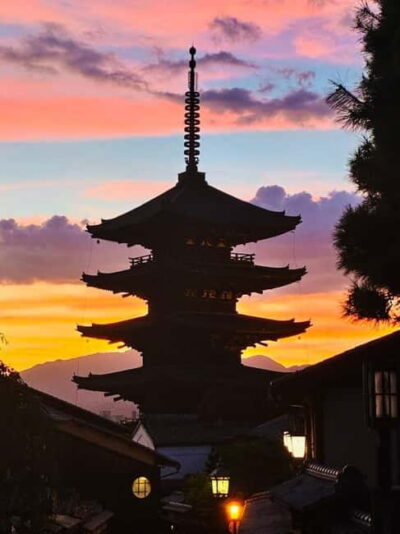
Kyoto Geisha Walking Tour: Gion District & Hidden Gems
Read our review →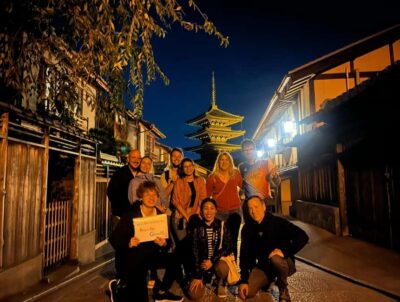
Gion Magical Night Walking Tour with Geisha Trivia
Read our review →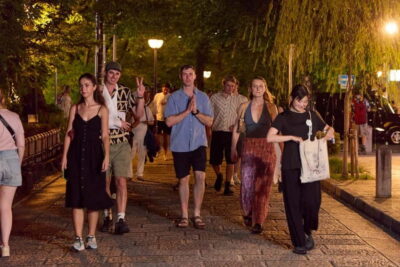
Gion Geisha District Walking Tour – Stories of Geisha
Read our review →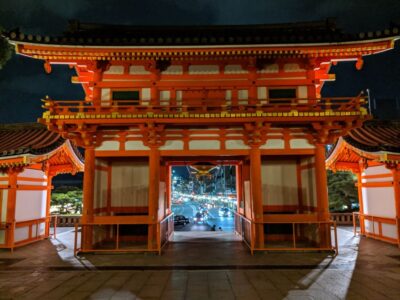
Best of Kyoto: Gion, Geisha, Pagodas & Cobblestones
Read our review →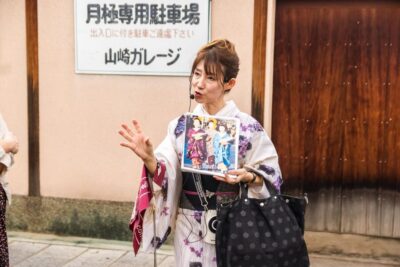

Kyoto Night Foodie Tour in Gion (9+ dishes + 6 Sake tastings)
Read our review →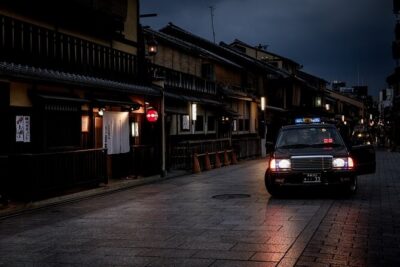
Kyoto Gion Geisha District Walking Tour – The Stories of Geisha
Read our review →