Reviewed · GION GEISHA QUARTER WALKS
Private Dinner with a Geisha
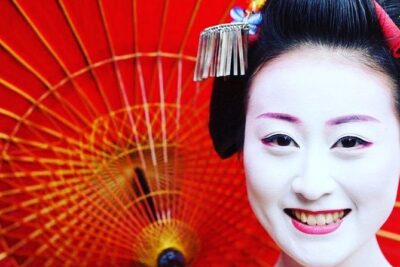
Meeting a geiko or maiko is Kyoto’s quiet magic. What makes this evening special is the private dinner setting, plus a guided walk through Gion that turns postcard streets into lived-in culture.
You’ll also love the structure: a calm start in the Gion area, then a kaiseki-style meal paired with songs, music, and dance right in your dining room. One thing to think about up front, though, is food and comfort level, because the meal is traditional and may not suit picky eaters or certain diets.
In This Review
- 6 key things to know before you go
- A Kyoto geiko or maiko dinner is not a show, it’s a conversation
- Meeting at Minamiza Kabuki Theatre at 5:00 pm, then heading into Gion
- Gion walking tour with your guide, turning streets into meaning
- Kaiseki dinner at your Japanese restaurant option: what you should expect
- Private tea house option: sake and a more party-like tone
- The moment with your geiko or maiko: dance, music, and Q and A
- How long it takes, and why timing matters
- Price and value: why $381.49 per person can make sense
- Who this fits best in Kyoto
- Practical etiquette tips so you get the most out of it
- Should you book the private dinner with a geiko or maiko?
- FAQ
- Where do I meet for the Private Dinner with a Geisha in Kyoto?
- What time does the experience start?
- How long is the experience?
- Is this a private tour?
- What is included with the dinner?
- Are drinks included?
- Can the dinner accommodate dietary requirements?
- Are children allowed?
- What is the rule for drinking age in Japan?
6 key things to know before you go
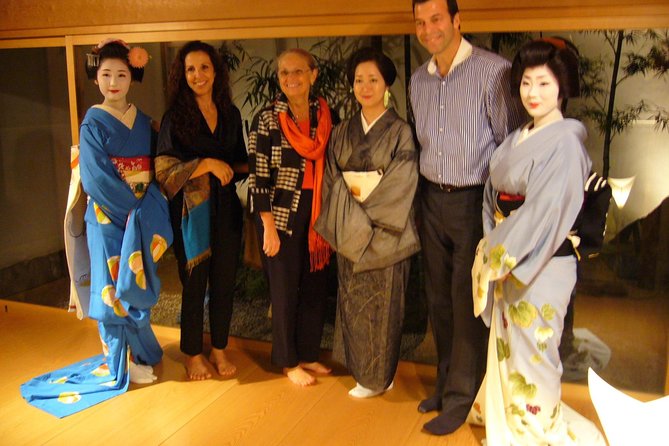
- Private access in a closed setting: you’re not watching from the outside, you’re included in the conversation and entertainment
- Start point is specific: meet at the main gate area of Minamiza Kabuki Theatre, facing Shijo street
- Two format options at checkout: dinner at a Japanese restaurant or a private tea house party
- What’s served is kaiseki style: you’ll get multiple courses, often including tempura, seafood, and vegetables
- Entertainment happens during your meal: dancing, singing, and instrument music, plus Q and A or simple games
- Guide support matters: you’ll have an English-speaking cultural guide to translate and frame what you’re seeing
A Kyoto geiko or maiko dinner is not a show, it’s a conversation
This is one of those Kyoto experiences that feels genuinely rare because you’re not just observing. You’re guided into the world around Gion, then you dine where a geiko (licensed geisha) or maiko (apprentice geisha) joins in with conversation and performance.
Why it works so well is pacing. The evening starts with context, so the dance and stories land better. And then it stays personal during the meal, so you can ask questions and learn what life and training look like in real terms.
The best part, for me, is the human scale. A lot of Kyoto culture is grand and distant, like temples viewed from the street. This is closer, calmer, and more direct.
Meeting at Minamiza Kabuki Theatre at 5:00 pm, then heading into Gion
Your evening begins at 5:00 pm at 198 Nakanochō, Higashiyama Ward, with the practical meeting spot being in front of the main gate of Minamiza Kabuki Theatre, facing Shijo street. Expect an easy arrival, since it’s near public transportation.
From there, you head out with your guide. Depending on the option you pick at checkout, you may do a walking tour in Gion and then transition to your restaurant or tea house.
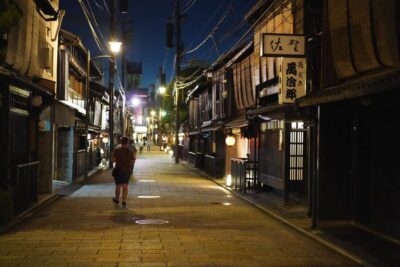
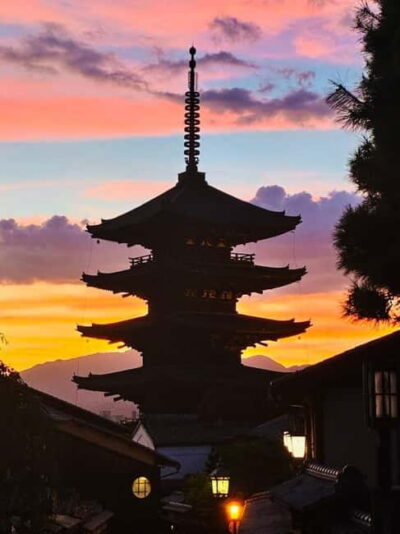
This start time is smart. You’re in the Kyoto streets as daylight softens, when Gion starts to look like the Kyoto people describe, not like a rushed daytime stop. It’s also early enough that the food and performance don’t turn into a late-night endurance test.
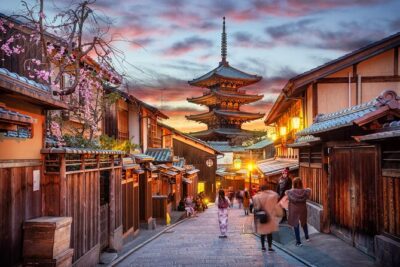
Lantern-lit streets of the geisha quarter
- Kyoto Geisha Walking Tour: Gion District & Hidden Gems
★ 4.7 · 3,273 reviews - Kyoto: Gion Magical Night Walking Tour with Geisha Trivia
★ 4.9 · 2,393 reviews - Kyoto: Gion Geisha District Walking Tour – Stories of Geisha
★ 4.7 · 2,187 reviews - Best of Kyoto: Gion, Geisha, Pagodas & Cobblestones
★ 4.9 · 2,058 reviews
Gion walking tour with your guide, turning streets into meaning
If you’re choosing the dinner-only experience in a restaurant, you still get a guided start. If you’re choosing the private tea house format, you’ll get a walking tour of Gion, the historic geiko district.
This part is about orientation and culture, not just scenery. Your guide helps connect what you see, traditional houses and district details, with what they mean in geiko and maiko life.
A name that comes up often with this operator is Mia (sometimes spelled similarly, like Miyah in past experiences). People tend to remember her because she mixes clear explanations with humor, and you can actually ask questions without the moment feeling stiff. That matters in a setting like this, where the etiquette is part of the experience.
My tip: come ready to walk and listen. If you only want photos, you may miss half the value. If you like stories you can connect to real places, this walk is where the night starts clicking.
Kaiseki dinner at your Japanese restaurant option: what you should expect
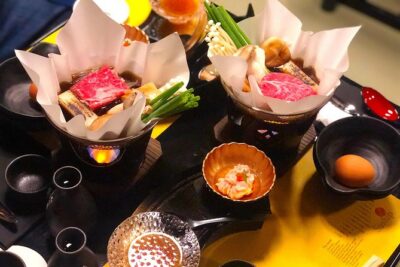
For the more traditional dinner format, you’ll go to a Japanese restaurant or tea house. Your meal is a kaiseki-style experience, which typically means multiple courses, with careful seasonal presentation.
From the tour details, you can expect a spread that often includes tempura, seafood, and vegetables. The kaiseki courses are traditional and meant to be eaten slowly, course by course, not like a quick “tour dinner.”
In a number of real-world situations people described, the dinner is enough to feel like a full meal, and the best use of your time is to treat it like part of the cultural program. Ask about what you’re eating, and let your guide set expectations about ingredients and flavors.
Food reality check: if you’re very picky, or if you avoid seafood, this is one of the points where you might feel tension between your preferences and the fixed traditional menu. Even when the restaurant can handle some requests, you should plan on limited flexibility.
If you’re the type who likes trying new flavors, you’ll probably enjoy how the courses connect to craft and season.
Private tea house option: sake and a more party-like tone
If you choose the private tea house option, your meal includes drinks in addition to the kaiseki-style dinner. The details specifically call out sake and beer being included.
That changes the vibe. Tea house evenings often feel less formal, more like a hosted party in a traditional room. And with drinks involved, it can naturally lead to games and more relaxed back-and-forth with your geiko or maiko.
There’s also a practical point here: Japan has a minimum drinking age of 20. If anyone in your group is younger, you’ll want to plan accordingly.
The moment with your geiko or maiko: dance, music, and Q and A
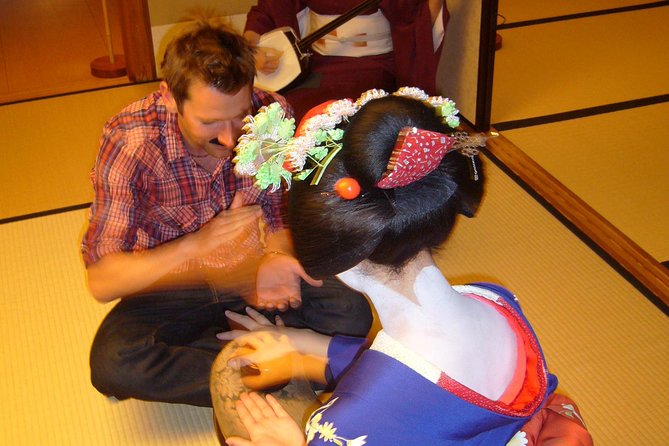
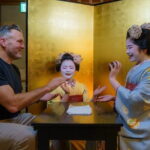
After the walk, you’ll sit down in your dining room and the geiko or maiko joins the program. Depending on the format and how the night unfolds, entertainment can include singing, playing musical instruments, and dancing during your meal.
The evening is designed to feel interactive. Your geiko or maiko can share insights, answer questions, and demonstrate parts of performance and tradition in a way that’s meant for you, not a crowd.
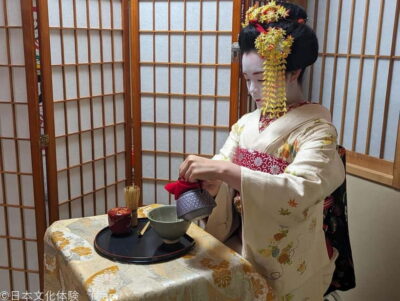
One of the best parts I’d encourage you to lean into is asking smart, respectful questions. Since you’ll have an English-speaking guide, you can ask about daily life and training steps, what certain kimono details mean, or how the performance craft works. People often come away surprised by how specific these conversations can be.
In past experiences connected to this format, the maiko or geiko sometimes plays simple games during the meal, including playful drinking games where you keep glasses filled. The exact activity can vary by night, but the goal is the same: turn “watching” into “participating.”
And yes, you also get the geisha dance performance during dinner time. The key is to watch with patience. In a dining room, the performance tends to be intimate, and part of the charm is that it doesn’t feel like a distant stage production.
Where to eat once the sun sets

How long it takes, and why timing matters
The whole experience runs about 3 hours 30 minutes. It’s long enough to include a guided walk and a full dinner program, but short enough that you can still enjoy other Kyoto plans the same day.
This timing also matters because geiko and maiko schedules are built around evening appointments. Your experience is planned to fit within those rhythms, which is why the pacing is structured. In other words, the “start, walk, dinner, performance” flow is part of the authenticity.
If you’re the type who likes to pack your calendar tightly, I’d still leave buffer time. You’ll want to arrive ready and not be rushing in that last ten minutes before 5:00 pm.
Price and value: why $381.49 per person can make sense
At $381.49 per person, this is a true splurge. The value comes from access, not from a big museum-style attraction.
You’re paying for:
- Private grouping (only your group participates)
- A guided cultural experience in Gion
- A traditional multi-course kaiseki meal
- Time and attention from a geiko or maiko, including conversation and performance
Is it expensive? Yes. Is it still worth it for the right traveler? Also yes.
I’d only recommend paying this price if you know what you want. If your priority is simply “see a geisha,” there are easier options. If your priority is learning what life and performance look like up close, in real conversation, then the price starts to feel more rational.
One more practical angle: the booking pattern for this experience suggests people plan ahead, averaging about 38 days in advance. If you’re traveling around peak seasons, earlier booking helps you avoid last-minute disappointment.
Who this fits best in Kyoto
This experience fits best if you:
- Want a cultural encounter with context, not a quick sightseeing stop
- Enjoy listening, asking questions, and learning etiquette and tradition
- Like traditional Japanese meals and are comfortable with seafood-heavy kaiseki
It can also work for family groups, including teenagers, since the walking part and guided translation can make it feel more accessible. Just remember that this is a formal cultural setting, and the night is designed around respect and manners.
Who should rethink it: if you have strong dietary restrictions like vegetarian or no seafood, you need to manage expectations. The meal is traditional, and while dietary needs can be advised at booking, the format is built around a set program. If you’re worried you may not eat much, the best move is to ask directly what accommodations are possible for your specific needs before you commit.
Practical etiquette tips so you get the most out of it
This is a private cultural experience, so your behavior shapes the tone. The tour notes stress proper manner because these traditions are not public in the same way as street sightseeing.
Here are the habits that keep things smooth:
- Be punctual for the 5:00 pm meet at Minamiza Kabuki Theatre main gate
- Dress in a way that feels respectful for a formal dinner setting
- Keep your phone quiet and follow your guide’s lead on photos
- Ask questions that show curiosity, not demands
Also, do not treat the meal like an afterthought. Come hungry, because the kaiseki courses are the foundation of the evening. If you go in expecting “just snacks,” you may feel stressed instead of delighted.
Should you book the private dinner with a geiko or maiko?
I’d book it if you want Kyoto in a rare, human scale way. The combination of Gion walking context, a kaiseki dinner, and real time with a geiko or maiko is hard to recreate on your own.
I’d hesitate if you’re a strict eater, not into seafood, or if you need lots of dietary flexibility. In that case, confirm what the menu looks like for your situation and whether adjustments are realistic.
Bottom line: if you’re excited about tradition, conversation, and performance in a small setting, this is one of the best “splurge evenings” you can plan in Kyoto.
FAQ
Where do I meet for the Private Dinner with a Geisha in Kyoto?
You meet in front of the main gate of Minamiza Kabuki Theatre, facing Shijo street.
What time does the experience start?
The start time is 5:00 pm.
How long is the experience?
It lasts about 3 hours 30 minutes.
Is this a private tour?
Yes. It’s a private tour/activity, and only your group participates.
What is included with the dinner?
You get a dinner and a geiko or maiko accompaniment, plus the geisha’s dance performance during dinner time. A professional guide is also included.
Are drinks included?
Drinks are included only if you choose the private tea house option. If you choose other options, drinks are available for purchase.
Can the dinner accommodate dietary requirements?
You can advise any specific dietary requirements at the time of booking. Your food is still described as kaiseki-style, so communicate early to understand what can be changed.
Are children allowed?
Children must be accompanied by an adult.
What is the rule for drinking age in Japan?
The minimum drinking age is 20 years in Japan.
Sit-Down Dining in Kyoto
New This Season
- Koyasan Day Trip by Private Car from Kyoto
- Old Port Town and Ultimate Sake Tasting Private Tour From Kyoto
- Kyoto’s Timeless Charm: 3hr Exploration of History and Peace
- Kyoto: 5 Types of Sushi Making
- Sacred Peak & Ancient Paths: Kurama-Kibune Hiking Experience
- Kyoto: Exclusive ZEN practice at Manpukuji temple in Uji
- Kyoto: Private Seasonal Aroma Yoga Class
- Traversing Kyoto’s Scenic West – Arashiyama to Kinkakuji
Gion Geisha Quarter Walks, compared.
Kyoto Geisha Walking Tour: Gion District & Hidden Gems
Read our review →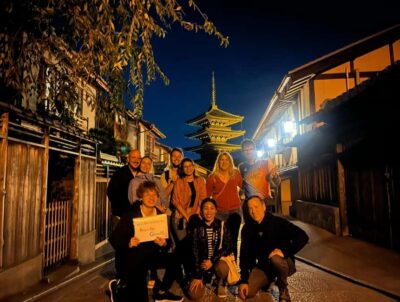
Gion Magical Night Walking Tour with Geisha Trivia
Read our review →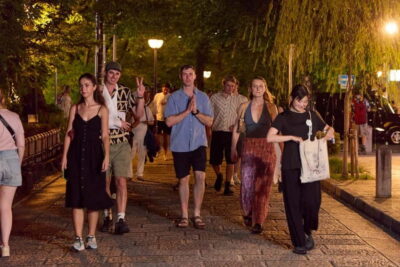
Gion Geisha District Walking Tour – Stories of Geisha
Read our review →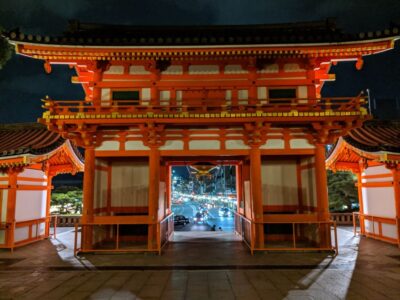
Best of Kyoto: Gion, Geisha, Pagodas & Cobblestones
Read our review →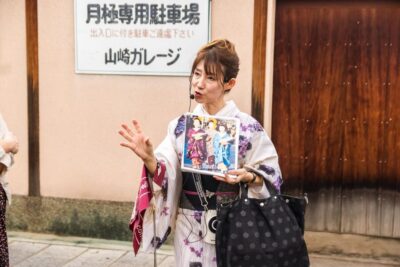
Kyoto Night Foodie Tour in Gion (9+ dishes + 6 Sake tastings)
Read our review →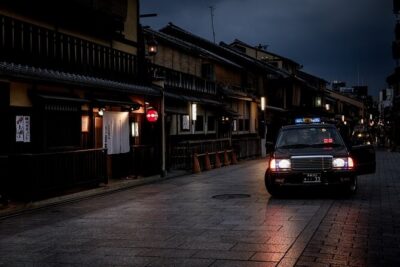
Kyoto Gion Geisha District Walking Tour – The Stories of Geisha
Read our review →