Reviewed · GION GEISHA QUARTER WALKS
Private Dinner with Maiko and Geiko in Kyoto
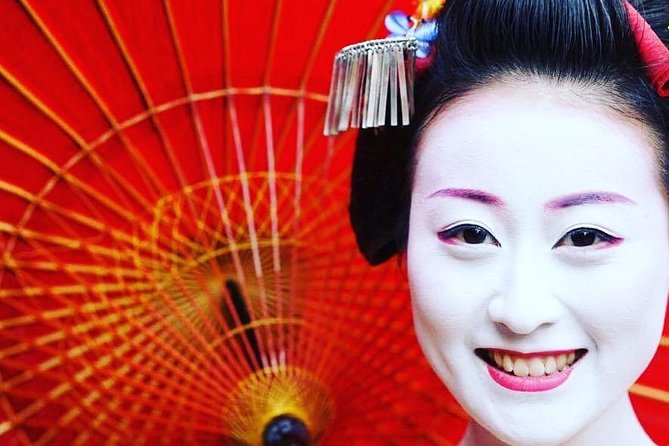
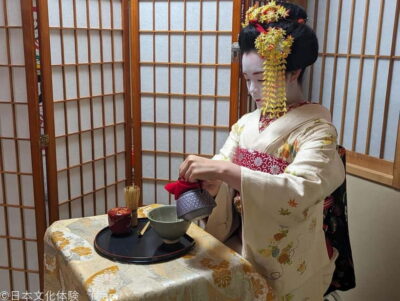
Kyoto nightlife gets real in an ochaya. What makes this special is that you get a private evening with a Maiko and Geiko in a tea house that is usually closed to the public, paired with a kaiseki dinner served course by course. It is the kind of experience that feels less like a show and more like a backstage pass into Kyoto traditions.
My favorite part is the personal access. You are not watching from the next room or hearing secondhand explanations. Your hosts teach you through conversation, and you get a reserved performance designed just for your party. It is also paired with high-quality sake that keeps coming as part of the experience.
The main drawback is simple: this is not a budget night in Kyoto. At $1,567.49 per person, you are paying for exclusivity, plus there are clear etiquette rules, like smart casual dress and socks required to enter, plus no touching kimonos or furnishings.
In This Review
- Key highlights worth circling
- Why a private ochaya dinner feels different in Kyoto
- The 6:00 pm evening flow, from entry to farewell
- Kaiseki dinner: what you should expect and how to make it enjoyable
- Sake service and responsible drinking in an etiquette setting
- Watching mai dance privately, without the crowd noise
- Culture lessons that go beyond a script
- The practical reality of etiquette and what to wear
- Price and value: what you are really paying for
- Who this is best for in Kyoto
- Should you book a private dinner with Maiko and Geiko?
- FAQ
- What is the duration of the private dinner?
- What time does it start in Kyoto?
- How many people can be in a booking?
- Is this a private experience with no other participants?
- What food and drinks are included?
- What is the dress code for entering the ochaya?
- What are the age requirements?
- Can I bring a camera?
- Are there restrictions on touching during the evening?
- If I have dietary needs, can I request adjustments?
Key highlights worth circling
- A closed-to-the-public ochaya setting: the venue depends on patronage, so you are stepping into a side of Kyoto most people never see.
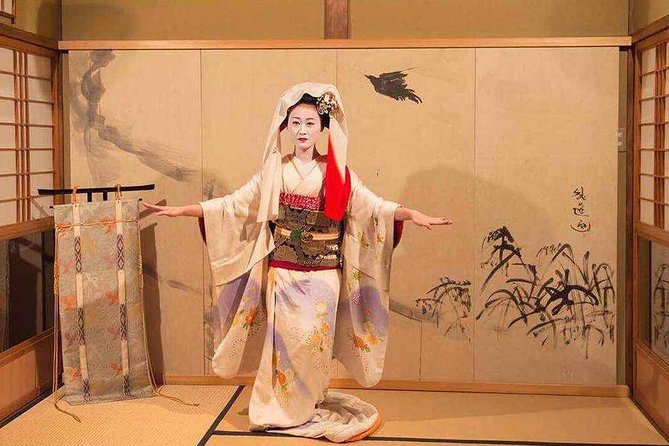
- Private mai dance performance: the dance is reserved for your party with no other people joining.
- Kaiseki dinner with all-you-can-drink sake: a full-course meal plus drink service built into the evening.
- Culture lessons that feel conversational: you learn about geisha culture and Japanese traditions through chatting.
- A traditional game and light moments: the evening includes activities beyond dining and dancing.
Why a private ochaya dinner feels different in Kyoto
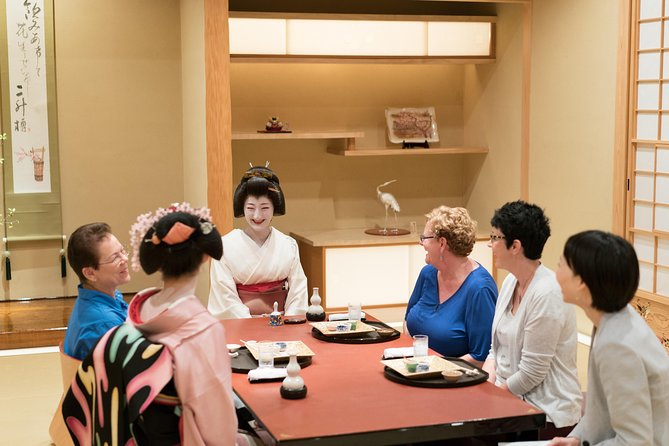
In Kyoto, “geisha culture” can easily turn into a tourist product, meaning you get a quick photo and a lecture outside the real context. This experience keeps you inside the actual setting: an ochaya, the tea house world where geiko and maiko spend time before and after performances.
The big value here is access. To enter an ochaya, you need an introduction, usually through patronage. That is what your evening is built around, using relationships tied to the major geisha districts in Kyoto. In plain terms, you are not just booking dinner. You are being allowed into a tradition-bound space.
The second reason it feels different is pacing. A private dinner does not run on a rigid “line of people” rhythm. You can settle in, eat properly, ask questions, and watch the dance in a calmer room. That makes it easier to actually understand what you are seeing.
The 6:00 pm evening flow, from entry to farewell
This runs for about 2 hours, starting at 6:00 pm and ending back at the meeting point. Even with only a couple hours on the clock, the structure is designed to give you a full arc: arrival, dinner, performance, and conversation.
Here is how it typically feels when you show up:
- You meet your local guide near public transportation and get oriented.
- You enter the ochaya, following their entry rules, including smart casual clothing and socks.
- The kaiseki meal begins, usually course by course, while you settle into the atmosphere.
- You enjoy all-you-can-drink sake during dinner, so the pacing stays social and relaxed.
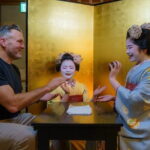
- The Maiko and Geiko share cultural context through conversation and a fun traditional game.
- A private mai dance performance is reserved for your party.
- You finish with time to chat and then wrap up, returning to the meeting area.
Because it is completely private, you are not competing with other schedules or other parties for attention. With a max group size of 10 people per booking, the setting stays intimate enough to feel human rather than industrial.
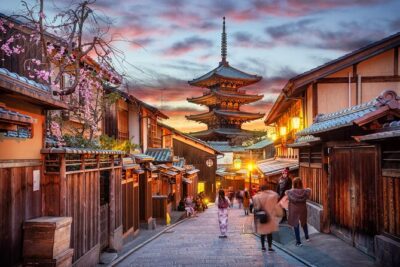
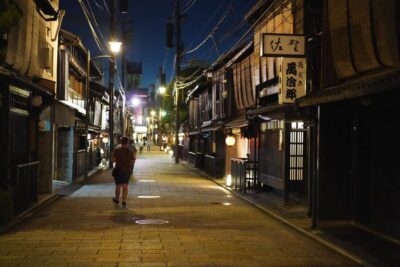
Lantern-lit streets of the geisha quarter
- Kyoto Geisha Walking Tour: Gion District & Hidden Gems
★ 4.7 · 3,273 reviews - Kyoto: Gion Magical Night Walking Tour with Geisha Trivia
★ 4.9 · 2,393 reviews - Kyoto: Gion Geisha District Walking Tour – Stories of Geisha
★ 4.7 · 2,187 reviews - Best of Kyoto: Gion, Geisha, Pagodas & Cobblestones
★ 4.9 · 2,058 reviews
Kaiseki dinner: what you should expect and how to make it enjoyable
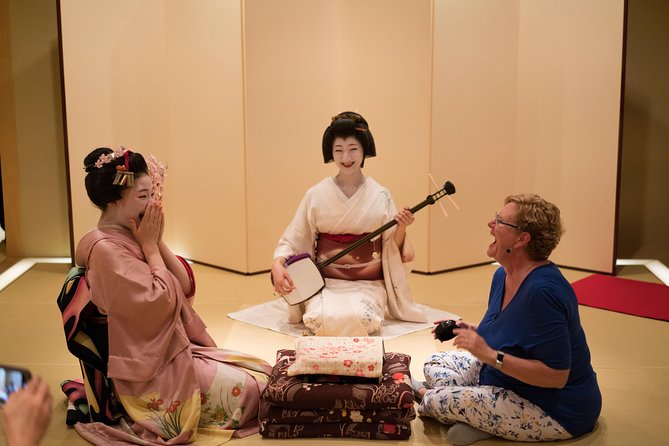
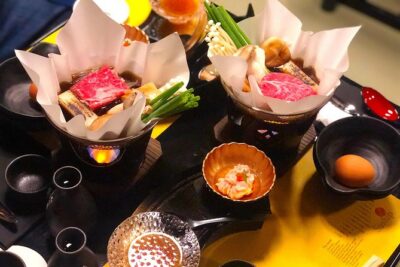
A kaiseki dinner is built around detail: timing, portioning, seasonal presentation, and a sequence meant to guide your senses. In this case, you get that full-course meal inside a setting that matters. The meal is not just food. It is part of the cultural performance of the evening.
What is included:
- A traditional kaiseki dinner
- Drinks, including high-quality sake served as all-you-can-drink
Practical tip: go in hungry, but do not rush. The best kaiseki moments are often the smaller bites and the pauses between courses. If you treat it like a fast dinner, you can miss what makes it special.
Another tip: be ready to ask simple questions. Even if your Japanese is basic, you will learn faster by asking about what you are eating, what the dance relates to, and how geisha culture works day to day. Your hosts are there to chat, not just to be watched.
Sake service and responsible drinking in an etiquette setting
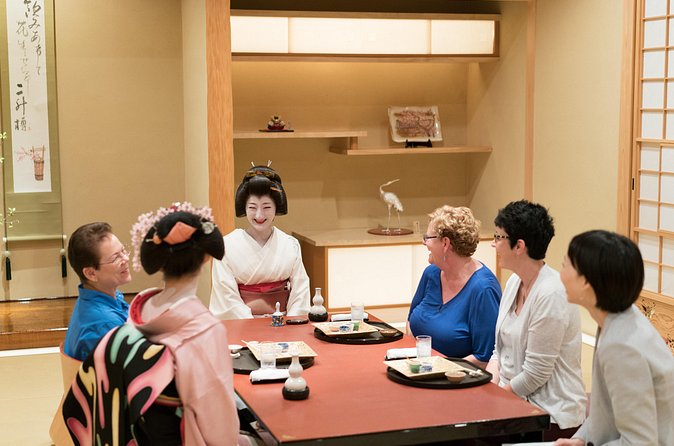
The drinks are a real part of the value proposition here. You get all-you-can-drink sake, and it is high-quality rather than a generic add-on.
Still, this is not a rowdy pub evening. You are in an ochaya, with clear etiquette expectations. The minimum drinking age is 20 years, and the maximum group size stays small, which helps keep the room respectful.
My advice: pace yourself early. If you start with sake too aggressively, the later conversation and dance can feel like you are catching up rather than taking it in. You want to remember the room, the details, and what you learned.
Watching mai dance privately, without the crowd noise
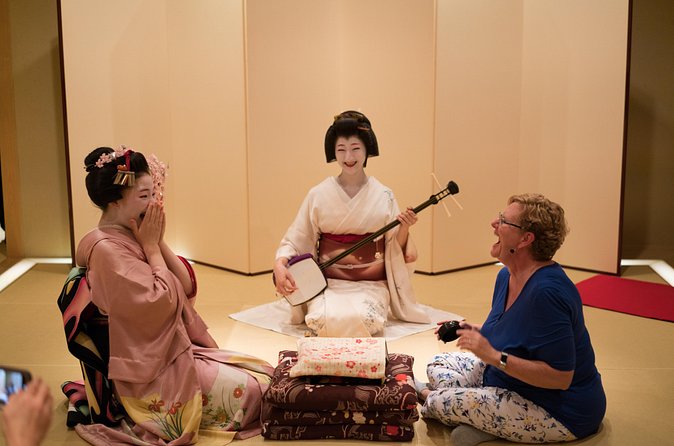
The mai dance performance is one of the main reasons to book this. Unlike public performances, this dance is reserved for your party, with no other people allowed to join.
That changes how you experience it. In a quiet room, you notice more than choreography. You start picking up the rhythm of movement, the intentional stillness, and the way the performance connects to the broader world of Japanese arts and etiquette.
If you want the best view:
- Keep your phone put away once the dance starts, if you can.
- Watch the posture and the hands, not just the steps.
- Be ready for the dance to feel precise rather than showy.
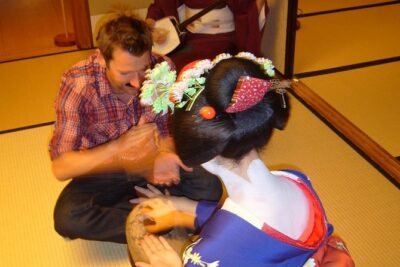
One more point: this evening also includes a traditional game. That matters because it breaks up the intensity. You get art, then you get a human moment, then you get the dance again in a way that feels connected to the evening rather than dropped in like a separate ticket.
Culture lessons that go beyond a script
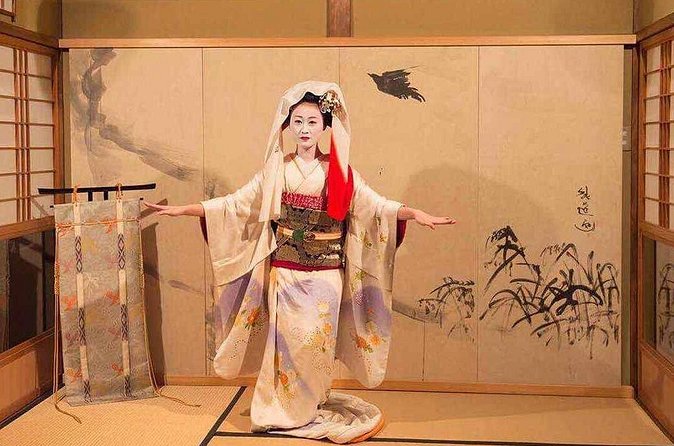
This is not a lecture hour. The value comes from learning in context: chat, questions, and small activities with the people who live the culture.
You will learn about geisha culture and Japanese traditions, and you are also invited into light interactions like playing a traditional game. Those moments help you understand that the role is not just public performance. It is training, discipline, and social practice.
What I like most about this style of cultural education is that it does not force you to memorize terms. You learn because you are curious, and because your hosts respond. If you go in expecting only facts, you may miss the warmth and the practical explanations.
Also, a gentle reminder: you should not touch the Maiko or Geiko, and you should not pull their kimonos. Do not touch decorations or furnishings either. Those rules protect the dignity of the setting, and they keep everyone comfortable.
Where to eat once the sun sets

The practical reality of etiquette and what to wear
This experience has a few rules that matter more than you might expect. They are not “gotchas.” They are there because an ochaya is an indoor cultural environment with its own flow.
Key points you should plan around:
- Dress code is smart casual
- You must have socks on to enter the ochaya
- No drones allowed
- Cameras are fine if you bring your own
- Do not touch kimonos, the Maiko or Geiko, or the furnishings
If you forget socks, you can end up scrambling at the worst time. Before you head out, check what you are wearing and pack a spare pair if you tend to misplace things.
For camera use: follow the room vibe. It is usually best to take photos before the dance begins and then set your camera down so the dance can fully land.
Price and value: what you are really paying for
At $1,567.49 per person, this is a splurge. There is no sugarcoating that. The only honest question is whether the experience matches the level of exclusivity you want.
Here is what you are paying for, bundled together:
- Entry into an ochaya not open to the public
- A reserved private dance performance (no other people)
- A full kaiseki dinner (not a light meal)
- All-you-can-drink sake
- A local guide included
- A max group size of 10, which helps keep it personal
In other words, you are paying for access and privacy, not just dinner and entertainment. If you are the type who wants a memorable Kyoto night with real human interaction, this can feel like strong value compared with experiences that oversell access and underdeliver.
If you mainly want a quick taste of geisha culture, you may prefer a less expensive evening. But if you want the atmosphere of a traditional tea house, the meal quality, and the private dance all together, this is built for that.
Also, read the fine print on changes. This experience is non-refundable and cannot be changed for any reason. That means you should book only when your timing is solid.
Who this is best for in Kyoto
This experience fits best if you want:
- A private cultural evening rather than a group show
- A kaiseki dinner experience, not just snacks and photos
- An atmosphere tied to Kyoto’s living heritage
- A chance to chat and learn through conversation, games, and guided context
It also works well for couples and small parties who want something meaningful. If you are celebrating, the organizers specifically welcome surprises for birthdays or anniversaries.
Age notes matter too:
- Minimum age is 12 years
- Minimum drinking age is 20 years
So if your group includes teens, it is still an option, but you will want to manage expectations around the sake side.
Should you book a private dinner with Maiko and Geiko?
Book it if you value access, atmosphere, and a full evening built around a real ochaya setting. This is one of those rare Kyoto experiences where the privacy is not a marketing line, it is the format: your party, your dance reservation, your dinner pacing, no other people joining.
Skip it if you are price sensitive or you expect a casual, informal evening. This is etiquette-led. It asks you to dress smart casual, wear socks, and respect clear boundaries like no touching kimonos or furnishings.
My final take: if you want a Kyoto night that feels like tradition in action, not tradition as a staged souvenir, this delivers. Just go in prepared for a respectful, high-touch evening, and it will land exactly where it is supposed to.
FAQ
What is the duration of the private dinner?
The experience lasts about 2 hours.
What time does it start in Kyoto?
It starts at 6:00 pm.
How many people can be in a booking?
A maximum of 10 people per booking.
Is this a private experience with no other participants?
Yes. It is completely private, and no other people will join your party.
What food and drinks are included?
You get a traditional kaiseki dinner plus alcoholic beverages, including all-you-can-drink high-quality sake.
What is the dress code for entering the ochaya?
Smart casual is required, and you must have socks on when you enter.
What are the age requirements?
Minimum age is 12 years. The minimum drinking age is 20 years.
Can I bring a camera?
Yes, you can bring your own cameras. Drones are not allowed.
Are there restrictions on touching during the evening?
Yes. You should refrain from touching the Maiko and Geiko, pulling their kimonos, or touching decorations and furnishings.
If I have dietary needs, can I request adjustments?
You should advise any specific dietary requirements at the time of booking.
Sit-Down Dining in Kyoto
New This Season
- Koyasan Day Trip by Private Car from Kyoto
- Old Port Town and Ultimate Sake Tasting Private Tour From Kyoto
- Kyoto’s Timeless Charm: 3hr Exploration of History and Peace
- Kyoto: 5 Types of Sushi Making
- Sacred Peak & Ancient Paths: Kurama-Kibune Hiking Experience
- Kyoto: Exclusive ZEN practice at Manpukuji temple in Uji
- Kyoto: Private Seasonal Aroma Yoga Class
- Traversing Kyoto’s Scenic West – Arashiyama to Kinkakuji
Gion Geisha Quarter Walks, compared.
Kyoto Geisha Walking Tour: Gion District & Hidden Gems
Read our review →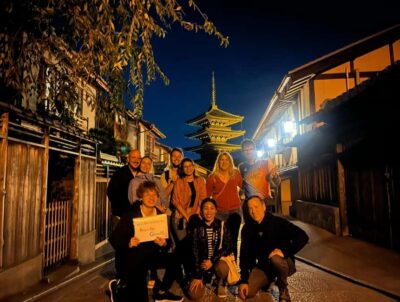
Gion Magical Night Walking Tour with Geisha Trivia
Read our review →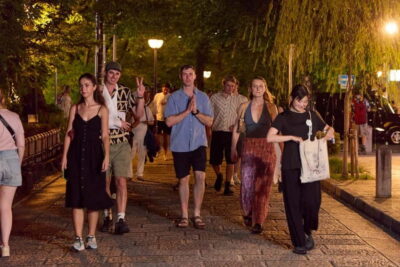
Gion Geisha District Walking Tour – Stories of Geisha
Read our review →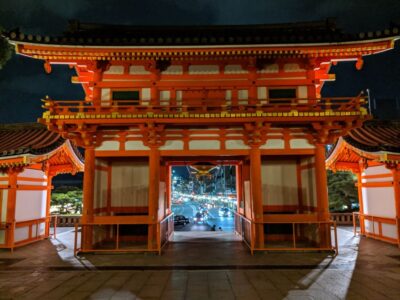
Best of Kyoto: Gion, Geisha, Pagodas & Cobblestones
Read our review →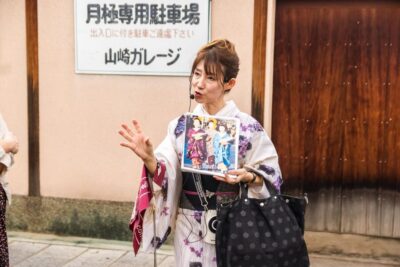
Kyoto Night Foodie Tour in Gion (9+ dishes + 6 Sake tastings)
Read our review →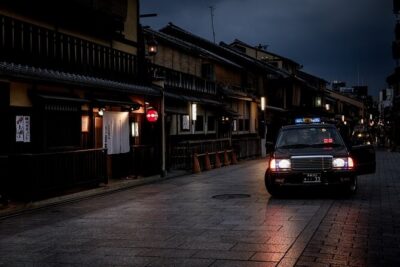
Kyoto Gion Geisha District Walking Tour – The Stories of Geisha
Read our review →