Reviewed · FUSHIMI INARI SHRINE WALKS
Kyoto Fushimi Inari Night Walking Tour
Kyoto after dark has a way of making the famous feel personal. This Fushimi Inari night walk is built for a calmer visit, and I love how the evening timing helps you enjoy the torii experience without feeling cooked by midday heat. I also like that your guide turns the shrine into something you understand, with explanations that connect Shinto and Buddhism and the shrine’s background as you stroll.
The main thing to watch is the length. The tour is about one hour, so it’s ideal for a focused look, not a full deep exploration at every path and side section.
In This Review
- Key highlights before you go
- Why Fushimi Inari Feels Different After 5 pm
- Meeting at JR Inari Station and How the Walk Flows
- Fushimi Inari-taisha at Night: Torii Gates in Real Life
- What Your Guide Teaches Along the Shrine Paths
- Photo-ops and Small Details You Can Actually Use
- Time, Pace, and Who This One-Hour Tour Fits Best
- Price and Value: Paying $35.93 for One Hour Done Right
- Practical Tips Before You Start Your Night Walk
- Should You Book This Fushimi Inari Night Walking Tour?
- FAQ
- Where is the meeting point for the Kyoto Fushimi Inari Night Walking Tour?
- What time does the tour start?
- How long is the tour?
- Is admission included for Fushimi Inari-taisha Shrine?
- What is included in the tour price?
- Are food and drinks included?
- How many people are in the group?
- Is hotel pickup included?
- Can I get a full refund if I cancel?
Key highlights before you go
- Evening visit to Fushimi Inari for a more comfortable, photo-friendly stroll
- Free entry to the shrine during the tour time
- English-speaking guides who answer questions and point out details
- Small group size (up to 15) so you can actually ask things
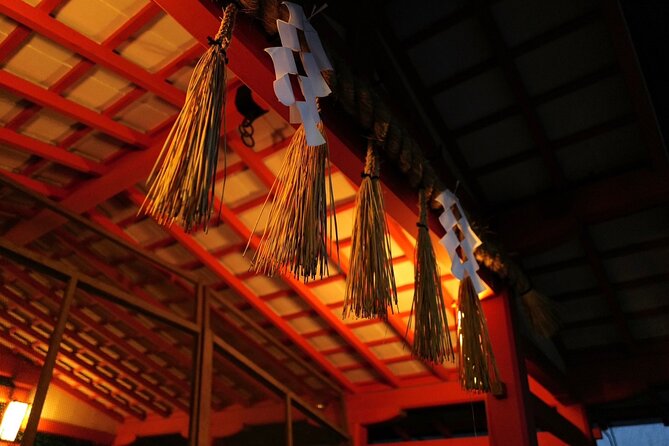
- Shinto and Buddhism context explained in a practical, human way
- Simple meeting setup near JR Inari Station and a nearby Daily Yamazaki
Why Fushimi Inari Feels Different After 5 pm
Fushimi Inari Shrine is Kyoto’s torii-gate magnet. You come for the look, then you stay because the place has layers, beliefs, and rituals that make it feel more like a living shrine than just a photo stop. Doing it at night changes the mood fast. The light is softer, the air is often easier to breathe, and the walk feels less like a rush and more like a stroll.
This tour is scheduled to start at 5:00 pm, which is smart timing. If you’re also planning dinner soon after, it slots in cleanly as a pre-dinner activity or a post-dinner decompress walk. I also like the way it avoids the worst crush that can build earlier in the day. Even if you’ve seen photos of the torii gates, experiencing them in the evening helps you notice small things you’d otherwise miss when you’re stuck moving with everyone else.
And yes, you will still see torii gates. That’s the whole point. But with a guide setting expectations, you’ll understand what you’re looking at instead of just walking past repeating patterns.
Meeting at JR Inari Station and How the Walk Flows
The tour keeps logistics refreshingly simple. You meet at the exit of JR Inari Station in Kyoto, then you turn left. You’ll see a Daily Yamazaki convenience store, and the meeting point is in front of it. That’s helpful if you’re trying to avoid last-minute guesswork when you’re already tired from trains and walking.
There is no hotel pickup, so plan to arrive on your own by public transportation. The good part is that the meeting point is near transit, which matters a lot in Kyoto where you don’t want to burn time on complicated arrival routes.
Once you connect with your group, you get moving toward the shrine area. Because the tour is about one hour, the flow is efficient. You’re not dragged around for half the evening. You get a guided pass through the main sights, plus explanations that help you make sense of what’s happening as you go.
The tour also uses a mobile ticket, so you can keep everything on your phone. That’s one less thing to manage, especially if you’re bouncing between multiple Kyoto plans.
Still climbing through the orange gates?
- Kyoto: Fushimi Inari, Kinkakuji, Bamboo Grove 1 Day Bus Tour
★ 4.8 · 4,316 reviews - Fushimi Inari Hidden Hiking Tour (Private Option Available)
★ 5.0 · 1,750 reviews - Osaka/Kyoto:Kinkakuji,Arashiyama,FushimiInariShrine,NaraPark
★ 4.1 · 1,596 reviews - Kyoto/Osaka: Nara, Fushimi Inari Taisha, Arashiyama Bus Tour
★ 4.7 · 1,275 reviews
Fushimi Inari-taisha at Night: Torii Gates in Real Life
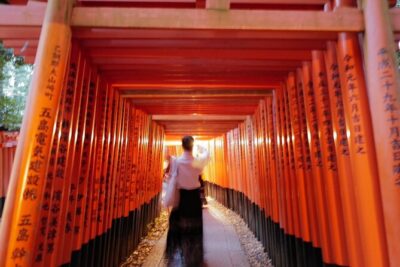
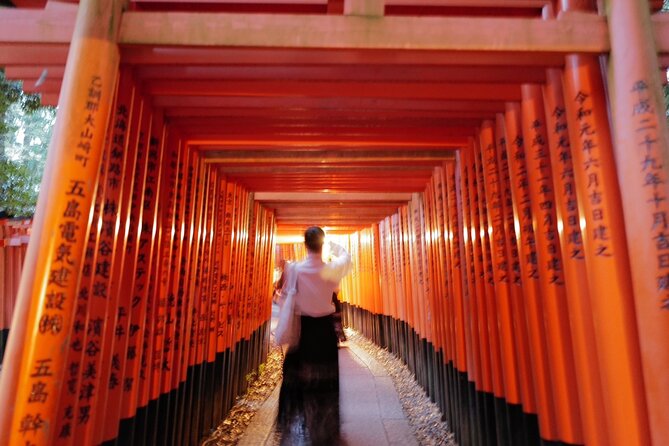
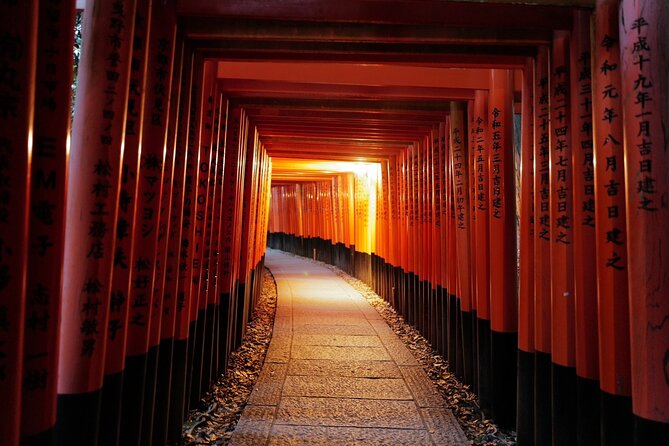
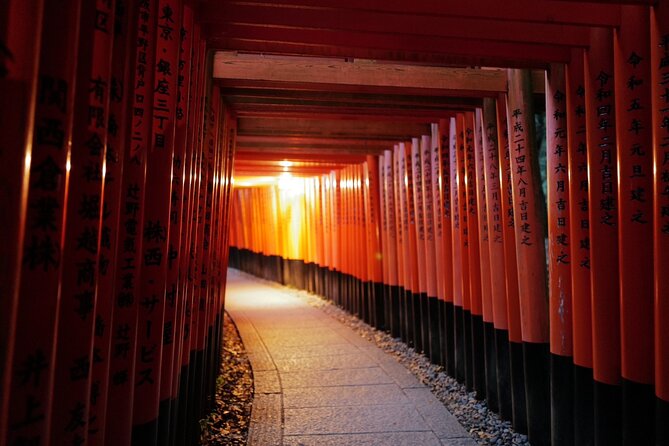
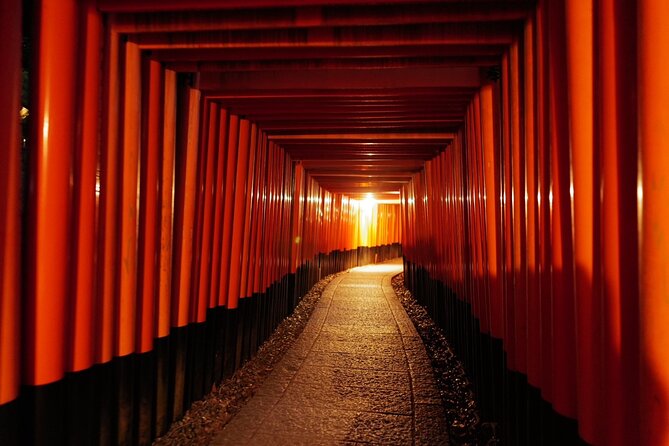
Let’s talk about the big draw: the famous 10,000 torii gates. Even if you know that number, seeing how the gates stack and repeat in a real space does something photos often can’t. The pattern pulls you forward, and the shrine paths feel like they’re guiding you deeper without needing to force it.
At night, the gates can feel more like a corridor of light and shadow. You’ll likely find yourself slowing down for photos, not because the tour pauses constantly, but because the atmosphere invites it. One of the best things about booking a guided walk is that you get help spotting better photo moments without standing around guessing where the “best angle” is.
The tour’s stop is the Fushimi Inari-taisha Shrine, and the experience is centered there. That means you’re not doing a multi-neighborhood marathon. You’re focusing on the main site, with a guide’s commentary that gives the torii gates context instead of leaving you with just visual impressions.
One practical note: because the tour is only about an hour, you should treat it as a smart overview and night-friendly introduction. If you want to wander for longer on your own afterward, you can. But during the guided window, the aim is to hit the highlights and teach you how to read the place as you walk.
What Your Guide Teaches Along the Shrine Paths
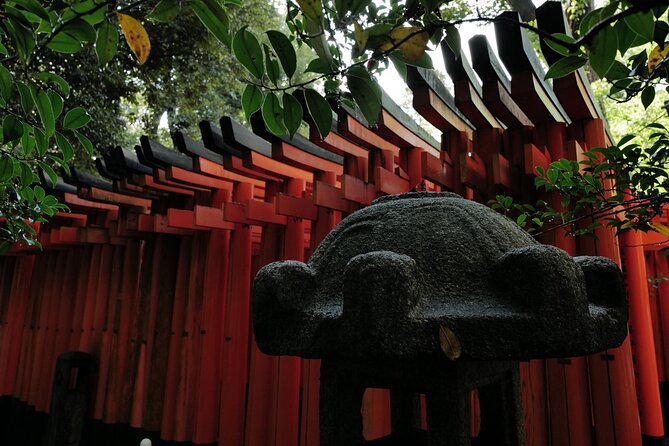
This is where the tour earns its top ratings. The guides don’t just point. They explain. And they keep it conversational, which matters because Fushimi Inari can feel confusing if you only know the torii-gate headline.
Your guide covers several themes as you move through the shrine area:
- The shrine’s deep history and why it matters in Kyoto
- Helpful context on Shintoism vs Buddhism and how people understand the space
- Details that make the experience feel grounded, not like a generic walking tour
That explanation is especially useful because the shrine world is full of symbols and traditions that don’t come with a simple English label. When a guide gives you the meaning behind what you see, your brain stops treating it like random scenery. You start noticing the logic of the place.
The reviews also highlight something important: guides who answer questions well and tailor the walk to what you’re curious about. I’ve seen this style work in Japan because it lets you shift from lecture mode into real travel conversation. If you’re the kind of person who keeps wondering why certain shrines look one way, or why people behave a certain way, this format helps.
You may even get a guide with a strong track record of enthusiastic, patient teaching. In past tours, guides such as Kanami, Mai, Satsuki Morikawa, Moto, and Haruki have stood out for their explanations and for making the walk enjoyable for different ages, including kids and teens. That range matters if your group includes someone who’s not thrilled by “just looking at buildings.”
Photo-ops and Small Details You Can Actually Use
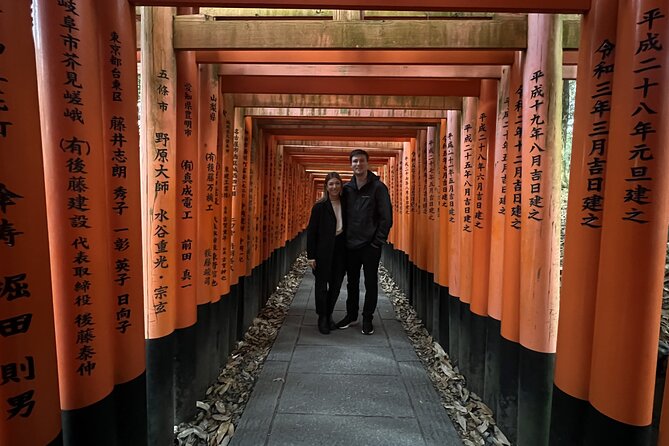
Fushimi Inari is one of those sites where photos can look amazing from many angles, but it’s easy to miss the “why” of a shot. This tour gives you direction without making you feel herded.
In practice, you can expect:
- Guidance on where to pause so your torii frames look better
- Quick cues about how to get photos without blocking others
- A sense of where to stand so you’re not stuck with awkward sightlines
More importantly, the guide’s suggestions can extend beyond the shrine. One review praised a guide for offering transport recommendations around the area, which is exactly the kind of travel help that saves you time later. Even if you already have a plan, these little nudges help you avoid the common Kyoto trap of wandering around a transit hub without a clear next move.
If you plan to keep walking after the tour, go easy on the schedule. Start your evening with this visit, then give yourself buffer time to wander and find your next meal. The tour is short, so you’re not forced into an artificial, back-to-back itinerary.
Time, Pace, and Who This One-Hour Tour Fits Best
This is a 1 hour tour, and that time limit shapes everything. You get enough time to absorb the shrine atmosphere and learn the basics, but it’s not built to satisfy people who want a long, self-paced hike.
Here’s who tends to love this format:
- You want a quick, meaningful activity before or after dinner
- You care about understanding what you’re seeing, not just collecting photos
- You’re visiting for the torii gates and want a smoother, less stressful experience
- You’re traveling with someone who needs the tour to stay moving but still informative
It’s also a good option if you’re doing Kyoto “by neighborhoods” and need a time-efficient plan that doesn’t balloon. Because the group is capped at 15 travelers, it’s not a huge, chaotic mass. That makes the guide’s Q and A style more workable.
The drawback is the same thing that makes it convenient: you won’t have hours to explore every fork and every side path. If that’s what you want, consider using the guided hour as your introduction, then return on your own later when you can linger.
A quieter way to spend a day in Kyoto




Price and Value: Paying $35.93 for One Hour Done Right
At $35.93 per person, the price isn’t “cheap,” but it can feel fair depending on what you value. You’re paying for two things:
- A live English-speaking guide
- A focused, time-efficient visit that gives you context fast
Fushimi Inari itself is free to enter, and the guided time is listed as around an hour. So most of what you’re buying is interpretation, pacing, and the chance to ask questions while you’re actually standing in the space.
Is it worth it if you’re happy with a solo stroll and you already know the shrine basics? Maybe not. You can absolutely walk there on your own. But if you want the place explained and you want to reduce friction, this is the kind of tour that can turn “I saw torii gates” into “I understood what I was seeing.”
The value improves if:
- You want to maximize a single evening window
- You’d rather not spend your limited time googling symbols and history while tired
- You like having someone point out practical photo pauses and movement cues
Also, the small group size (up to 15) matters for value. Larger groups often mean less interaction. Here, you’re more likely to get real answers, not just generic commentary.
Practical Tips Before You Start Your Night Walk
You’ll enjoy this tour more if you plan your evening like a local:
- Wear comfortable shoes. You’ll be walking during the hour, and you’ll want a stable stance for photos.
- Bring a layer. Night air can feel cooler than you expect, especially in Kyoto.
- Have dinner timing in mind. Because this starts at 5:00 pm, you’ll want a plan that doesn’t force you to rush.
Also, think about what you want from the hour. If your goal is “torii photos and basics,” you’re set. If your goal is “I want to follow every path and stay for a long exploration,” you’ll probably want to add extra time after the tour.
Finally, show up a little early at the meeting point. Meeting in front of Daily Yamazaki by the JR Inari Station exit is straightforward, but Kyoto evenings can make you feel rushed even when everything is easy.
Should You Book This Fushimi Inari Night Walking Tour?
I’d recommend booking this tour if you want a smart, guided introduction to Fushimi Inari that fits neatly into an evening schedule. The strongest reason is the combination of night timing plus clear explanation, delivered by guides who have a track record of making the walk enjoyable and question-friendly. If you love torii gates but also want meaning behind what you’re seeing, this tour is a very efficient way to get there.
Skip it if you already know the shrine well and you prefer to wander independently without any guidance. Also consider skipping if you specifically want a long, self-paced exploration that takes more than an hour. In that case, you can still enjoy the shrine on your own, and then use your time elsewhere for deeper freeform walking.
If you’re somewhere in between, use this hour as your anchor. It sets the tone for the rest of your Kyoto evenings, and it helps you leave with a better sense of what you just experienced.
FAQ
Where is the meeting point for the Kyoto Fushimi Inari Night Walking Tour?
You meet at the exit of JR Inari Station. After exiting, turn left, and look for the Daily Yamazaki convenience store. The tour meets in front of that store.
What time does the tour start?
The start time is 5:00 pm.
How long is the tour?
The tour lasts about 1 hour.
Is admission included for Fushimi Inari-taisha Shrine?
Yes. Admission Ticket is free for the shrine as part of the tour.
What is included in the tour price?
The tour includes an English-speaking guide and about 1 hour of guided time at Fushimi Inari Shrine.
Are food and drinks included?
No. Food and drinks are not included.
How many people are in the group?
The tour has a maximum of 15 travelers.
Is hotel pickup included?
No. Hotel pickup is not included.
Can I get a full refund if I cancel?
Yes. You can cancel up to 24 hours in advance for a full refund. If you cancel less than 24 hours before the start time, the amount paid is not refunded.
More Walking Tours in Kyoto


New This Season
- Koyasan Day Trip by Private Car from Kyoto
- Old Port Town and Ultimate Sake Tasting Private Tour From Kyoto
- Kyoto’s Timeless Charm: 3hr Exploration of History and Peace
- Kyoto: 5 Types of Sushi Making
- Sacred Peak & Ancient Paths: Kurama-Kibune Hiking Experience
- Kyoto: Exclusive ZEN practice at Manpukuji temple in Uji
- Kyoto: Private Seasonal Aroma Yoga Class
- Traversing Kyoto’s Scenic West – Arashiyama to Kinkakuji
Fushimi Inari Shrine Walks, compared.

Fushimi Inari, Kinkakuji, Bamboo Grove 1 Day Bus Tour
Read our review →
Fushimi Inari Hidden Hiking Tour (Private Option Available)
Read our review →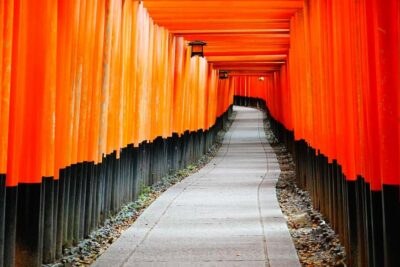
Kinkakuji,Arashiyama,FushimiInariShrine,NaraPark
Read our review →
Nara, Fushimi Inari Taisha, Arashiyama Bus Tour
Read our review →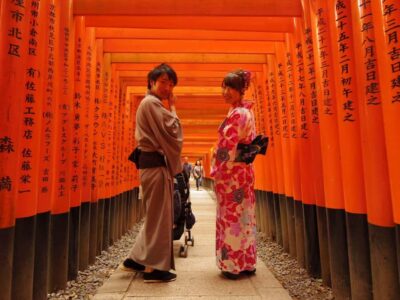
Arashiyama, Nara & Fushimi Inari Shrine w/Lunch
Read our review →
Nijo Castle, Kiyomizu & Fushimi Inari Guided Tour
Read our review →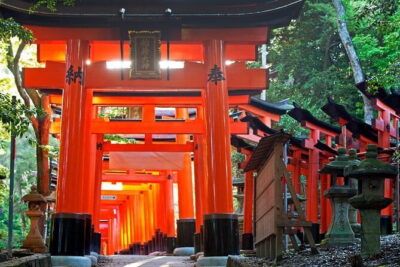
Nijo, Kinkaku-ji, Arashiyama, Kiyomizu & Fushimi Inari
Read our review →