Reviewed · FUSHIMI INARI SHRINE WALKS
Kyoto: Fushimi Inari Night Walking Tour with Guide
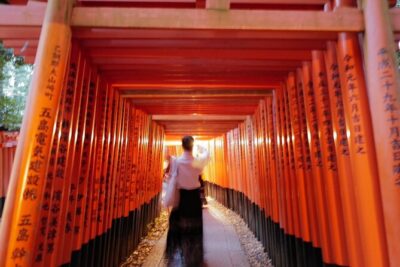
Torii gates feel totally different at night. I love the uncrowded lantern-lit route and how the guide ties Shinto meaning to what you are seeing. The only drawback: the tour focuses on the lower and middle sections, not the full mountain hike.
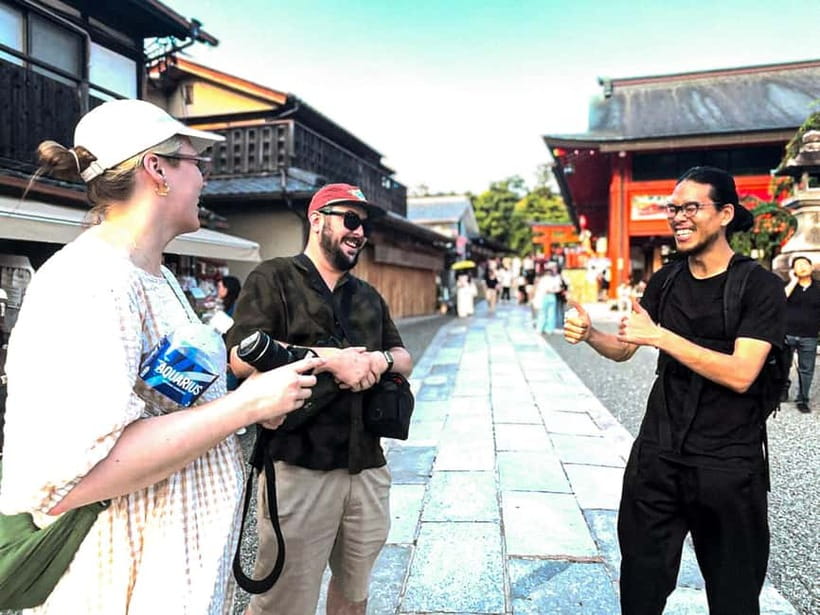
You meet your guide right at JR Inari Station, at the ticket gate, and this makes the start stress-free. The experience is built for a small group, capped at 10, with a professionally trained local who can explain shrine traditions in clear English. That setup is ideal if you want your time to feel guided, not like you are just following a crowd.
My favorite part is the atmosphere shift, twilight to night, when lanterns soften the red torii and shrine buildings. You also get structured photo and quiet stops, plus Q&A that can go in the direction you care about, from ritual basics to everyday Japanese customs. And because it is a two-hour plan, it works well even if you are juggling other Kyoto sights.
In This Review
- Key Things to Know Before You Go
- Finding Your Guide at JR Inari Station, the Easiest Start in Kyoto
- Fushimi Inari Taisha After Dark: Lantern Light Changes Everything
- The Senbon Torii Walk: What You’ll See, and What You Skip
- What the Guide Explains About Shinto, Rituals, and Torii Meaning
- Photo Time That Actually Fits the Schedule
- How the 2 Hours Feel: Pace, Group Size, and Real Value
- Languages and How Flexible This Tour Can Be
- Season Reality: Sunset Timing and a Winter Day Option
- Who Should Book This Night Walk (and Who Might Pass)
- My Booking Advice: Should You Choose This Tour or DIY?
- FAQ
- Where is the meeting point?
- How long is the tour?
- How much does it cost?
- What part of Fushimi Inari does the tour cover?
- Is the tour a small group?
- What languages are available?
- What should I bring?
- Are food and drinks included?
- Can I contact the guide before the tour?
- Is there a winter daytime option?
Key Things to Know Before You Go
- Meet at JR Inari Station ticket gate so you can find your group fast
- Night focus at Fushimi Inari Taisha with a calmer, lantern-lit feel than daytime
- Walk part of the Senbon Torii while skipping the full climb up the mountain
- Symbol and ritual explanations so the torii gates and shrine customs make sense
- Small group size up to 10 for easier questions and a more personal pace
- Time for photos and quiet reflection built into the route
Finding Your Guide at JR Inari Station, the Easiest Start in Kyoto
Your tour meeting point is the ticket gate at JR Inari Station. The good news is simple: there is only one ticket gate at the station, so it is hard to get lost. Show up a few minutes early, then get your smartphone ready since you may need to contact the guide in advance.
The operator asks you to have WhatsApp or SMS available for contact before the tour. That matters because in real life, train delays and timing slip-ups happen. Having the messaging app or phone ready helps you avoid the awkward wait.
This tour is also set up for a quick handoff from transit to shrine walking. You are not spending your precious “Kyoto night” figuring out logistics. If you are doing other stuff earlier in Kyoto, this clean start is a big part of the value.
Fushimi Inari Taisha After Dark: Lantern Light Changes Everything
This is a night walking tour, designed around that twilight-to-evening glow. During the season the tour notes, sunset is around 6:00 PM, which puts you in the right window for soft, evening light. Expect the vermillion torii gates and shrine buildings to look gentler than they do in harsh daylight.
I like that the tour leans into the quieter, more intimate feeling of Fushimi Inari at night. You get fewer people competing for space and a more spiritual, slower rhythm. That is the kind of setting where you can actually read the meanings behind what you are seeing, instead of rushing past.
Also, this is not a “stand still and listen” event. The lantern-lit atmosphere is meant to pair with walking through the shrine area. It feels like Kyoto, not a theme-park version of Kyoto.
Still climbing through the orange gates?
- Kyoto: Fushimi Inari, Kinkakuji, Bamboo Grove 1 Day Bus Tour
★ 4.8 · 4,316 reviews - Fushimi Inari Hidden Hiking Tour (Private Option Available)
★ 5.0 · 1,750 reviews - Osaka/Kyoto:Kinkakuji,Arashiyama,FushimiInariShrine,NaraPark
★ 4.1 · 1,596 reviews - Kyoto/Osaka: Nara, Fushimi Inari Taisha, Arashiyama Bus Tour
★ 4.7 · 1,275 reviews
The Senbon Torii Walk: What You’ll See, and What You Skip
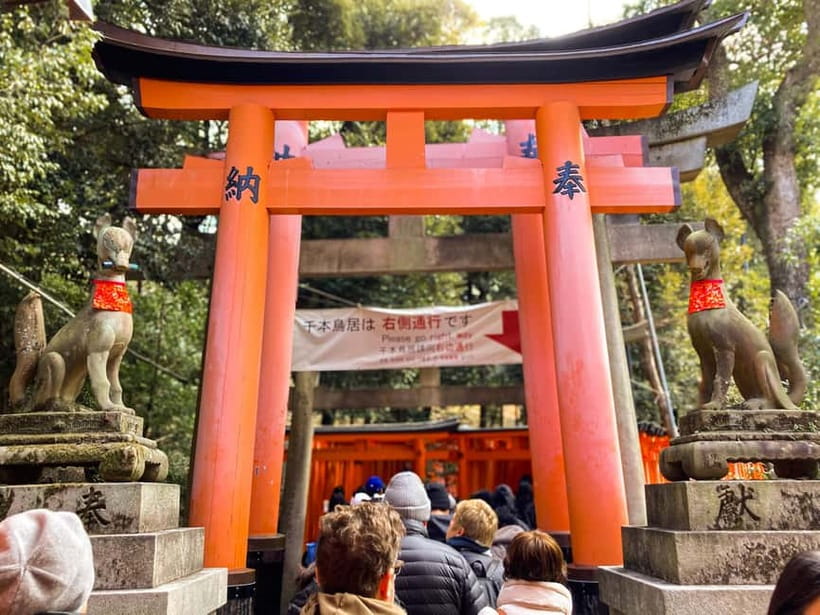
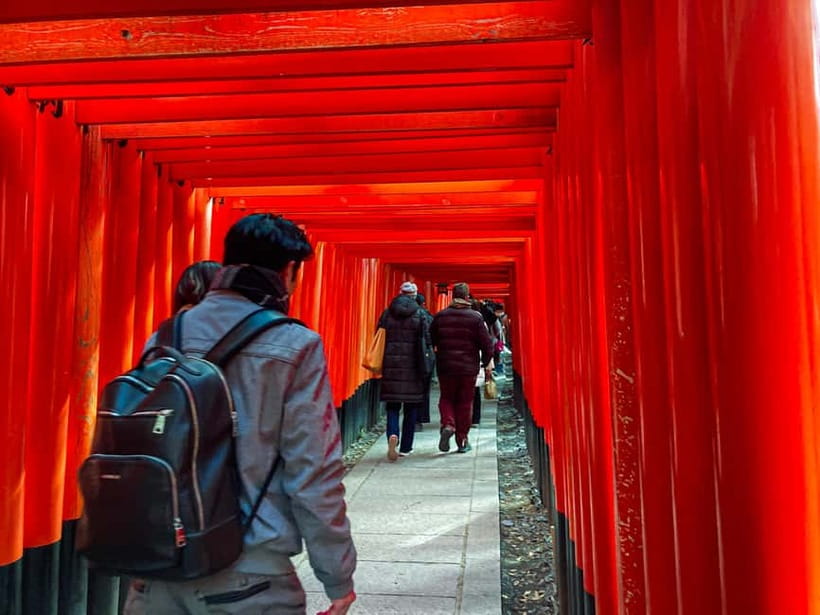
You will walk through part of the famous Senbon Torii, the stretch of torii gates people call the thousand torii. The tour focuses on the lower and middle sections, so you get the iconic feel without committing to the full mountain climb.
That choice is practical. The route is long enough to deliver the magic, but short enough to fit neatly into a two-hour plan. It is also a good match for people who want the sights and symbolism, not a strenuous hike.
The guide also routes you through quieter, scenic stretches away from heavier crowd areas. You should still expect crowds to exist at Fushimi Inari, since it is one of Kyoto’s most famous stops, but this tour’s timing and routing aim to keep your experience calmer.
At key spots, you get free time for photography or quiet reflection. That balance is important at Fushimi Inari because the torii are visually dramatic, and you will want a moment to pause, reframe your shot, and just look.
What the Guide Explains About Shinto, Rituals, and Torii Meaning
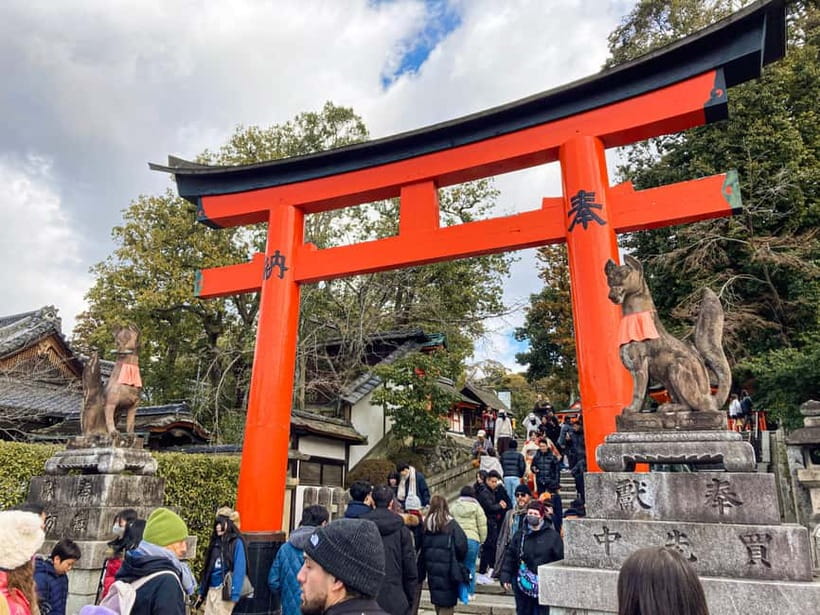
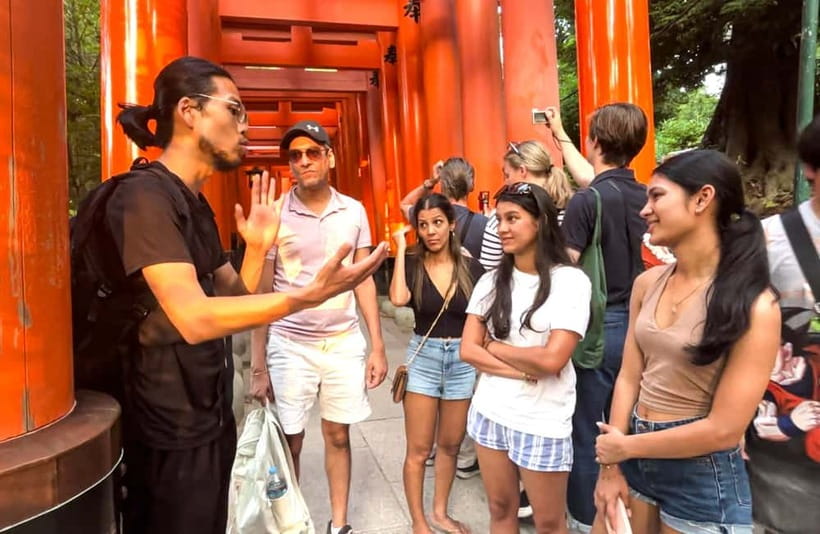
This tour is not just moving you through photo angles. The guide brings cultural context, specifically about Shinto shrines, shrine rituals, and Japanese spirituality.
The guides are local professionals with formal training in tourism and Japanese culture. They also have expertise in Japan’s religious traditions, including Shinto shrines, and related religious and historical customs. That matters because Fushimi Inari is not only architecture, it is a sacred place with practices that shape how people behave there.
You also get interpretation of symbolic architecture and torii gate meanings. In plain terms, you learn what the gates represent and why the place is treated with respect. That makes your walk feel purposeful instead of repetitive.
The Q&A is tailored to what you care about. Some people want practical cultural differences, like how shrine rituals relate to everyday Japanese life. Others want the deeper meaning behind what you see. Either way, the tour is built like a conversation, not a script.
And if you end up with a guide like Goku, you may find the explanations come through in a very human, chat-friendly way, including discussion beyond the shrine itself. If your guide is Kate, expect a similarly thoughtful approach, with attention to the details that make the evening choice feel worth it.
Photo Time That Actually Fits the Schedule
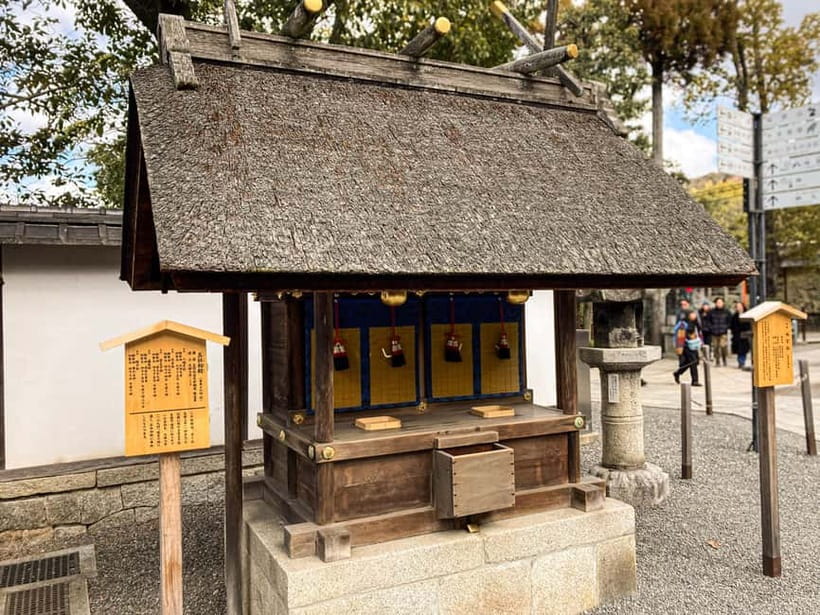
If you care about photos, the timing is a big deal. Lanterns cast a softer glow on the red torii, which usually means more flattering light for smartphone shots than midday glare. You also get dedicated moments to stop and take pictures rather than squeezing photos between constant movement.
The tour includes free time for quiet reflection or photography at key points. I like that it is not treated like an afterthought. In a famous place, photo time often gets swallowed by crowd control. Here, it is planned, so you can actually use it.
Bring a charged smartphone, since you will likely be shooting a lot. The tour specifically calls this out, which usually means the operator expects you to rely on your own camera rather than waiting for someone else’s photos.
You do not have to be a pro to get good results. The combination of evening light, repeating torii lines, and the calmer pace makes it easier to frame your shots without rushing.
How the 2 Hours Feel: Pace, Group Size, and Real Value
The full tour duration is 2 hours, with about 1.5 hours guided at Fushimi Inari Taisha. That pacing is a sweet spot. You get enough time to experience the shrine atmosphere at night, walk through a meaningful chunk of the torii route, and still return to JR Inari without feeling like your evening is gone.
The small group limit, up to 10 participants, is not just a marketing line. It affects how the tour works in real life. It is easier to ask questions, hear explanations, and keep your orientation during the walking parts.
At $38 per person, you are paying for more than entry-level sightseeing. What you get is an English-speaking professional guide, in-depth cultural explanations, historical insights, insider tips, and a Q&A that can adjust to your interests. If you go on your own, you might see the torii, but you will miss the meaning and the small customs that a good guide points out.
One more value angle: the tour includes optional assistance with post-tour recommendations, like where to eat or what to do nearby. That is helpful when you are tired, and your next Kyoto move matters.
A quieter way to spend a day in Kyoto




Languages and How Flexible This Tour Can Be
By default, tours run in English. If you want another language, you can request a French, Spanish, Russian, or Portuguese-speaking guide depending on availability.
Language matters a lot for a shrine tour. When you can understand the why behind the torii and rituals, it clicks faster. You also get better Q&A, since the guide can answer questions directly instead of working around translation gaps.
This is also a good choice if you are traveling with friends of different language comfort levels. You can often match the tour language to your group rather than relying on basic phrasebook explanations.
Season Reality: Sunset Timing and a Winter Day Option
This tour is built around evening timing. It notes that sunset in the season is around 6:00 PM, which helps you understand why the torii and shrine buildings glow at the right moment.
Also, the operator offers a daytime option during winter months. That matters if you visit when evenings get short or lighting feels less favorable. It is a built-in adjustment, not a last-minute workaround.
Practical takeaway: pick the version that matches your comfort with timing. If you love night atmospheres and lantern light, choose the evening slot. If winter daylight is a better fit for your schedule, take the daytime option.
Who Should Book This Night Walk (and Who Might Pass)
You should book this tour if you want iconic Kyoto scenery with context. It is ideal for first-timers to Fushimi Inari who want the story behind the gates, not just a photo reel. It is also a strong fit if you like asking questions, since the tour includes Q&A tailored to your interests.
I would also recommend it if you prefer a calmer walk. The tour is designed to help you enjoy the setting with quieter routes and built-in moments for reflection and photography.
You might pass if your top goal is the full climb up the mountain. This experience focuses on the lower and middle sections, so it is not the right pick for people who want to go all the way upward.
My Booking Advice: Should You Choose This Tour or DIY?
If you are aiming for a meaningful Fushimi Inari visit in a limited amount of time, this is a solid booking. The price makes sense when you count what is included: a trained local guide, cultural and historical explanations, torii symbolism, small-group pacing, and planned photo and quiet stops. You also get help with what to do after, which is a real benefit on travel days.
Choose this tour rather than DIY if you care about understanding Shinto rituals and why the gates matter. Choose DIY only if you already know what you want to learn, and you are comfortable navigating the site without interpretation.
Bottom line: for $38 and a two-hour plan, you are buying a guided night experience that turns Fushimi Inari from a must-see spot into something you understand.
FAQ
Where is the meeting point?
The meeting point is the ticket gate at JR Inari Station, and it is the only ticket gate at the station.
How long is the tour?
The tour lasts 2 hours total, with a guided visit at Fushimi Inari Taisha of about 1.5 hours.
How much does it cost?
It costs $38 per person.
What part of Fushimi Inari does the tour cover?
The tour focuses on the lower and middle sections of Fushimi Inari, not the entire mountain.
Is the tour a small group?
Yes. The group is limited to 10 participants.
What languages are available?
English is the default. Depending on availability, guides may be available in French, Spanish, Russian, or Portuguese.
What should I bring?
Wear comfortable shoes and bring a charged smartphone.
Are food and drinks included?
No. Food and drinks are not included.
Can I contact the guide before the tour?
Yes. You should have WhatsApp or SMS available so the guide can contact you prior to the tour.
Is there a winter daytime option?
Yes. For winter months, a daytime option is available.
More Walking Tours in Kyoto


New This Season
- Koyasan Day Trip by Private Car from Kyoto
- Old Port Town and Ultimate Sake Tasting Private Tour From Kyoto
- Kyoto’s Timeless Charm: 3hr Exploration of History and Peace
- Kyoto: 5 Types of Sushi Making
- Sacred Peak & Ancient Paths: Kurama-Kibune Hiking Experience
- Kyoto: Exclusive ZEN practice at Manpukuji temple in Uji
- Kyoto: Private Seasonal Aroma Yoga Class
- Traversing Kyoto’s Scenic West – Arashiyama to Kinkakuji
Fushimi Inari Shrine Walks, compared.

Fushimi Inari, Kinkakuji, Bamboo Grove 1 Day Bus Tour
Read our review →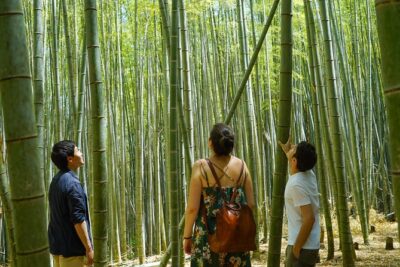
Fushimi Inari Hidden Hiking Tour (Private Option Available)
Read our review →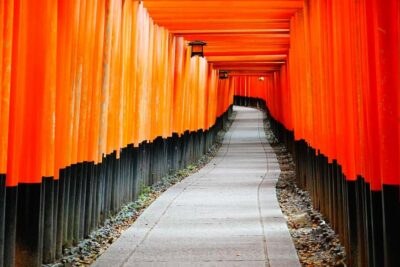
Kinkakuji,Arashiyama,FushimiInariShrine,NaraPark
Read our review →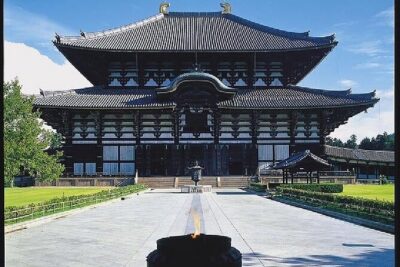
Nara, Fushimi Inari Taisha, Arashiyama Bus Tour
Read our review →
Arashiyama, Nara & Fushimi Inari Shrine w/Lunch
Read our review →
Nijo Castle, Kiyomizu & Fushimi Inari Guided Tour
Read our review →
Nijo, Kinkaku-ji, Arashiyama, Kiyomizu & Fushimi Inari
Read our review →