
Reviewed · KIMONO & YUKATA RENTALS
Kyoto: Handmade Japanese Paper Kimono Doll Making Experience
Washi paper turns into something you can hold. I love the way this workshop fits two crafts into 90 minutes, letting you choose between a bookmark, charm pouch, or washi notebook before you start. I also like the calm Japanese atmosphere, with a borrowed haori plus tea and Japanese sweets while you work.
One practical thing to plan for, there is no hotel transfer, so you will need to get yourself to the Urban Hotel Kyoto-Nijo Premiam meeting point.
In This Review
- Key highlights to know before you go
- Kyoto paper craft in 90 minutes: what you actually do
- Step 1, pick your craft: bookmark, charm pouch, or washi notebook
- Step 2, choose your pattern from washi and origami options
- Step 3, the Hanahime tutorial: your technique foundation
- Step 4, make your second craft with friendly specialists
- The haori, tea, and Japanese sweets part you should not skip
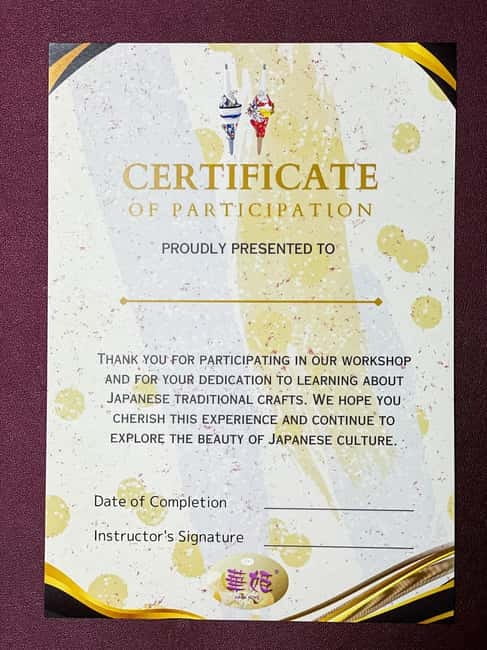
- Certificate of completion and a handmade souvenir, what you take home
- Who this Kyoto workshop suits best
- Price and value: is $76 per person worth it?
- Meeting point at Urban Hotel Kyoto-Nijo Premiam: plan your arrival
- What stood out in the experience quality
- Should you book this Kyoto washi and Hanahime workshop?
- FAQ
- What crafts can I make in this workshop?
- How long is the experience?
- Is tea and snacks included?
- Will I receive a certificate and a souvenir?
- Where is the meeting point?
- Is hotel transfer included?
Key highlights to know before you go
- Two handmade souvenirs in one short session: you make Hanahime plus a second craft from your chosen paper item
- Choose your craft and your paper pattern: bookmark, charm pouch, or washi notebook, then patterns from washi and origami options
- Haori on loan during the workshop: it is a small detail that makes the whole experience feel more like Kyoto
- Tea and Japanese sweets included: you get a proper break built into the flow, not just at the end
- Patient instruction in English and Japanese: instructor support like Ruri Ito is specifically praised for being kind and steady
- You leave with proof and keepsakes: you receive a certificate of completion plus a handmade souvenir
Kyoto paper craft in 90 minutes: what you actually do
This is a hands-on Kyoto workshop built for people who want more than a photo and more than a quick shopping stop. In about 90 minutes, you work through a structured sequence that starts with choosing your craft, then moves into a tutorial on Hanahime, and ends with you creating your second item with help from specialists.
The workshop also leans into atmosphere. You can wear a haori during the session, and you get tea and traditional sweets as part of the experience. It turns a paper craft into something you can slow down for, even though the clock is moving.
The promise here is not you becoming an expert in washi. It is you walking out with two handmade pieces that look intentional and giftable, and the skills to appreciate why Japanese paper crafts look so clean and satisfying.
Step 1, pick your craft: bookmark, charm pouch, or washi notebook
Right at the start, you choose one craft from the samples. Your options are:
- a bookmark
- a charm pouch
- a washi notebook
This choice matters more than it sounds. Each item has a different “look and purpose,” and the final piece feels different in your hands.
A bookmark is ideal if you want something light and practical you will actually use on your trip and afterward. A charm pouch feels more personal and gift-like because it is small and symbolic. A washi notebook is the most useful for daily life, especially for travelers who like journaling in Kyoto.
You also get to pick patterns from washi and origami options after your craft choice. That means you are not stuck with one design. You can pick what fits your taste, and that helps the final souvenir feel like it came from you, not a factory.
Make something with a Kyoto craftsman
- Authentic knife making experience at a blacksmith in Kyoto
★ 4.8 · 350 reviews - Kyoto: Calligraphy class at Buddhist temple in city center
★ 5.0 · 167 reviews - Roketsu dyeing experience: M course Roketsu Dyeing Experience
★ 5.0 · 163 reviews - Kyoto: Japanese Calligraphy Class
★ 4.8 · 89 reviews
Step 2, choose your pattern from washi and origami options
After choosing your craft, you move to selecting a pattern. The workshop offers a variety of washi papers and origami choices, so you can match the look to your personality or to what you want to remember from Kyoto.
This is one of the best parts for first-timers. Paper crafts can feel intimidating when you do not know what choices exist. Here, the selection happens early, so you can feel invested right away, before any folding or assembly begins.
Practical tip: if you have a strong preference, decide your pattern early. It keeps you from second-guessing later when the workshop pace picks up.
Step 3, the Hanahime tutorial: your technique foundation
Next comes the tutorial on how to make Hanahime. The workshop sequence makes this the skill anchor. You learn the method step-by-step, guided by the instructor, and you get enough structure to avoid the typical beginner problem: making something that looks uneven because you did not know which detail mattered.
While you are learning, focus on the small technique cues you are given. Paper crafts often hinge on alignment, careful handling, and pacing more than fancy tools. If you get the tutorial steps right, your final paper items usually look dramatically better.
This is also where you see why the experience is positioned as a kimono doll making experience. The Hanahime portion is the “character” of the workshop. It is what gives the session its identity, not just generic paper folding.
Step 4, make your second craft with friendly specialists
After the Hanahime tutorial, you create the other craft you chose. In practice, this is where the workshop becomes personal, because you are shaping the souvenir that will live on your shelf or get tucked into a gift bag.
The workshop states you will work with friendly specialists. That matters for a 90-minute session. You do not want to struggle silently, especially if you are crafting while your hands are learning. Specialist help keeps you moving at a good pace and helps you avoid the common end-of-class panic where you realize you are missing a step.
Time-wise, this setup is smart. You get a foundation first, then you apply it immediately to a second piece. That rhythm keeps beginners engaged, and it also helps experienced crafters stay interested without feeling stalled.
The haori, tea, and Japanese sweets part you should not skip
Yes, this is a paper craft class. But the experience is also designed as a small slice of Kyoto daily life.
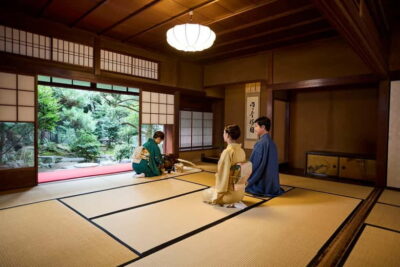
You can wear your favorite haori during the workshop. It is optional, but it is one of those details that quietly changes how the whole session feels. Sitting down to craft with a borrowed layer that matches the mood makes the work feel like a tradition, not a task.
Then you get tea and Japanese sweets. This is not just “snacks included” as a checkbox. It is built into the pacing of the session, so you get a real break while the instructor guides you through the next steps. It also makes the class more social and comfortable, especially for people who are doing this with family or friends.
If you are traveling with kids, this is a big reason the workshop can feel easygoing instead of strict. Kids often stay calmer when there is a clear rhythm and a break.
Walk the old streets in kimono


Certificate of completion and a handmade souvenir, what you take home
At the end, you receive a certificate of completion. You also take home a handmade souvenir made during the workshop.
This part is not small. For many visitors, paper crafts can feel like “something I made” but not always something that feels official or memorable. A certificate turns the activity into a keepsake you can keep with your photos and travel notes. The handmade souvenir gives you an item that is both decorative and personal.
Also, because the workshop includes materials and you finish with a completed piece, you do not have to worry about finding paper supplies later in Kyoto. You get the full experience inside the workshop walls.
Who this Kyoto workshop suits best
This experience fits a wide range of visitors:
- First-time crafters who want guidance and structure
- People who want two souvenirs in one go without spending half a day
- Individuals or groups, since the workshop supports both
- Families with children, since children can enjoy and participate
- Anyone who likes gift-making, since the goal is a one-of-a-kind handmade item you can give to someone you care about
The biggest factor is time. 90 minutes is long enough to learn and finish something real, but short enough that you can still enjoy other Kyoto activities the same day.
If you love crafting but hate feeling rushed, plan your day with buffer time. The workshop itself runs for the full 90 minutes, and you will want to arrive ready, not breathless.
Price and value: is $76 per person worth it?
The price is $76 per person for a 90-minute workshop.
For value, I look at what you get besides the instruction. Here, you get:
- materials needed for the workshop
- experience making two crafts
- tea and snacks
- a haori available for use
- a certificate of completion
- a handmade souvenir
That is a lot packed into a short window. If you were to buy comparable craft materials in Japan, plus pay for guided help, plus account for your time to pick supplies, this price starts to feel reasonable.
The only cost is your travel to the meeting point, since hotel transfer is not included. So the value is strongest if you are already near Kyoto-Nijo or you are comfortable getting yourself there with local transport.
Meeting point at Urban Hotel Kyoto-Nijo Premiam: plan your arrival
The venue is listed as the Urban Hotel Kyoto-Nijo Premiam. That is your main logistics detail.
Because transfers are not included, I suggest building a little extra time before the start. Hotel meeting points can be easy to miss if you arrive late, and you want to settle in, choose your craft, and start promptly.
If you are going as a group, decide in advance who is responsible for confirming the correct entrance or floor. That little bit of coordination saves stress.
What stood out in the experience quality
The strongest praise is about the teaching style. In this workshop, instruction comes through as patient, calm, and friendly, and that is essential for paper crafts where a small mistake can throw off the final look.
There is also a clear emphasis on learning in a short time and finishing pieces that feel beautiful and special. One standout detail is that an instructor named Ruri Ito is specifically credited with being lovely and patient, and with helping both an adult and a child learn the process quickly.
That matters because it signals what you should expect inside the room: you are not expected to already know the craft.
Should you book this Kyoto washi and Hanahime workshop?
I would book it if you want a hands-on Kyoto souvenir that you personally create in a structured 90-minute session, with tea and sweets, and the option to wear a haori while you work. It is also a great pick if you are traveling with kids or if you want something giftable that is not just another magnet.
Skip it only if you are looking for a long, deep multi-session course, or if you strongly prefer being picked up by the tour. Since hotel transfer is not included, your day needs to work with the Urban Hotel Kyoto-Nijo Premiam meeting point.
If your schedule can handle that, this workshop is one of those practical “Kyoto you can take home” experiences, where the end result is both pretty and meaningful because it is genuinely handmade.
FAQ
What crafts can I make in this workshop?
You can choose one craft from these samples: a bookmark, a charm pouch, or a washi notebook. The workshop also includes a tutorial on Hanahime, and you will make two crafts total.
How long is the experience?
The workshop lasts 90 minutes.
Is tea and snacks included?
Yes. Tea and snacks are provided during the workshop.
Will I receive a certificate and a souvenir?
Yes. You get a certificate of completion, and you also receive a handmade souvenir from the instructor.
Where is the meeting point?
The venue is Urban Hotel Kyoto-Nijo Premiam.
Is hotel transfer included?
No. Hotel transfer is not included.
New This Season
- Koyasan Day Trip by Private Car from Kyoto
- Old Port Town and Ultimate Sake Tasting Private Tour From Kyoto
- Kyoto’s Timeless Charm: 3hr Exploration of History and Peace
- Kyoto: 5 Types of Sushi Making
- Sacred Peak & Ancient Paths: Kurama-Kibune Hiking Experience
- Kyoto: Exclusive ZEN practice at Manpukuji temple in Uji
- Kyoto: Private Seasonal Aroma Yoga Class
- Traversing Kyoto’s Scenic West – Arashiyama to Kinkakuji
Kimono & Yukata Rentals, compared.
Kimono Tea Ceremony at Kyoto Maikoya, NISHIKI
Read our review →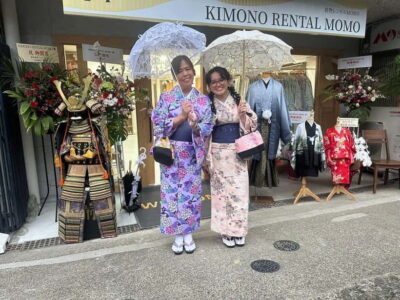
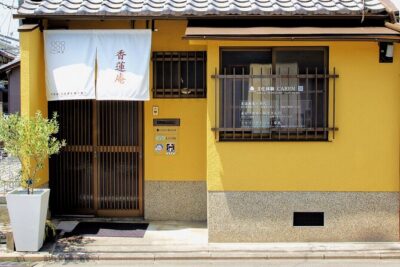
KYOTO Tea Ceremony with kimono near by Imamiya Jinjya Shrine
Read our review →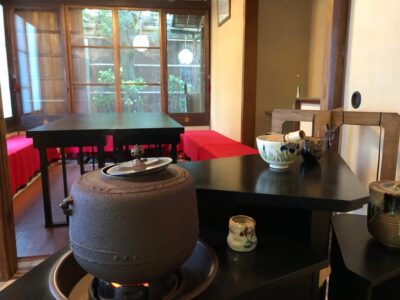
Kimono and Tea Ceremony Experience at Cultural Asset
Read our review →
Family-Friendly Kimono & Yukata Experience at WARGO
Read our review →Also filed under