
Reviewed · ARTISAN CRAFT WORKSHOPS
Kyoto: IKEBANA Private Program : enjoy the view of Kyoto!
Stepping from a Kyoto shrine into a flower classroom feels quietly special. I like how the session starts with a blessing at Kamigoryo Shrine, then moves into a Japandi-style alcove where you learn ikebana fundamentals without feeling rushed, and you get fresh, seasonal materials and instructor support as you make your own arrangements. One thing to weigh: it is pricey for a 90 minute class, and you cannot take home the vases or vessels, only the flowers you use.
The pace is gentle, structured, and very “do it properly” in the best way. You also get that Kyoto payoff at the end, the rooftop photo with the mountains of Kyoto in the background, including Mount Daimonji.
In This Review
- Key takeaways before you go
- Shrine blessing, then straight to the ikebana lesson
- A 90-minute private class in a Japandi-style alcove
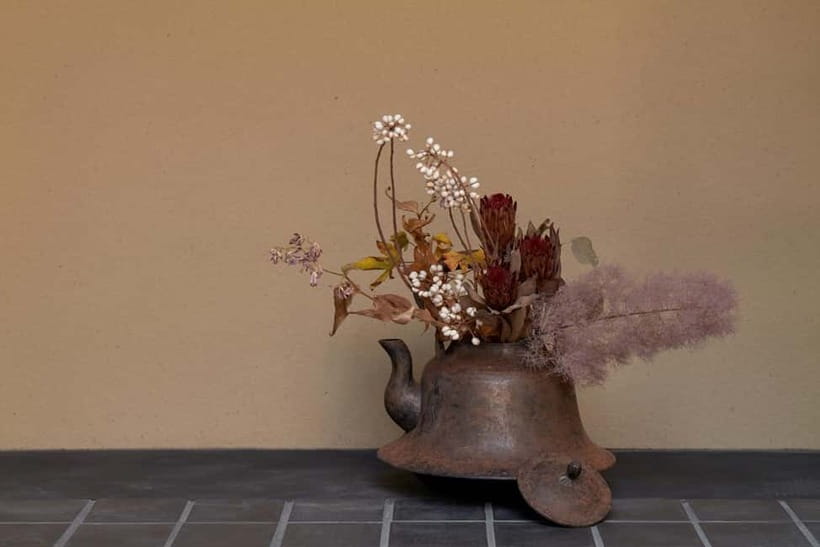
- What you learn in ikebana, from vessel choice to composition
- Antique tools, needle point holder, and making 5 to 6 styles
- Omotenashi in practice: gentle guidance with room to choose
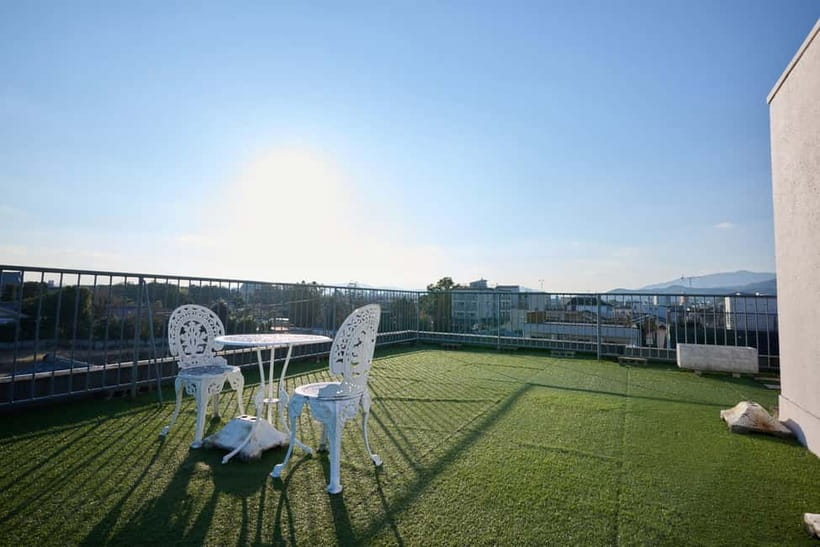
- The rooftop photo with Kyoto mountains and Daimonji
- What you take home (and what you cannot)
- Price and value: is $162 worth 90 minutes?
- Timing it with nearby temples like Shokoji
- Practical tips: clothing, scents, and arriving on time
- Should you book this Kyoto ikebana private program?
- FAQ
- Where do I meet for the Kyoto ikebana private program?
- How long is the experience, and is it private?
- Is the ikebana lesson in English?
- What is included in the price?
- Can I take my ikebana work home?
- Is the tea ceremony included?
- Is it suitable if I have an insect allergy?
Key takeaways before you go
- Shrine blessing first, then you walk to the studio for the lesson
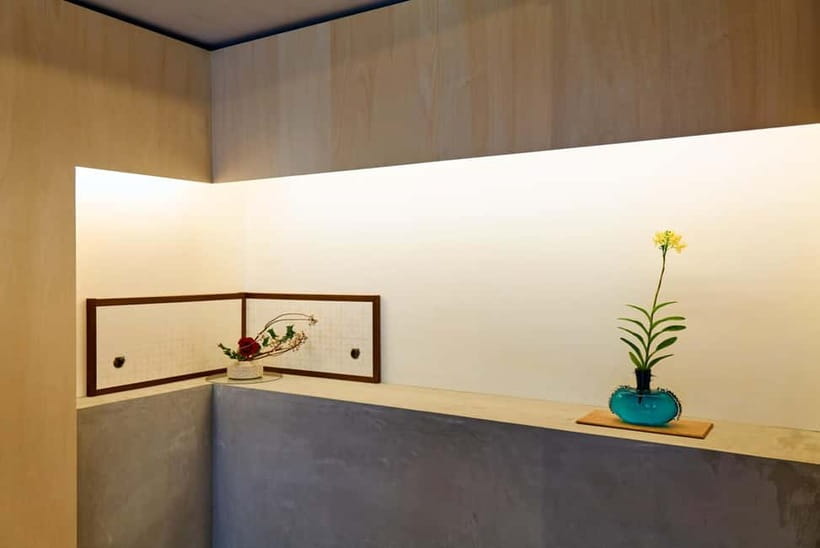
- Japandi-style alcove performance setup, with you sitting while the instructor demonstrates
- Hands-on technique, including how to choose vessels and how ikebana differs from general flower arrangement
- You make multiple styles, 5 to 6 types, using both vases and other tools like a needle point holder and baskets
- Take-home flowers and a bouquet, but not the tools or vessels
- Rooftop commemorative photo with Kyoto mountains and Mount Daimonji visible
Shrine blessing, then straight to the ikebana lesson
This experience starts at Kami Goryo Shrine in Kamigyo-ku, Kyoto. Your meeting point is inside the shrine area near the Ema halls, where you’ll find the large framed emas that are decorated on site.
A nice touch is that you gather for a blessing before walking to the workshop space. It sets the tone: you are not just learning a craft, you are stepping into the idea of respect that goes with Japanese hospitality.
From there, you head to the studio at Micché Kuramaguchi, where the teaching happens on the first floor of the four-story building. The building itself is cream-colored and has bamboo planted along the facade, plus an atelier line at the entrance that helps you find the right spot.
A 90-minute private class in a Japandi-style alcove
Plan for 90 minutes, and think of it as focused, not slow. This is a private group experience, and the lesson is conducted in English, with guidance by licensed instructors.
When you arrive, the setup is modern and calm. I like that you watch the demonstration in a Japandi-style alcove, with everyone sitting on chairs, so it stays orderly and you can actually see what the instructor is doing.
Your hands-on time is then built around that demonstration. You get enough structure to learn the basics, but there is space for your own choices when it is your turn to arrange.
Make something with a Kyoto craftsman
- Authentic knife making experience at a blacksmith in Kyoto
★ 4.8 · 350 reviews - Kyoto: Calligraphy class at Buddhist temple in city center
★ 5.0 · 167 reviews - Roketsu dyeing experience: M course Roketsu Dyeing Experience
★ 5.0 · 163 reviews - Kyoto: Japanese Calligraphy Class
★ 4.8 · 89 reviews
What you learn in ikebana, from vessel choice to composition
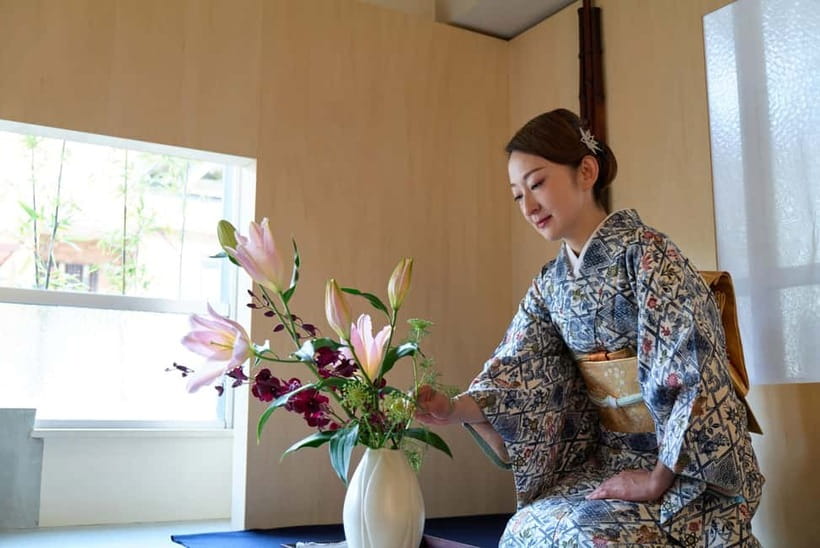
If you want the “how” behind ikebana, this lesson is aimed right at technique. You will learn how to select flower vessels, and you will also hear guidance on how to express the uniqueness of Japan through your arrangement.
A key part is understanding how ikebana principles work, not just copying a pretty picture. You’ll learn differences between ikebana and general flower arrangements, which helps you later if you try this at home.
You also get practical tips on materials, especially what makes a good selection when flowers are fresh and seasonal. One review highlighted advice about choosing fresh, seasonal flowers and the instructor steering you toward strong ceramic options, which is exactly the kind of detail that turns “I made something” into “I learned something.”
Antique tools, needle point holder, and making 5 to 6 styles
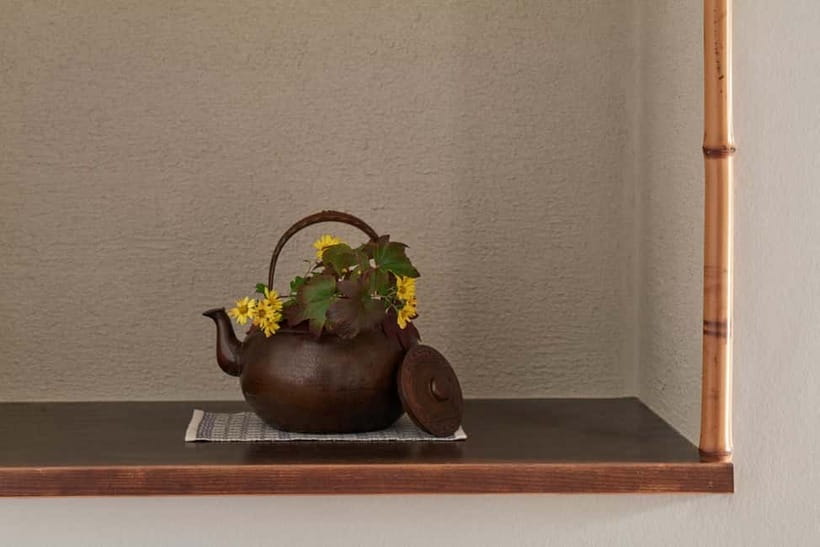
One reason this program feels more complete than many short ikebana workshops is the variety of work you do. You will arrange multiple versions, described as 5 to 6 types of ikebana, rather than a single centerpiece and done.
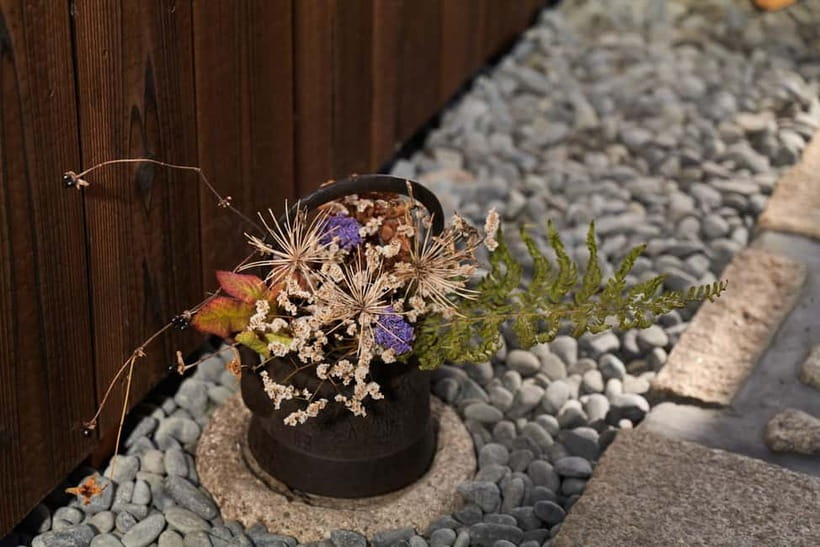
You’ll work with traditional ikebana tools like flower vases and a needle point holder, plus other formats such as arrangements that use baskets. That gives you a broader feel for what ikebana can look like, and it teaches you how structure changes based on container and support.
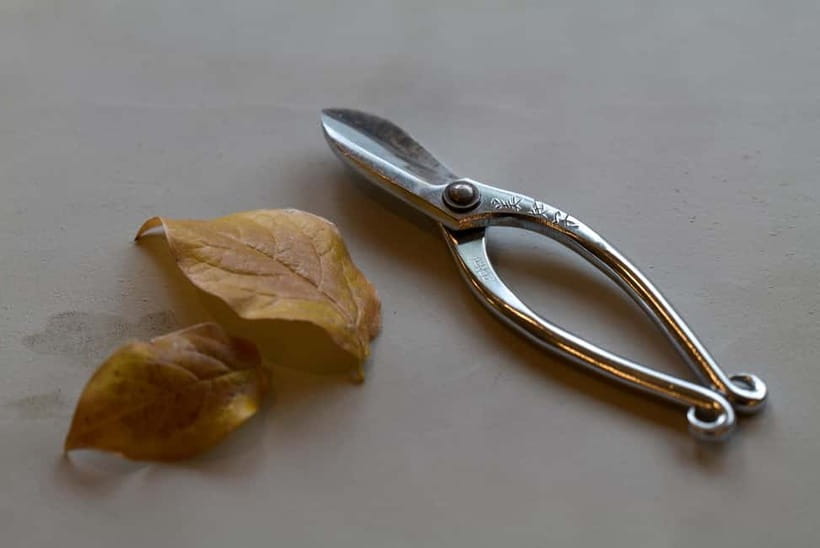
They also use antique tools, which adds a real sense of continuity with the art form. Even if you’re brand new, it helps you understand that ikebana is not just “craft,” it is a discipline where the tools matter.
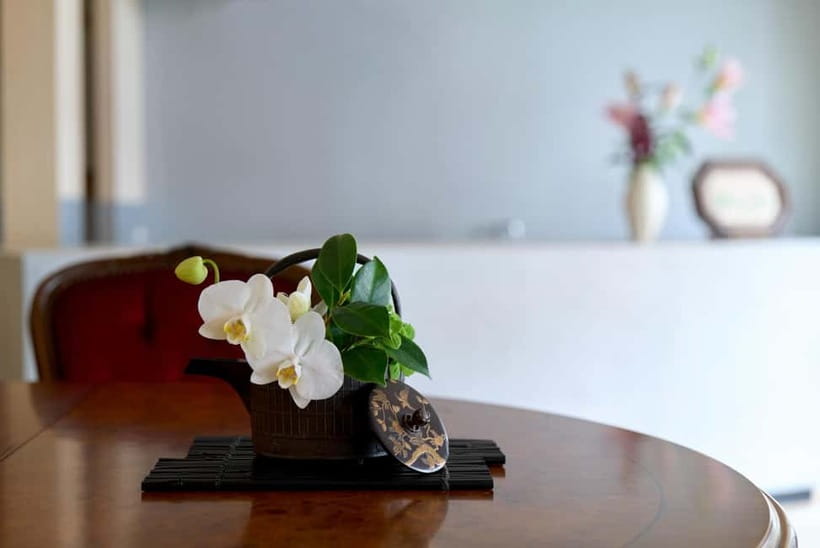
One more detail I appreciate: after you finish your ikebana works, you make a bouquet using the flower materials you used. That adds time for reflection and a satisfying end point, since you are literally packaging your materials into something you can take home.
Omotenashi in practice: gentle guidance with room to choose
Japanese hospitality, or omotenashi, is not explained like a slogan here. It comes through in how the instruction is paced: you watch a demonstration, then you work step-by-step with guidance, while still being allowed to make choices.
In the experience, the instructor provides fundamentals and advice, then lets you shape the arrangement in your own way once you understand the rules. That balance is what makes the class feel gentle instead of intimidating.
There is also a modern side to the teaching space. Micché Kuramaguchi is described as a complex facility that was built about 50 years ago and renovated from a four-story building, with multiple rooms and practical spaces for workshops and practice. So you are not squeezed into a tiny studio, you are in a purpose-built environment designed for creating and learning.
The rooftop photo with Kyoto mountains and Daimonji
Yes, you get a view. After the ikebana portion, you go up to the rooftop for a commemorative photo.
The backdrop matters. The program specifically mentions Mount Daimonji in the scene, along with the mountains of Kyoto. Even if you’ve seen Kyoto viewpoints before, this kind of “finish the lesson, then look out” moment is memorable because it connects craft time to the city around it.
The rooftop at Micché Kuramaguchi is also used for events like tea parties in the sky and summer okuribi in season, which tells you this space is meant to be enjoyed, not just photographed once and forgotten.
A quieter way to spend a day in Kyoto

What you take home (and what you cannot)
This is one of those classes where you leave with real material, not just a photo. The program includes material costs (flowers), and you can take home the flowers you used.
After you arrange and complete your works, the added step of making a bouquet means you get a take-home result that feels intentional, not like leftover stems thrown in a bag.
What you cannot take home is the hardware. You cannot take home tools such as flower vases and vessels. Some items may be sold, but you should assume you are leaving with flowers only unless the instructor tells you otherwise on the day.
Also note: flower scissors and ikebana materials are available for you during the class, so you do not need to bring them.
Price and value: is $162 worth 90 minutes?
At $162 per person for 90 minutes, this is not a bargain workshop. Still, for Kyoto, it can be good value if you care about technique and want real instruction, not just a quick craft.
Here is what you are paying for that raises the value:
- A private group format, which usually means more attention for your questions
- A structured lesson that covers fundamentals, plus vessel selection guidance
- You make multiple ikebana styles (5 to 6 types), not one
- Fresh flowers are provided, and you can take them home
- You get a rooftop photo with a Kyoto mountain backdrop, including Mount Daimonji
Where it might feel expensive:
- You cannot take home the vases or vessels, so you might be tempted to buy additional items if you want a longer-term setup
- If your main goal is a casual souvenir, you may find the instruction-focused approach less satisfying than a simpler workshop
I’d frame it like this: pay for the lesson quality, the technique transfer for later at home, and the take-home flowers. If you want a sampler that also includes tea ceremony, you will need to book something else, since tea ceremony lessons are not included here.
Timing it with nearby temples like Shokoji
The class meets at Kami Goryo Shrine and finishes back at Micché Kuramaguchi with the rooftop photo. That makes it easy to build a short cultural loop around Kyoto’s north and central temple areas.
One helpful review detail: this is right in the neighborhood of Shokoji Temple. If you have time before or after your lesson, I’d consider wandering the Shokoji area and checking out the temple gallery and garden, especially in autumn when the garden is described as quaint but spectacular.
Tip: keep the lesson time sacred. Kyoto traffic and walking routes can be unpredictable, and ikebana setups work best when you arrive at the start.
Practical tips: clothing, scents, and arriving on time
Because you will handle flowers and tools, your clothes might get dirty. If you are sensitive about that, bring an apron or at least something you don’t mind protecting.
Strong fragrances are not allowed, so skip heavy perfume and fragrance sprays, especially indoors. Also, avoid bringing anything sharp or treating this like a DIY art stop, the rules are clear about what is permitted.
For timing, the experience notes a grace period of 30 minutes if you’re unable to arrive at the start time. It is still best to be on time, since the lesson starts after the shrine meeting and blessing segment.
Getting there is straightforward: the nearest station is Kuramaguchi Station on the subway. The shrine is about a 5-minute walk, and Exit 1 is described as the most convenient.
When you reach the shrine, look for the meeting building with large and old paintings on the ceiling. That is identified as the Ema-dokoro, the meeting place.
Should you book this Kyoto ikebana private program?
Book it if:
- You want a real fundamentals lesson in ikebana, not just a quick souvenir
- You like the idea of learning technique, including vessel selection and composition principles
- You enjoy a calm, respectful tone that starts with a shrine blessing
- You want to take home flowers and a bouquet made from what you arranged
Skip it or think twice if:
- You were hoping the vases and vessels would be included for keeps
- You specifically want a tea ceremony lesson, since tea is not included in this program
- Your budget is tight, because this is priced as a guided private cultural class
If you’re the type who wants to understand why Japanese crafts look the way they do, this is a satisfying use of time in Kyoto. You leave with a physical result, plus a better sense of how to keep practicing after you go home.
FAQ
Where do I meet for the Kyoto ikebana private program?
You meet at Kami Goryo Shrine in Kamigyo-ku, Kyoto City. When you arrive, wait at the Ema halls with the large framed emas, and look for the meeting building called Ema-dokoro with large old paintings on the ceiling.
How long is the experience, and is it private?
The program lasts 90 minutes and is offered as a private group.
Is the ikebana lesson in English?
Yes. The instructor is listed as English.
What is included in the price?
Included are the ikebana lesson fee, material costs (flowers), and flower scissors and materials for ikebana.
Can I take my ikebana work home?
You can take home the flowers you used, and you also make a bouquet with the flower materials. You cannot take home tools such as flower vases and vessels (some items may be sold).
Is the tea ceremony included?
No. Tea ceremony lessons are not included in this program.
Is it suitable if I have an insect allergy?
It is noted as not suitable for people with insect allergies.
New This Season
- Koyasan Day Trip by Private Car from Kyoto
- Old Port Town and Ultimate Sake Tasting Private Tour From Kyoto
- Kyoto: 5 Types of Sushi Making
- Sacred Peak & Ancient Paths: Kurama-Kibune Hiking Experience
- Kyoto’s Timeless Charm: 3hr Exploration of History and Peace
- Kyoto: Exclusive ZEN practice at Manpukuji temple in Uji
- Kyoto: Private Seasonal Aroma Yoga Class
- Traversing Kyoto’s Scenic West – Arashiyama to Kinkakuji
Artisan Craft Workshops, compared.
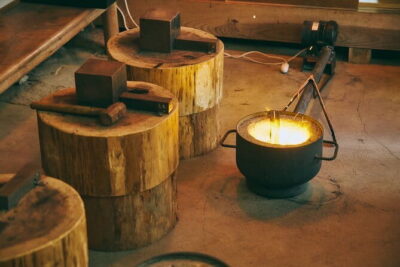
Authentic knife making experience at a blacksmith in Kyoto
Read our review →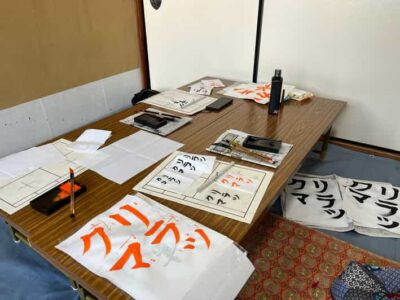
Calligraphy class at Buddhist temple in city center
Read our review →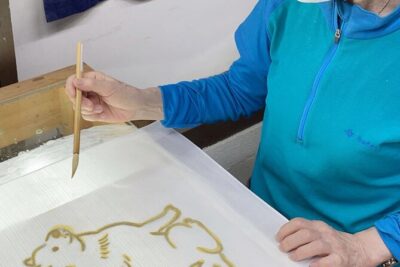
Roketsu dyeing experience: M course Roketsu Dyeing Experience
Read our review →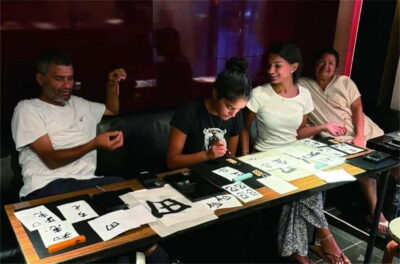

Traditional Japanese Washi Papermaking- Kyoto morning
Read our review →
Also filed under