Reviewed · FUSHIMI INARI SHRINE WALKS
Kyoto Magical Night English Tour: Gion & Fushimi Inari Shrine
Kyoto at night hits different. This English-guided walk strings together Fushimi Inari and Gion in a way that feels easy to follow and special to remember. You get iconic sights, yes, but also the meanings behind them, told while you’re actually walking.
I love two things here. First, the guide level tends to be excellent, with names like Ikki, Yui, Yuri, Yuki, Mariko, and Joi popping up in guest feedback for their clarity and care. Second, you don’t just look, you get professional photos taken during the tour, so you’re not stuck playing photographer while everyone else wanders off.
One caution: this is a real walking tour. You should have moderate fitness and be ready for a fast pace in spots, especially on uneven stone paths and popular uphill areas.
In This Review
- Key things I’d highlight before you go
- Why Kyoto at night feels smarter than daytime
- Getting started near Kawabatacho: meeting point and essentials
- Fushimi Inari after dark: glowing torii gates in one focused hour
- Gion by lantern light: Hanamikoji and the lanes that feel lived-in
- Yasui-Konpiragu: a shrine stop with relationship stakes
- Yasakanoto and Yasaka Pagoda: the scale you notice right away
- Sannenzaka and Ninenzaka: stone steps, old streets, and the Kyoto you wanted
- Nene-no-Michi: the calmer path between temples
- Yasaka Shrine to wrap up: the evening’s final meaning
- Guide quality and photo help: why guests keep naming the same people
- Price and value: what $26.43 really buys you
- Who this tour suits best, and who might want to rethink it
- Practical tips so your night goes smoothly
- Should you book Kyoto Magical Night: Gion and Fushimi Inari?
- FAQ
- How long is the Kyoto Magical Night English Tour?
- Where does the tour start, and where does it end?
- Is this tour mostly walking?
- What does the tour include?
- What is not included in the price?
- Are admission tickets required for the stops?
- Is this tour private?
- Can I cancel and get a full refund?
Key things I’d highlight before you go
- Fushimi Inari at night: glowing torii gates and a calmer vibe than daytime rushes
- Gion after dark: Hanamikoji and Gion lanes with that old-Kyoto feel
- Meaning-focused stops: relationship prayers at Yasui-Konpiragu, plus Yasaka Shrine’s wider network
- Pro photos included: you’ll get help posing and timing shots in low light
- A guide with range: guests mention laminated charts, photo tips, and smooth communication
- Good tour length: about 2.5 hours, enough to feel the city without burning your whole evening
Why Kyoto at night feels smarter than daytime
Night in Kyoto isn’t just a timing choice. It changes the mood of the places themselves. Fushimi Inari’s red gates look extra unreal when the lighting softens and the foot traffic spreads out.
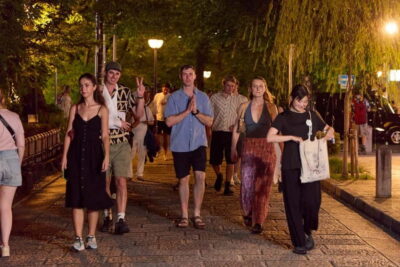
Gion also shifts at night. The streets feel quieter, older, and more “still working,” even if you’re just walking through for an evening. And since the whole route is built around walking, you see the connections between shrines, temples, and neighborhood streets instead of hopping between taxis.
This tour is also a great first-evening option. In about 2.5 hours, you get a compact sense of Higashiyama’s layout, so the next day you’re not playing map roulette.
Getting started near Kawabatacho: meeting point and essentials
You meet at the Statue of Izumo-no-Okuni in Higashiyama Ward, Kawabatacho. The tour ends back at the same meeting point, which makes planning dinner easier.
Two practical things to sort before you head out:
- Bring the right shoes. One review specifically pointed out how much better the experience is with good walking shoes, and the route includes stone-paved lanes.
- Think about small change. A guest suggested bringing coins to make a wish. Since some shrines offer ways to pray and make offerings, having coins ready can save you a small scramble.
The tour uses public transportation, and that part is on you. The listed public transit cost is ¥480 per person. Your guide handles the walk segments and keeps the timing moving, but you’ll still want to have the transit covered.
Still climbing through the orange gates?
- Kyoto: Fushimi Inari, Kinkakuji, Bamboo Grove 1 Day Bus Tour
★ 4.8 · 4,316 reviews - Fushimi Inari Hidden Hiking Tour (Private Option Available)
★ 5.0 · 1,750 reviews - Osaka/Kyoto:Kinkakuji,Arashiyama,FushimiInariShrine,NaraPark
★ 4.1 · 1,596 reviews - Kyoto/Osaka: Nara, Fushimi Inari Taisha, Arashiyama Bus Tour
★ 4.7 · 1,275 reviews
Fushimi Inari after dark: glowing torii gates in one focused hour
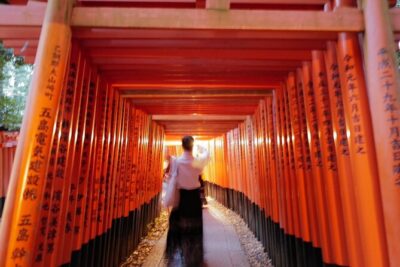
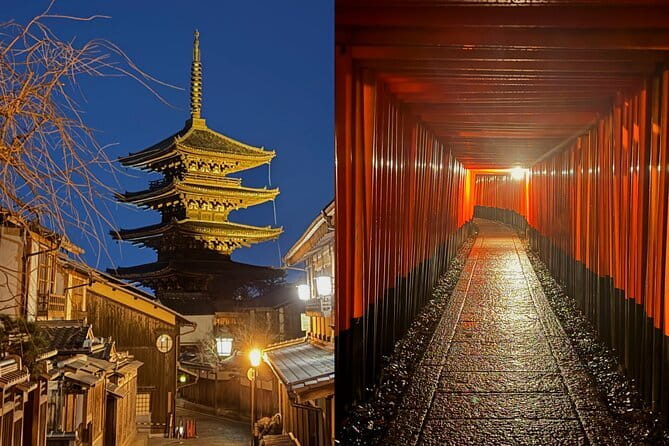
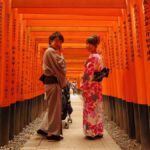
If Kyoto had a headline, Fushimi Inari would be it. Dedicated to Inari, the shrine is famous for thousands of red torii gates that lead up Mount Inari. At night, the gates look almost cinematic, especially in the gaps between pillars where light filters through.
You get about one hour here. That’s a real amount of time, but it’s also smart. You can appreciate the scale without feeling like you must sprint to the farthest trailhead. And since this is an organized walk, you’re less likely to get lost in the endless-looking pathways.
This stop is where the guide matters most. Guests highlighted lessons on how to pay respect at shrines, which is a small thing that can turn a photo stop into a meaningful visit. It also helps you move with the flow instead of stopping in the middle of someone else’s prayer moment.
Photo-wise, this is your big payoff. If you’ve ever tried to photograph torii gates at night, you know how fast it becomes a blurry mess. Having the guide manage timing and spots makes a difference, and the included photo coverage means you’re not guessing what angle will work best.
Gion by lantern light: Hanamikoji and the lanes that feel lived-in
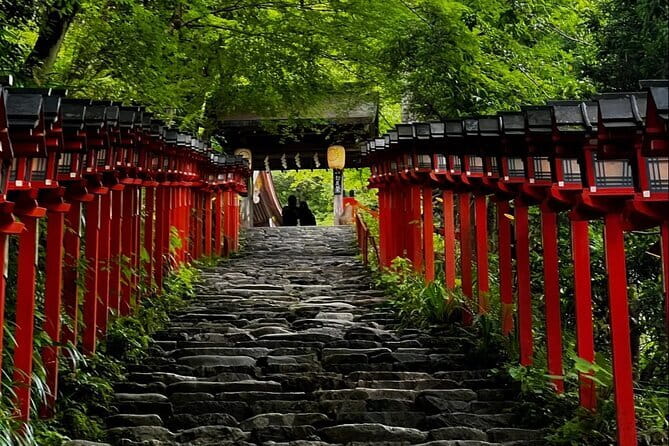
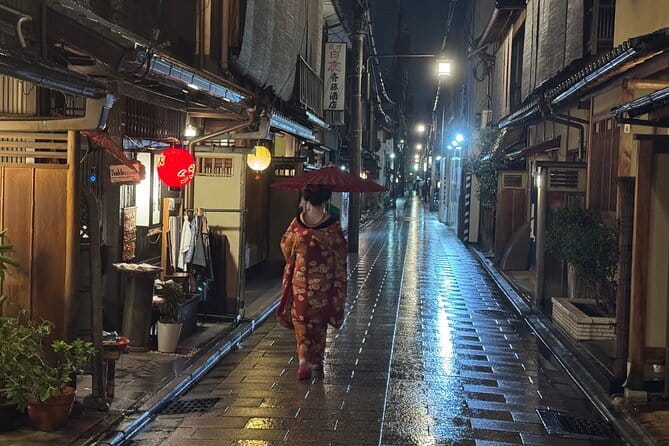
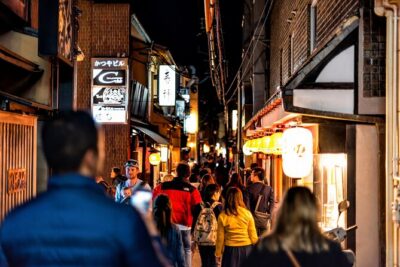
After Inari, the route lands you in Gion. The key street here is Hanamikoji, known for traditional teahouses and classic machiya wooden houses. It’s also the kind of place where you might spot geisha or maiko, though you should treat that as a possible bonus rather than a guarantee.
You’ll spend about 10 minutes on Hanamikoji, then another short chunk walking through Gion itself. Ten minutes sounds quick, but the goal is placement. You learn what the area is, where the main lanes sit, and how the atmosphere changes street by street.
Night matters again. Many people think Gion is only for sightseeing. At night, it can feel more like a neighborhood doing its evening routine. That makes the short time limit less of a problem, because you’re not stuck at one crowded photo spot. Instead, you’re getting the “feel” and moving.
Also, the guide can help you avoid common mistakes. For example, you’ll want to watch your volume and your exact location while people are walking by. Even if you’re excited, keep it calm, slow, and respectful.
Yasui-Konpiragu: a shrine stop with relationship stakes

Not every stop on this tour is about big scenery. Yasui-Konpiragu brings a different kind of meaning. It’s known as a strong shrine for severing bad relationships, with people praying for an end to negative ties and a path toward new, positive connections.
You’ll spend about 10 minutes here. Think of it as a mental reset stop. It gives the route balance. One moment you’re staring at torii gates and traditional streets, and the next you’re in a place with very human, very specific hopes.
This is also a great place to slow down. Shrine visits are not a checklist. If you want to understand what you’re seeing, give yourself a moment to observe before you start taking photos. Your guide can help with the respectful approach, including what to do and how to think about it in the moment.
Yasakanoto and Yasaka Pagoda: the scale you notice right away
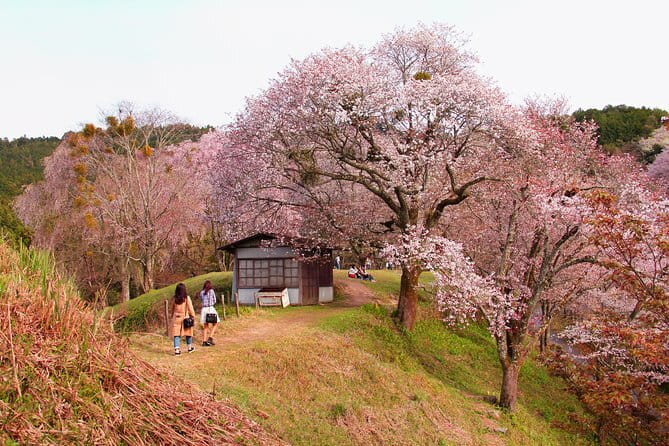
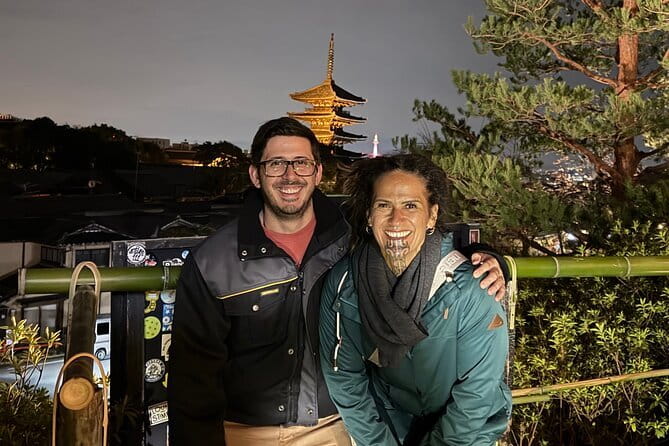
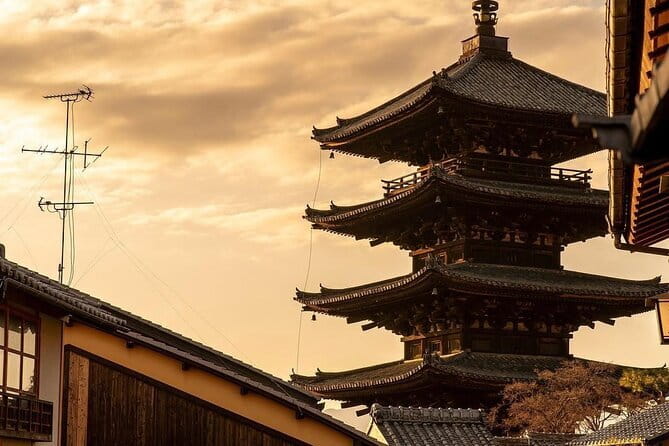
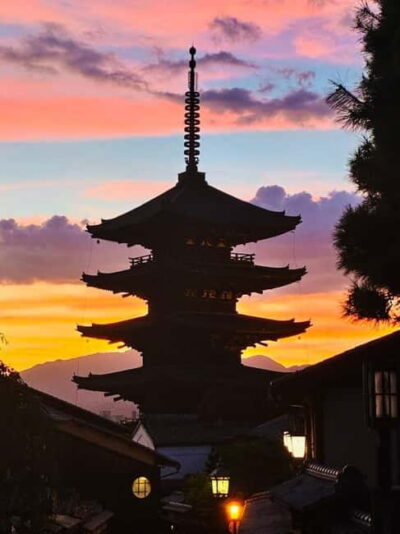
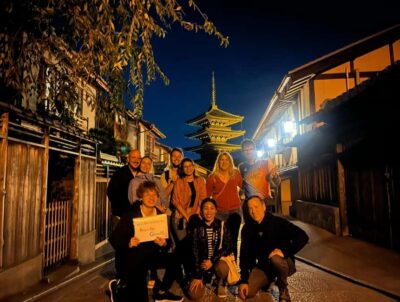
Next is the area around Yasaka Pagoda (Hokanji Temple), where the stop is about 15 minutes. The pagoda is one of the oldest wooden structures in Japan, and the claim you’ll hear is that it was built without nails. Even if you don’t care about construction history, the scale is hard to miss in person.
This is the kind of stop where your brain recalibrates. In one part of the route you’re focused on red gates and street textures. Here, you shift to vertical lines and the sheer presence of the architecture.
Night makes the pagoda easier to read visually. Shadows help define the form, and you often get a clearer view without as many daytime crowds pressing in.
More rooftops worth a detour

Sannenzaka and Ninenzaka: stone steps, old streets, and the Kyoto you wanted
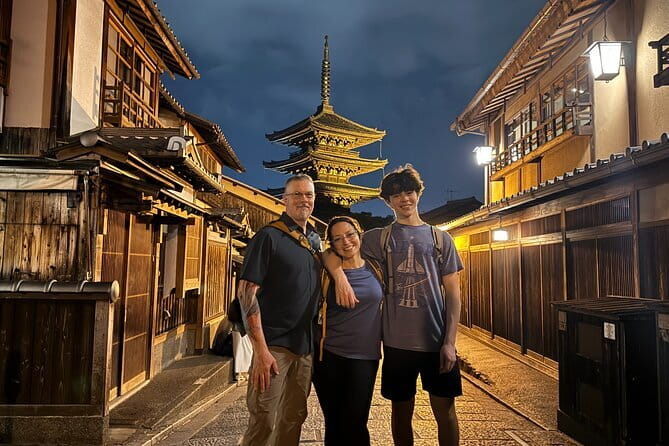
Then you move onto the traditional streets of Sannenzaka and Ninenzaka. These are stone-paved slopes lined with shops and restaurants housed in historic wooden buildings. The vibe is classic Kyoto, the kind you picture when you think about old-town Japan.
You’ll spend about 15 minutes here. That’s a sweet spot for a nighttime walk, because you can absorb the street texture and still keep the energy up for the rest of the route. Also, these lanes tend to photograph well because the stone and building shapes create natural depth.
A practical note: stone steps can be slippery. If it rained earlier, go slower than you think you need to. Your shoes will thank you, and your photos will be sharper too.
Nene-no-Michi: the calmer path between temples
After the busy energy of shopping lanes, you get Nene-no-Michi. It’s described as a serene route named after Nene, wife of a powerful Japanese shogun. The point is a more peaceful walk past temples, with a calmer pace than the main tourist lanes.
You’ll have about 15 minutes here. It works as a breath between the big “icon” moments. It also helps you understand how Kyoto’s famous streets connect to quieter cultural corners.
Even if you’re not chasing secret spots, this segment is worth it for pacing. You’ll feel less rushed, and the route stops become easier to remember.
Yasaka Shrine to wrap up: the evening’s final meaning
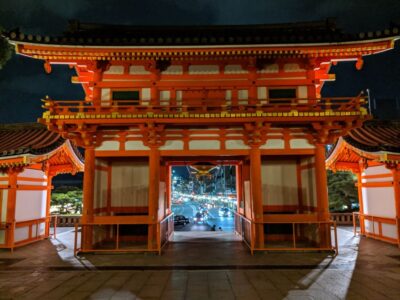
The tour ends at Yasaka Shrine, one of Kyoto’s central shrines, and the headquarters of 2,300 related shrines across Japan. It’s dedicated to the gods of prosperity and protection, so it’s an emotional closer. You go from “what I saw” to “what I’m hoping for.”
You’ll spend about 15 minutes here. This is long enough to see the main area and still stay part of the group without feeling like you’re holding everyone up.
A good guide also helps you leave with a better sense of what shrines do in daily life, not just what they look like. Guests often mention the way guides coach respectful behavior at key shrines, and Yasaka is a fitting place for that lesson to land.
Guide quality and photo help: why guests keep naming the same people
The included English-speaking guide is the core of the value. Guests regularly single out guides like Ikki, Yui, Yuri, Yuki, Mariko, and Joi for being friendly, organized, and communicative.
Several reviews also highlight preparation tricks that make the tour feel smooth:
- One guest noted a laminated chart with explanations and graphics.
- Another mentioned that the guide was easy to talk to and helped make the walk feel effortless.
- People with different needs were supported, including older visitors and families with kids, with guides staying patient and adjusting breaks when needed.
- Photo timing gets praised a lot. One family reported receiving many photos quickly after the tour, including some short videos, which is a nice bonus if you want an easy memory dump.
And the best part is how the photos fit the nighttime setting. Night photography is hard, even for phone cameras. Having someone take the lead on the angles, timing, and positioning means you end up with usable images without slowing your whole group.
Price and value: what $26.43 really buys you
At $26.43 per person, this is priced like a budget-friendly evening activity, but it includes some meaningful extras. You’re getting:
- A local English-speaking guide
- Admission fees for the included temples and shrines
- Professional photos taken during the tour
Even though many stops are described as admission ticket free, the included guide turns “free entry” into a guided experience, with help on where to stand, how to pay respect, and what you’re actually looking at. That’s where your money goes, and that’s also where your time becomes more valuable.
Your main added cost is ¥480 for public transportation, since it’s not included. Still, compared to paying for individual private time, plus trying to figure out routes and etiquette on your own at night, the structure here is the bargain.
If you want a night plan that reduces decision fatigue and improves your odds of great photos, this price makes sense.
Who this tour suits best, and who might want to rethink it
This tour is built for people who like walking and want an organized route through Kyoto’s most famous highlights.
It’s a good fit if:
- You’re seeing Kyoto for the first time and want Fushimi Inari plus Gion in one evening
- You’d rather learn the meaning behind shrines and streets than just take pictures
- You care about good photos and would rather not handle night photography yourself
- You want a guide who can explain things clearly, and you may appreciate patience if your group needs slower moments
You might reconsider if:
- Your mobility is limited and you struggle with uneven stone paths and stairs
- You dislike a guided pace. Some feedback mentions the guide walks fast, so comfort matters.
- You hate public transport in the evening. You’ll use transit as part of the plan.
Practical tips so your night goes smoothly
A few small choices can make a big difference on this kind of route:
- Wear good walking shoes. Kyoto stone and night steps can surprise you.
- Take a light layer for evening air. Even without rain, nighttime can feel cooler than you expect.
- If you want to make a wish, consider bringing coins, as one guide tip suggested.
- Don’t show up late. The tour notes that arriving late can mean you cannot join and you won’t get a refund, so give yourself buffer time.
- Be ready to move. This is not a sit-and-stroll tour. It’s a walk with stops, and the timing is part of the experience.
Also, take the guide coaching seriously at shrine moments. It helps you understand what to do and why, and it keeps your photos respectful.
Should you book Kyoto Magical Night: Gion and Fushimi Inari?
I think this is a strong choice if you want a Kyoto evening that’s structured but not stiff. The combination of Fushimi Inari at night and Gion streets gives you contrast, and the shrines and temple stops add meaning beyond the postcard moments.
Book it if you:
- Want English guidance and clear explanations
- Care about photos and photo timing
- Prefer a walking route that shows how the areas connect
Skip it if you:
- Can’t handle stairs and stone paths
- Want a totally unstructured night with no guide pace
- Are mainly chasing crowds and shopping time, because the route is about sights and respect, not long free time
If you’re like most first-time Kyoto visitors, you’ll probably love this as your “get oriented, see the icons, understand the why” evening plan. And if you luck into a guide like Ikki, Yui, Yuri, Yuki, Mariko, or Joi, you’ll get the kind of calm confidence that turns a short tour into a lasting memory.
FAQ
How long is the Kyoto Magical Night English Tour?
It runs about 2 hours 30 minutes.
Where does the tour start, and where does it end?
It starts at the Statue of Izumo-no-Okuni, Kawabatacho, Higashiyama Ward, Kyoto, and ends back at the same meeting point.
Is this tour mostly walking?
Yes. It’s designed as a walking experience, using public transportation and plenty of time on foot.
What does the tour include?
You get a passionate local English-speaking guide, admission fees for the temples and shrines, and professional photos taken during the tour.
What is not included in the price?
Public transportation fare is not included, listed at ¥480 per person. Food and drinks are also not included.
Are admission tickets required for the stops?
The tour indicates admission ticket free for the listed stops, and admission fees for temples and shrines are included.
Is this tour private?
Yes. It’s private, and only your group participates.
Can I cancel and get a full refund?
Yes, free cancellation is available if you cancel at least 24 hours in advance for a full refund. If you cancel less than 24 hours before the experience starts, the amount paid is not refunded.
More Evening Experiences in Kyoto
Gion Geisha Quarter Walks
New This Season
- Koyasan Day Trip by Private Car from Kyoto
- Old Port Town and Ultimate Sake Tasting Private Tour From Kyoto
- Sacred Peak & Ancient Paths: Kurama-Kibune Hiking Experience
- Kyoto’s Timeless Charm: 3hr Exploration of History and Peace
- Kyoto: 5 Types of Sushi Making
- Kyoto: Exclusive ZEN practice at Manpukuji temple in Uji
- Kyoto: Private Seasonal Aroma Yoga Class
- Traversing Kyoto’s Scenic West – Arashiyama to Kinkakuji
Fushimi Inari Shrine Walks, compared.
Fushimi Inari, Kinkakuji, Bamboo Grove 1 Day Bus Tour
Read our review →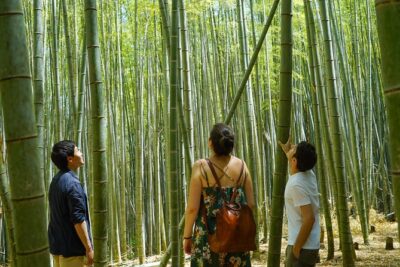
Fushimi Inari Hidden Hiking Tour (Private Option Available)
Read our review →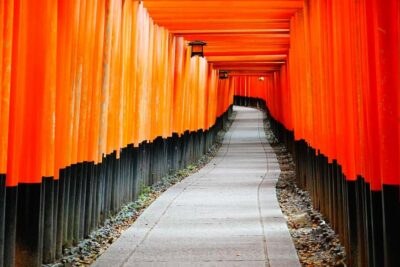
Kinkakuji,Arashiyama,FushimiInariShrine,NaraPark
Read our review →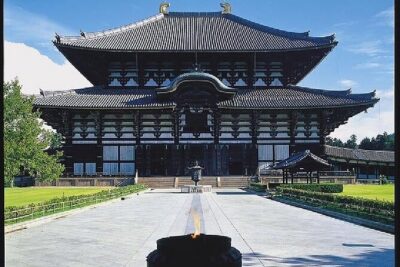
Nara, Fushimi Inari Taisha, Arashiyama Bus Tour
Read our review →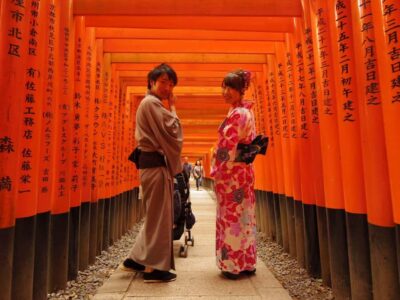
Arashiyama, Nara & Fushimi Inari Shrine w/Lunch
Read our review →
Nijo Castle, Kiyomizu & Fushimi Inari Guided Tour
Read our review →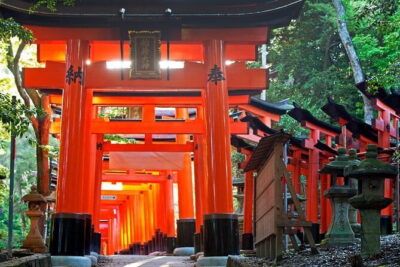
Nijo, Kinkaku-ji, Arashiyama, Kiyomizu & Fushimi Inari
Read our review →