
Reviewed · ARTISAN CRAFT WORKSHOPS
Fukusa Shibori Class
Shibori turns cloth into your own pattern. This class is interesting because you learn two classic techniques, Kasamaki and Nuishime, and you do it right in the Kyoto Shibori Museum setting. I especially like the hands-on pace and the way you get museum examples before you start. One drawback to plan for is that this is a craft session first, so it is not a long, wandering tour of Kyoto sights.
I like that the group stays small, max 15, so questions do not get lost in the shuffle. The experience runs about 1 to 1.5 hours, and you enter with a mobile ticket, which keeps things simple. It is a nice choice when you want something authentic to do without building an all-day schedule.
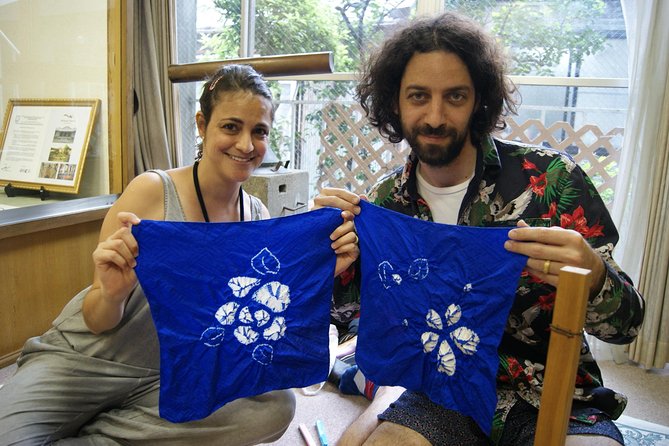
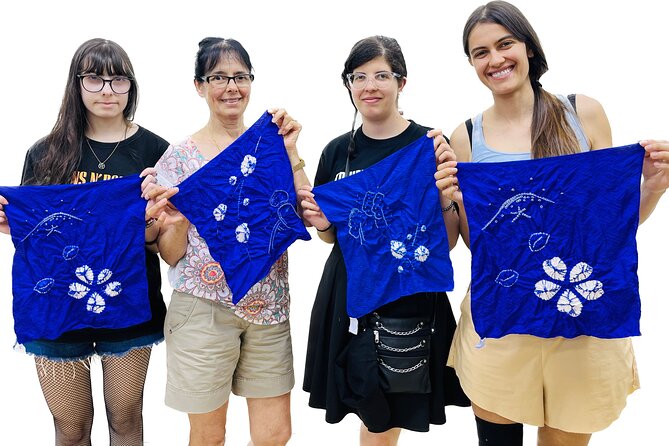
You also get a real take-home result, a dyed silk wrapping cloth you make during the class. The minimum age is 8, and pricing is the same for any age, so plan the budget accordingly if you are bringing kids.
In This Review
- Key highlights worth your time
- Kyoto Shibori Museum: where the craft makes sense
- What you learn: Kasamaki vs Nuishime, in plain craft terms
- Kasamaki method, the wrapping and pulling technique
- Nuishime method, the line stitching look
- Why doing both matters
- Step-by-step: what the class rhythm feels like
- The teacher and small-group advantage (and why it shows)
- Your take-home piece: silk, size, and what it means
- Timing tips: when this fits best in Kyoto
- Price and value: what you get for about $71.67
- Who this shibori class is best for
- Should you book Fukusa Shibori Class?
- FAQ
- Where is the class located?
- How long does the shibori class take?
- What shibori techniques will I learn?
- What do I take home?
- Is this class suitable for children?
- Do I get a mobile ticket?
- How big is the class?
- Is parking available near the museum?
- Can I cancel and get a full refund?
Key highlights worth your time
- Kasamaki and Nuishime in one session, so you see how two methods create different looks
- Kyoto Shibori Museum displays you can study before you wrap and dye
- Traditional tools and fabrics used for the silk cloth project
- Small group size (up to 15) for a more hands-on rhythm
- Teacher support, including careful step-by-step guidance from Roy
- Take-home finished silk, sized at 38 cm by 38 cm
Kyoto Shibori Museum: where the craft makes sense
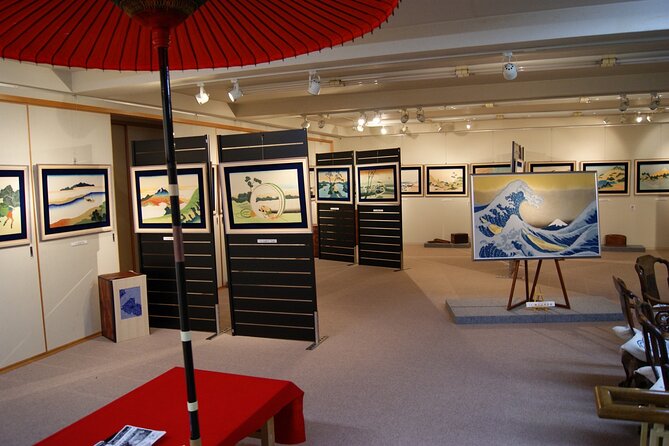
Kyoto Shibori Museum is the right kind of backdrop for a class like this. Instead of treating shibori like a random souvenir activity, you are surrounded by technique examples and finished work. That matters, because shibori is easier to understand when you can see what the dyeing is supposed to do before you touch the cloth.
The experience is built around the museum space in Nakagyo Ward, and the meeting point is at 135-5 Shikiamichō. You are not far from public transportation, so you can fit this into a day without complicated routing.
One nice detail is that the museum admission ticket is listed as free as part of the overall experience. Translation: you can spend a bit more time looking at displays while you wait for the class portion to start, which is exactly where the value comes from.
What you learn: Kasamaki vs Nuishime, in plain craft terms
This class focuses on two shibori methods, and the teaching is built around letting you feel the process, not just watch it. You work with a silk wrapping cloth sized 38 cm by 38 cm, and you dye it using both techniques.
Make something with a Kyoto craftsman
- Authentic knife making experience at a blacksmith in Kyoto
★ 4.8 · 350 reviews - Kyoto: Calligraphy class at Buddhist temple in city center
★ 5.0 · 167 reviews - Roketsu dyeing experience: M course Roketsu Dyeing Experience
★ 5.0 · 163 reviews - Kyoto: Japanese Calligraphy Class
★ 4.8 · 89 reviews
Kasamaki method, the wrapping and pulling technique
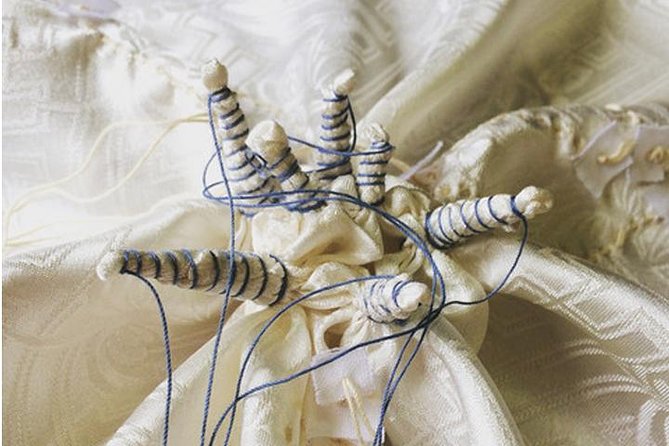
Kasamaki is the method that feels most like building a structure out of thread. The basic sequence is:
- Stitch around the shape you want to create.
- Pull the thread tight.
- Wrap the threads around the cone of fabric several times.
What I like about this is that it is mechanical and repeatable. Once you understand how the stitching forms the boundary, you can see how the tight pulling and repeated wrapping shape the final resist pattern during dyeing.
Nuishime method, the line stitching look
Nuishime uses a different approach, one that is more about guiding dye along a line. The key steps are:
- Stitch along a line.
- Pull the thread tight.
If Kasamaki feels like shaping a form, Nuishime feels like drawing with thread. You end up with another kind of resist effect, and seeing both methods side by side is a big part of why this class is worth doing.
Why doing both matters
Most craft activities give you one technique and call it a day. Here, you get two in one session. That gives you a clearer sense of how shibori patterns come from restraint and tension, not from painting with a brush. You will likely leave with more than a souvenir, more like a working mental model of the craft.
Step-by-step: what the class rhythm feels like
The class is listed as about 60 to 90 minutes. In real terms, you should expect a short introduction, then a clear run of practical steps, then a final moment where you admire the result you created.
You start at the museum, and you have time to look at samples and displays of classic shibori work. This is not filler. The museum examples give you visual targets: you can think, if I wrap like this, what kind of resist shape might I see later.
Then you get hands-on with traditional shibori tools and fabrics. The cloth you dye becomes your project, and you are guided through the Kasamaki and Nuishime steps so you can make a finished piece that you take home.
From the guidance angle, one review specifically called out Roy for careful teaching, with help that supported understanding while still letting you do the work yourself. That combination is ideal. You want structure, but you also want your hands making the decisions.
A quieter way to spend a day in Kyoto

The teacher and small-group advantage (and why it shows)
This experience caps at a maximum of 15 travelers, and that size changes the whole feel. In a bigger class, one person’s question can easily stall the group. In a smaller one, you can get corrections without losing momentum.
I also like the “many makers around” vibe described in reviews. Even though you are following your main teacher, having other experienced shibori makers nearby tends to make the craft feel alive. People are not just watching; they are genuinely happy to help.
If you like learning by doing, this setup is a strong match. If you freeze up when someone hands you tools and asks you to start, you will likely still be okay, because the class is structured and taught step by step. Just show up ready to participate.
Your take-home piece: silk, size, and what it means
Your final product is a dyed silk wrapping cloth that you make during the class. The cloth size is 38 cm by 38 cm, so it is substantial enough to feel like real fabric, not a tiny sample.
Why take-home value matters here: shibori is a resist-dye technique. The pattern comes from how you bind and stitch, then dye. When you create it yourself, you can look at your finished cloth and understand what you controlled. That is more satisfying than buying something already finished, because you know the path from thread to pattern.
Also, the class gives you a solid souvenir that you can actually use. A shibori-wrapped silk piece can work for display, gifting, or finishing off a small textile project. Even if you only hang it, it is a piece of Kyoto craft you can live with.
Timing tips: when this fits best in Kyoto
The class runs about 1 to 1.5 hours. That makes it one of those rare Kyoto activities that fits into real travel days, especially if you plan morning sightseeing elsewhere.
One review described it as a great way to spend a hot afternoon. You do not need to overthink it, but it is worth considering when you schedule it:
- If your day gets too warm, a museum-based workshop is a smart pivot.
- If you want a break from crowds, the museum setting can feel calmer.
- If you are trying to avoid spending your entire day commuting between multiple stops, this one adds meaning without taking over your schedule.
You do not need to plan a full theme around it, but it pairs well with other cultural stops in Kyoto. Even if you do just one structured activity per day, this one tends to deliver a memorable result.
Price and value: what you get for about $71.67
The price is listed as $71.67 per person. That sounds high if you compare it to basic DIY crafts, but the value is in the materials, the teaching, and the finished silk.
Here is what you are paying for, based on what is included:
- A guided class focused on two named techniques, Kasamaki and Nuishime
- Traditional tools and fabrics used during the session
- A dyed silk cloth project you take home (38 cm by 38 cm)
- Museum time to view displays of classic shibori samples
In other words, you are not just buying a ticket to sit in a workshop. You are buying a guided process that ends with an actual craft result made by you. That is usually what justifies the cost.
Also, because the group stays fairly small, you tend to get more direct instruction than you would in a larger classroom situation. That practical “time with the teacher” aspect is part of the value.
If you want a hands-on memory from Kyoto that is tied to a real local craft tradition, this is one of the more logical choices.
Who this shibori class is best for
This workshop is a strong fit if you:
- Want to try a real Japanese textile craft, not just watch or take photos
- Like learning through making, and you enjoy step-by-step guidance
- Prefer a shorter activity that still ends with a take-home item
- Want something authentic and Kyoto-specific, rooted in actual technique
It is also a good family option for kids old enough to participate comfortably, since the minimum age is 8. Adult pricing applies to any age, so families should plan for that budget up front.
If you are in Kyoto and you already have a long list of temples, this one balances the day with something hands-on and creative. If you are the type who loves museums, this class also gives you a reason to pay attention to the display samples instead of just walking past them.
Should you book Fukusa Shibori Class?
I would book this if you want a hands-on Kyoto craft with real technique names and a take-home silk result. The best reasons to go are straightforward: you learn Kasamaki and Nuishime, you get museum displays that help you understand what you are doing, and you leave with a finished piece you made.
You might skip it if you are looking for a long sightseeing experience or if you do not enjoy structured, guided activities. This is about making cloth, learning the method, and getting your own dyeing to the finish.
If that sounds like your kind of travel day, go ahead and reserve a slot. The class is typically booked about 21 days in advance, so waiting too long can narrow your options.
FAQ
Where is the class located?
The meeting point is at Kyoto Shibori Museum, 135-5 Shikiamichō, Nakagyo Ward, Kyoto, 604-8261, Japan.
How long does the shibori class take?
The class runs about 1 hour to 1 hour 30 minutes.
What shibori techniques will I learn?
You will learn and try two techniques: Kasamaki and Nuishime.
What do I take home?
You will take home your dyed silk wrapping cloth made during the class.
Is this class suitable for children?
The minimum age is 8, and adult pricing applies to any age.
Do I get a mobile ticket?
Yes, the experience uses a mobile ticket.
How big is the class?
The maximum group size is 15 travelers.
Is parking available near the museum?
Parking is available for two cars, and bicycle parking spaces are also available.
Can I cancel and get a full refund?
Yes. Free cancellation is available up to 24 hours in advance for a full refund, based on local time.
New This Season
- Koyasan Day Trip by Private Car from Kyoto
- Old Port Town and Ultimate Sake Tasting Private Tour From Kyoto
- Kyoto’s Timeless Charm: 3hr Exploration of History and Peace
- Kyoto: 5 Types of Sushi Making
- Sacred Peak & Ancient Paths: Kurama-Kibune Hiking Experience
- Kyoto: Exclusive ZEN practice at Manpukuji temple in Uji
- Kyoto: Private Seasonal Aroma Yoga Class
- Traversing Kyoto’s Scenic West – Arashiyama to Kinkakuji
Artisan Craft Workshops, compared.
Authentic knife making experience at a blacksmith in Kyoto
Read our review →
Calligraphy class at Buddhist temple in city center
Read our review →
Roketsu dyeing experience: M course Roketsu Dyeing Experience
Read our review →

Traditional Japanese Washi Papermaking- Kyoto morning
Read our review →
Also filed under