
Reviewed · ARTISAN CRAFT WORKSHOPS
Japanese Calligraphy – Shodo – Lesson (near Kyoto Station)
Brush tips, ink on paper, quick pride. This hands-on Japanese calligraphy (shodo) lesson is built for beginners and keeps things small, so you get personal help while you learn the brush and ink basics. I like that you leave with take-home calligraphy souvenirs, not just photos, and that the format works for families with kid-friendly support. One possible drawback is the meeting spot is a little specific to find at first, so build in a few extra minutes near Kyoto Station.
You’ll start with a short guide on how to hold and use the brush, how to apply ink, and how to approach the strokes without overthinking them. Then you practice a set of simple characters and build up to writing your own name in kanji, with support if you are unsure what your name might map to. If you prefer a totally passive experience, this class asks you to actually write, even if you only manage a few characters confidently at first.
In This Review
- Key highlights worth your time
- Kyoto Station convenience and a small-group classroom
- What you learn first, brush and ink technique that actually helps
- The character practice that builds confidence fast
- Writing your name in kanji, with help for the hard part
- Take-home souvenirs you can keep, display, and show friends
- Duration, meeting point, and how to plan your hour
- Price and value, what $50.40 buys you
- Who this class is perfect for
- Should you book this Japanese calligraphy lesson near Kyoto Station?
- FAQ
- Where is the meeting point for the lesson?
- How long does the Japanese calligraphy lesson last?
- How many people are in the class?
- Is this class beginner-friendly?
- What materials are included?
- What do I take home at the end?
- Can I write my name during the workshop?
- Is it family-friendly?
- Is there free cancellation?
Key highlights worth your time
- Small-group shodo near Kyoto Station, capped at 10 people, so questions stay easy.
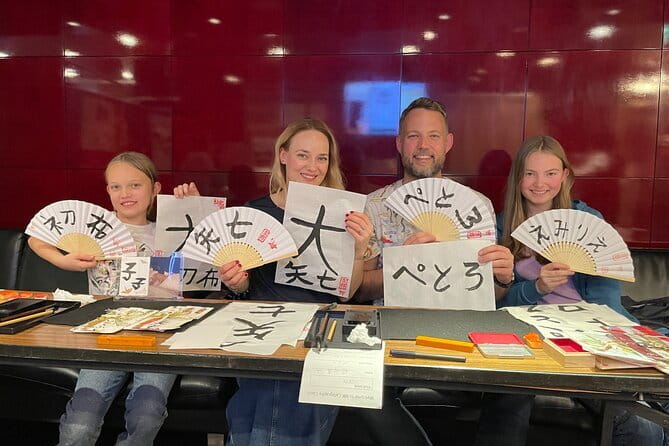
- All materials included, including brush, ink, and washi paper, so you do not have to hunt for supplies.
- A practical lesson flow, starting with brush and ink technique and moving into character practice.
- Your name in kanji, with staff guidance and examples for how names can be represented.
- Real souvenirs to take home, including scroll-style work and additional decorative items some classes include.
Kyoto Station convenience and a small-group classroom
Location matters in Kyoto, because time is always slipping away between temples. This class is set up near Kyoto Station, meeting you at the MK Taxi VIP Station at the Hachijo Exit taxi area. That means you can slot it into a travel day without planning a long ride across town.
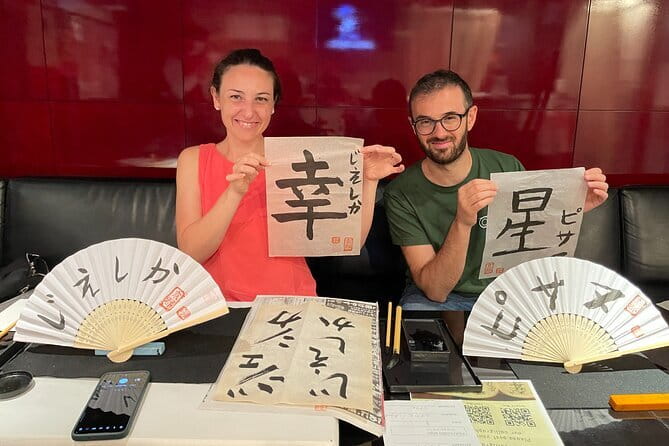
The lesson also works because it stays small. The cap is 10 travelers, and the experience is described as intimate. In practice, that helps with two things: you can see what the instructor is doing, and you can get help when your first stroke looks nothing like the sample. Calligraphy is one of those skills where tiny adjustments in grip and pressure change everything, so more one-on-one time is not just a nice-to-have.
It is also described as family-friendly, with activities available for kids. That matters if you are traveling with a child who will lose patience waiting around. A lesson format tends to be more engaging than a long lecture, because there is always the next step to try, even if it is just rewriting a single character to get the hang of it.
The vibe is beginner-friendly. The workshop does not assume you already know what kanji looks like on a brush stroke level. Instead, it teaches the fundamentals first, then builds toward personalization.
What you learn first, brush and ink technique that actually helps
The session starts with a straightforward lecture on brush use and applying ink. This is the part that most visitors think they can skip, but it is exactly what makes the rest of the class feel doable. When the brush is held the wrong way or the ink is applied too heavily, your strokes get thick, uneven, or blotchy. The instructor shows you how to avoid that by doing it the simple, correct way.
You also learn technique in a way that is not theoretical. The workshop is hands-on from the start. You get to try, compare your result to what you are aiming for, and adjust while you still have the instructor close by.
A useful thing here is pacing. You do not jump straight into your name before you understand how the brush behaves on washi paper. The lesson includes step-by-step character practice first, then name writing. That structure keeps beginners from feeling like they are failing before they even start.
And because all materials are provided, you do not have the common frustration of bringing a tool that is wrong for the method. Here, you are using the brush, ink, and washi paper the instructor expects you to use, which helps you get a result you can be proud to take home.
Make something with a Kyoto craftsman
- Authentic knife making experience at a blacksmith in Kyoto
★ 4.8 · 350 reviews - Kyoto: Calligraphy class at Buddhist temple in city center
★ 5.0 · 167 reviews - Roketsu dyeing experience: M course Roketsu Dyeing Experience
★ 5.0 · 163 reviews - Kyoto: Japanese Calligraphy Class
★ 4.8 · 89 reviews
The character practice that builds confidence fast
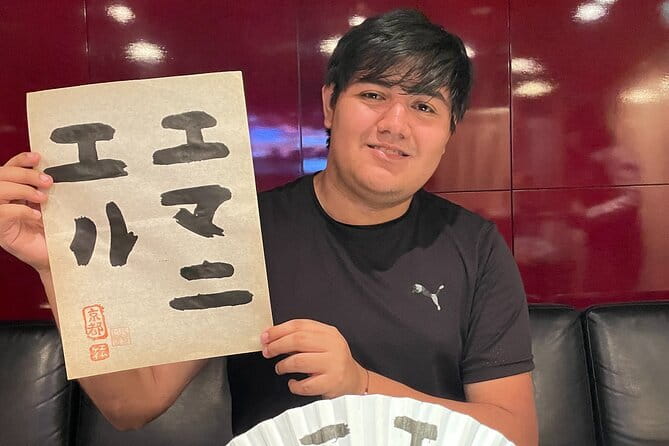
Once you have the basics down, you write a set of foundational kanji characters, including One, A, Forever, and Kyoto. This step is more than an exercise. It is your warm-up, plus it is a way to learn how the brush makes different shapes.
Writing multiple characters back-to-back also gives you quick feedback. If you were unsure about ink flow or stroke order, you spot it immediately when the next character looks smoother. You start to notice which parts of the stroke are the tricky ones, and you get better inside the same hour rather than having to take notes and practice later.
The “Kyoto” character is a smart choice for visitors. It turns a travel idea into something tangible. Instead of just learning that Kyoto has calligraphy traditions, you are literally putting the word on paper. Even if your strokes are imperfect, you are making a piece that connects to the place you are visiting.
And you are not just writing random characters and then leaving. The class includes making a scroll of the kanji characters you write, and you can take that scroll home. That keeps the practice meaningful instead of feeling like a disposable craft.
Writing your name in kanji, with help for the hard part
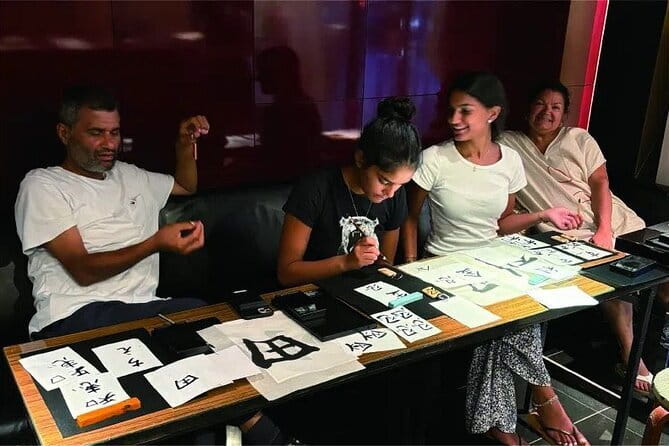
The next major step is writing your own name in kanji characters, with staff assistance for possible kanji options and their meanings. This is the most personal and usually the most emotional moment in a shodo class. Suddenly it is not an exercise anymore. It is you on paper.
You might wonder how your name becomes kanji in the first place, especially if your name is not originally Japanese. That is where guidance matters. The workshop uses staff support to suggest possible kanji representations and explain what they mean.
The class gives examples, like Brian written with kanji including 武 (Martial), 礼 (politeness, gratitude), and 安 (peace). Another example is Liz written with 梨 (pear) and 図 (painting). Whether those exact pairings match your name is not the point. The point is that someone helps you land on characters that fit, and you understand the meaning behind them.
That meaning piece is valuable for souvenirs. A calligraphy piece is more than decoration when you know what it represents. It becomes something you can explain later, not just something you are hoping no one asks about.
Also, because the instructor assists, you are not stuck staring at a blank page if you get stuck. You can keep moving and actually finish something. In a one-hour workshop, finishing matters.
Take-home souvenirs you can keep, display, and show friends
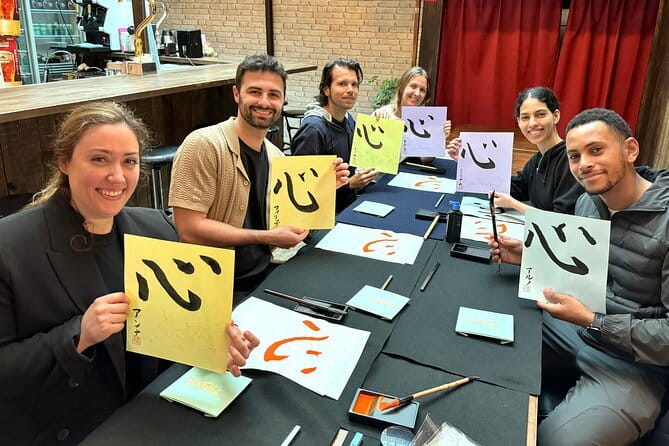
At the end, you take your finished calligraphy home. That includes the scroll of the characters you practiced and the personalized name writing piece.
Some classes also include decorative items made during the session. One set of comments describes a photo frame and custom fans created with calligraphy. That kind of extra item is nice because it gives you a way to display your work immediately, instead of storing it in a drawer.
Even when you only take the scroll and name piece, you still leave with a tangible record of your time in Japan. Calligraphy is one of those activities where results improve with practice, so it is easy to wish you had more time. But having a finished piece in hand gives you a clear endpoint, and you can keep it as a reminder instead of waiting to “get good someday.”
One more practical benefit: you do not have to source supplies. Brushes, ink, and washi paper are provided. If you have ever tried to buy the right paper and ink after a trip, you know it can be harder than it sounds. Here, you use the correct materials for the workshop and can expect the result to look like the instructor intended.
Duration, meeting point, and how to plan your hour
The class runs about one hour. That is short enough to fit into a day of temples and trains without wrecking your schedule, but long enough to actually learn something and produce take-home work.
Because it is near Kyoto Station, you can plan it as either a first activity after checking in, or a last activity before heading to your next stop. One comment praised how close it was to where they were staying near the station, making it feel easy and low-stress.
The meeting point is the part to pay attention to. You start at MK Taxi VIP Station Kyoto Station Hachijo Exit, at the taxi stand area, and it is connected to the Ibis Styles Kyoto Station area. People noted it is not immediately obvious at first, and the tip is to look for the MK building near where you exit. If you hate last-minute confusion, give yourself a few extra minutes before the start time.
You’ll end back at the meeting point, so you do not have to worry about getting somewhere else after you finish writing.
A quieter way to spend a day in Kyoto

Price and value, what $50.40 buys you
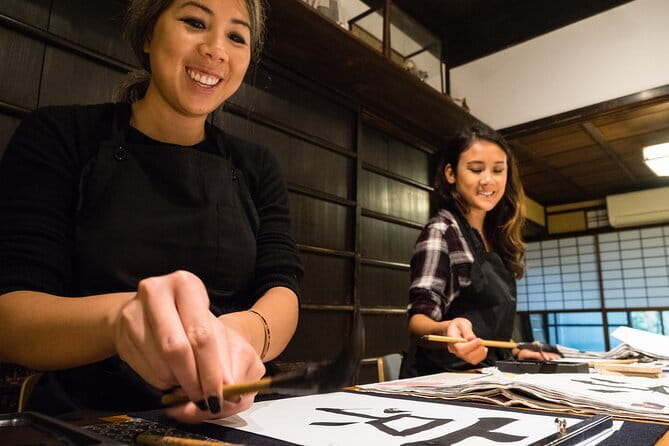
The price is $50.40 per person, with materials included. For many visitors, that is the key value driver: you pay for instruction plus supplies, not just a “make your own craft” moment. When brushes and ink are included, the class is more comparable to a guided workshop than a DIY souvenir stall.
You also get an English-speaking instructor, based on the way people describe the staff as engaging and helpful. That can matter more than it seems, because calligraphy technique has details, like brush angle and stroke control, that are hard to guess from a single diagram. Clear instruction helps you create something presentable faster.
The small group size also improves value. In a class with up to 10 people, you are less likely to feel invisible. You get more chances for the instructor to notice issues and suggest adjustments while you are still working.
And because you take home finished work, you are not paying for something ephemeral. You bring home a scroll and your name piece, plus possibly decorative items like fans or a photo frame, depending on what is included that day.
Who this class is perfect for
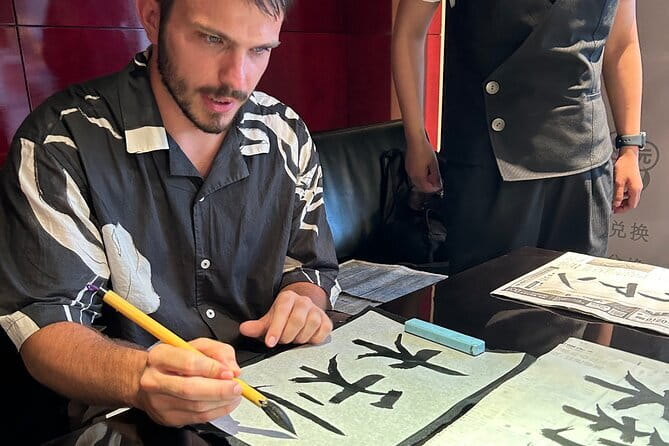
I’d steer you to this workshop if you want a hands-on Kyoto activity that does not require Japanese language skills. The lesson uses basic character practice and then supports name writing, so you can participate even if you know zero kanji going in.
It is also a good pick for families. The class is described as family-friendly with kid activities available, and the overall format keeps children involved because they are producing something during the hour, not just watching adults learn.
If you are someone who likes leaving with a personal souvenir that has a story behind it, this fits. Your name in kanji adds meaning. The lesson also teaches meanings for the characters used, so you can explain what you wrote later.
Finally, it is a good value choice if you are staying near Kyoto Station. Rather than taking a long detour, you get a focused workshop that fits into a travel schedule.
Should you book this Japanese calligraphy lesson near Kyoto Station?
Book it if you want a beginner-friendly activity with real instruction, small-group attention, and take-home work you can actually use as a keepsake. The price makes sense because brush, ink, and washi paper are included, and the class is short enough to plan without stress.
Skip it only if you strongly prefer passive experiences or you dislike workshops where you must write on paper. Calligraphy here is not a spectator activity.
If you do book, do yourself a favor: arrive a few minutes early, find the MK Taxi VIP Station meeting area on your own first time, and treat your first strokes as practice, not final work. Within that one hour, you should end up with a souvenir that feels personal, and a technique you can carry forward the next time you see Japanese calligraphy in a shop or on a temple sign.
FAQ
Where is the meeting point for the lesson?
The meeting point is MK Taxi VIP Station at Kyoto Station Hachijo Exit, in the taxi stand area, near the Kyoto sightseeing reception and Ibis Styles Kyoto Station.
How long does the Japanese calligraphy lesson last?
The lesson lasts about 1 hour.
How many people are in the class?
The experience has a maximum of 10 travelers.
Is this class beginner-friendly?
Most travelers can participate, and the lesson teaches the brush and ink basics before you write characters and your name.
What materials are included?
Brushes, ink, and washi paper are provided.
What do I take home at the end?
You can take home the calligraphy you make, including a scroll of the kanji characters you write and your name in kanji characters. Some sessions may include additional decorative items made with calligraphy.
Can I write my name during the workshop?
Yes. You write your name in kanji characters, and staff assist you with possible kanji choices and meanings.
Is it family-friendly?
Yes. The experience is described as family-friendly, with activities available for kids.
Is there free cancellation?
Yes, free cancellation is available up to 24 hours in advance for a full refund.
New This Season
- Koyasan Day Trip by Private Car from Kyoto
- Old Port Town and Ultimate Sake Tasting Private Tour From Kyoto
- Kyoto’s Timeless Charm: 3hr Exploration of History and Peace
- Kyoto: 5 Types of Sushi Making
- Sacred Peak & Ancient Paths: Kurama-Kibune Hiking Experience
- Kyoto: Exclusive ZEN practice at Manpukuji temple in Uji
- Traversing Kyoto’s Scenic West – Arashiyama to Kinkakuji
- Kyoto: Private Seasonal Aroma Yoga Class
Artisan Craft Workshops, compared.

Authentic knife making experience at a blacksmith in Kyoto
Read our review →
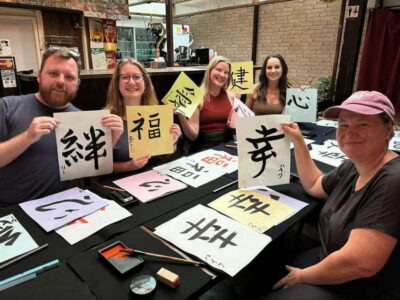
Calligraphy class at Buddhist temple in city center
Read our review →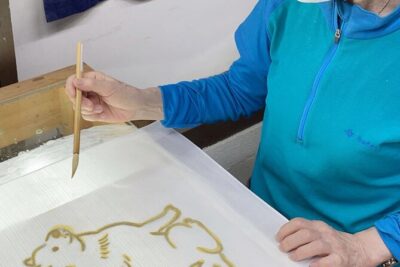
Roketsu dyeing experience: M course Roketsu Dyeing Experience
Read our review →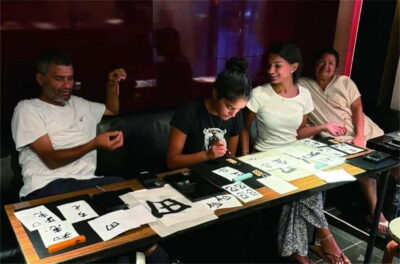

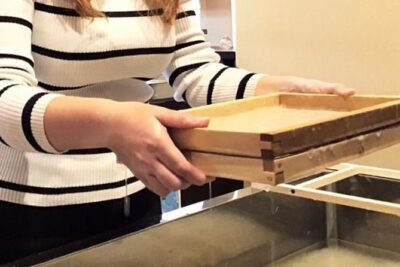
Traditional Japanese Washi Papermaking- Kyoto morning
Read our review →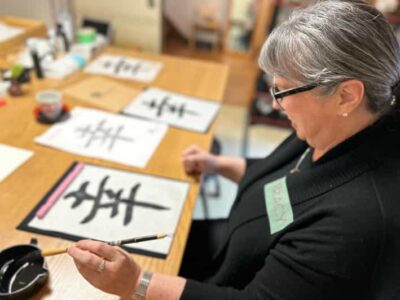
Also filed under