

Reviewed · ARTISAN CRAFT WORKSHOPS
Kyo-arashi Shibori Scarf Class
Making patterns with string is oddly satisfying. This Kyoto Shibori Museum class teaches kyo-arashi shibori step by step, so you dye a silk scarf you can take home. You also get time inside the museum and a chance to try on a shibori kimono.
I especially like the hands-on instruction, from folding the fabric to dyeing and unfolding results. I also love the personal payoff, you leave with a scarf customized to your color preferences.
The main thing to plan around is age and pacing. The minimum age is 12, and the workshop runs about 30 minutes to 1 hour, so it is not an all-day activity.
In This Review
- Key highlights you will care about
- Kyoto Shibori Museum: where silk dyeing actually happens
- Kyo-arashi shibori on a scarf: the process, step by step
- How the 30-minute to 1-hour class fits your day
- Museum browsing and kimono try-on while your scarf dries
- Personalizing your scarf: color choices and getting results you like
- Price and value: what you get for about $50
- Who should book this class, and who might not love it
- Practical tips for a smoother Kyoto Shibori Museum visit
- Should you book the Kyo-arashi Shibori Scarf Class?
- FAQ
- How long does the Kyo-arashi shibori scarf class take?
- Where does the class meet?
- What will I make in the class?
- Can I choose the colors for my scarf?
- Is admission to the museum included?
- Can I try on a kimono?
- Is this a private class or a group tour?
- What is the minimum age?
- How does cancellation work?
Key highlights you will care about

- Kyo-arashi shibori technique using folding, a wrapped pipe, and string to control the pattern
- A take-home silk souvenir, dyeing a scarf sized 70 x 17 inches (180 cm x 44 cm)
- Personal color choices, so your scarf feels like it belongs to you
- Museum time while the fabric dries, plus a chance to try on a shibori kimono
- A private class setup, only your group with professional supervision
- Multiple start times, so you can fit it into a busy Kyoto day
Kyoto Shibori Museum: where silk dyeing actually happens

This class is based at the Kyoto Shibori Museum, at 135-5 Shikiamichō, Nakagyo Ward, Kyoto. It is an easy location to target if you are staying in central Kyoto, and it is near public transportation.
One practical plus is that there is parking, including two car parking spots and bicycle parking. If you are using transit, plan a bit of extra time anyway, because the museum visit is part of the experience, not just the dyeing station.
This is also a good setup if you like crafts that feel controlled and guided. You are not wandering around a workshop hoping someone explains what is going on. Here, you start at the museum, learn the technique, and finish with your scarf.
Kyo-arashi shibori on a scarf: the process, step by step
The star of the class is the kyo-arashi shibori method, a traditional Japanese resist-dyeing approach that creates patterns by manipulating fabric before dyeing. In your case, you dye a silk scarf measuring 70 x 17 inches (about 180 cm x 44 cm).
What you do is very methodical. First, you learn how to fold the fabric in a specific way, then wrap a pipe in the fabric. After that, you wind string around the pipe and tighten it so the fabric is squished down toward the bottom.
Then comes the part that makes your scarf look like a scarf. You dye the fabric using your preferred color, and the resist effect from the folding and string helps shape the final pattern. After dyeing, you unwind the string, roll the fabric with a towel, and press it to set things up.
Finally, you unfold your fabric to see the result. This is the moment that feels like magic, even if you just made the whole thing happen. The pattern is the payoff for your careful wrapping, squishing, and dyeing decisions.
Make something with a Kyoto craftsman
- Authentic knife making experience at a blacksmith in Kyoto
★ 4.8 · 350 reviews - Kyoto: Calligraphy class at Buddhist temple in city center
★ 5.0 · 167 reviews - Roketsu dyeing experience: M course Roketsu Dyeing Experience
★ 5.0 · 163 reviews - Kyoto: Japanese Calligraphy Class
★ 4.8 · 89 reviews
How the 30-minute to 1-hour class fits your day
The class is structured to feel complete, without stretching your schedule. Most classes run about 30 minutes to 1 hour, and they are typically individual in nature, so you are not stuck watching someone else do all the work.
Start times vary, which is helpful in Kyoto. If you are juggling temple time, meal time, and museum time, being able to pick a start that makes sense for your day can keep you from rushing.
The flow is simple:
1) You arrive at the Kyoto Shibori Museum.
2) You learn and practice the folding and string-wrapping steps.
3) You dye the silk scarf.
4) You wait while the fabric dries.
5) You browse, try on a shibori kimono, then come back for the final reveal.
Because the dye needs time to dry and set, you get a built-in break. That is not wasted time. It turns the class into a short museum experience instead of a stop-and-go craft lesson.
Museum browsing and kimono try-on while your scarf dries

One reason this class feels more like an experience and less like a quick activity is what happens during the drying period. While your scarf is drying, you are free to browse the museum displays.
This matters because shibori is not just a technique, it is also a craft culture with history you can actually see. The museum context helps you understand why the folding and resist method produces certain looks, instead of treating it like a mystery trick.
You also get the fun option of trying on a shibori kimono. That is a smart add-on, because it lets you see shibori as something wearable and artistic, not just something you made once and folded away.
If you like souvenir shopping, plan to use this in-between time to browse the museum area as well. One of the practical takeaways is that the museum visit feels easy to tack on, since it is built into the timing instead of being tacked on afterward.
Personalizing your scarf: color choices and getting results you like
The class lets you customize your scarf using your color preferences, and that is the personalization that really counts. Choosing the color is not just aesthetic. It changes how the final scarf reads, especially once the resist pattern is revealed.
You also get instruction on how to make the folding and wrapping decisions correctly for the technique. In shibori, tiny adjustments can change how the resist effect behaves, so having professional supervision is what turns a first attempt into a scarf you feel proud to wear.
There are also design choices built into how the class helps you visualize what you are doing. Some sessions include options for selecting patterns or designs to work with, and the class can include small practice moments depending on how your session is handled. Either way, the goal stays the same: you leave with a scarf that reflects the choices you made, not a generic craft product.
If you are picky about colors, take a moment before you start to decide what mood you want. Cool tones can feel elegant and calm, while bolder colors can look dramatic once the pattern appears. You do not need to be a textile expert, just pick what feels like you.
Price and value: what you get for about $50
At $50.30 per person, this class is not trying to be a bargain ticket. It is priced like a guided craft workshop, and it works best when you look at what is included.
Here is the value math that matters:
- You get professional supervision for a multi-step silk dyeing process.
- You get museum admission included.
- You get the chance to try on a shibori kimono.
- You leave with a custom silk scarf as a souvenir.
So you are paying for instruction plus a take-home item. In Kyoto, that combination often costs more when it is split across separate experiences. Here, the class design bundles the learning and the museum time into one set session.
Another small value point is the private setup, meaning only your group participates. That can make a big difference in how much attention you get during the folding, winding, and dyeing steps.
Also, it is a mobile ticket experience. That is one less thing to manage on a paper-challenged trip.
A quieter way to spend a day in Kyoto

Who should book this class, and who might not love it

This is a great fit if you want a hands-on Kyoto activity that is creative but not intimidating. The minimum age is 12, and adult pricing applies to all ages, so plan accordingly if you are traveling with a younger kid.
It is also a smart choice if you like craft lessons where you can actually take something home. A scarf is wearable, giftable, and easy to pack compared to a lot of other souvenirs.
If you are the type who prefers quick photo stops only, this might feel like too much process and drying time. The class is worth it when you enjoy doing steps with your hands, watching the pattern form, and then spending time in the museum while the dye sets.
Practical tips for a smoother Kyoto Shibori Museum visit

A few planning habits will make your session calmer:
- Pick a start time that gives you a little buffer afterward, so you are not rushing to switch locations right after the reveal.
- Wear comfortable clothes for handling fabric and sitting through the drying period, and tie back long hair if you have it.
- Bring your color preferences into the visit, then commit. Choosing early helps your scarf feel like a decision, not a last-second compromise.
- If you are driving or cycling, remember there is both car parking and bicycle parking, which can make this easier than many central Kyoto stops.
- Use public transit if that is your style. The meeting point is near public transportation, so it should be manageable even on a packed itinerary.
If you are hoping for the best experience, arrive ready to learn. The class moves through folding, stringing, dyeing, pressing, and unfolding, so listening and following cues matters.
Should you book the Kyo-arashi Shibori Scarf Class?
Book it if you want a Kyoto craft that is guided, memorable, and actually results in something you will use. I think it is especially worth it when you like the idea of dyeing silk with a traditional method, then turning that technique into a personal scarf in one focused session.
Skip it if you are traveling with anyone under the minimum age of 12, or if you are short on time and only want a quick stop. Also, if you dislike waiting for fabric to dry, you might find the museum browsing portion more useful as a bonus than as a requirement.
If your goal is a hands-on Kyoto souvenir that feels authentic, this is a strong choice. You will leave knowing why the pattern looks the way it does, and you will have the scarf to prove it.
FAQ
How long does the Kyo-arashi shibori scarf class take?
The class runs about 30 minutes to 1 hour.
Where does the class meet?
The meeting point is Kyoto Shibori Museum, 135-5 Shikiamichō, Nakagyo Ward, Kyoto, 604-8261, Japan.
What will I make in the class?
You will dye a silk scarf using the kyo-arashi shibori method. The scarf size is listed as 70 inches by 17 inches (180 cm by 44 cm).
Can I choose the colors for my scarf?
Yes. The class lets you choose from color preferences.
Is admission to the museum included?
Yes. Admission to the Kyoto Shibori Museum is included.
Can I try on a kimono?
Yes. You have the opportunity to try on a shibori kimono while your fabric is drying.
Is this a private class or a group tour?
This is private in the sense that only your group participates.
What is the minimum age?
The minimum age is 12 years old.
How does cancellation work?
Free cancellation is available. You can cancel up to 24 hours in advance for a full refund. If you cancel less than 24 hours before the start time, the amount paid is not refunded.
New This Season
- Koyasan Day Trip by Private Car from Kyoto
- Old Port Town and Ultimate Sake Tasting Private Tour From Kyoto
- Sacred Peak & Ancient Paths: Kurama-Kibune Hiking Experience
- Kyoto’s Timeless Charm: 3hr Exploration of History and Peace
- Kyoto: 5 Types of Sushi Making
- Kyoto: Exclusive ZEN practice at Manpukuji temple in Uji
- Kyoto: Private Seasonal Aroma Yoga Class
- Traversing Kyoto’s Scenic West – Arashiyama to Kinkakuji
Artisan Craft Workshops, compared.
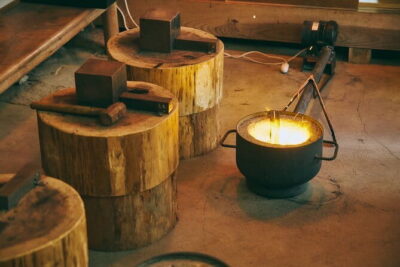
Authentic knife making experience at a blacksmith in Kyoto
Read our review →
Calligraphy class at Buddhist temple in city center
Read our review →
Roketsu dyeing experience: M course Roketsu Dyeing Experience
Read our review →

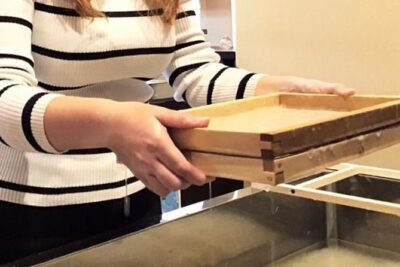
Traditional Japanese Washi Papermaking- Kyoto morning
Read our review →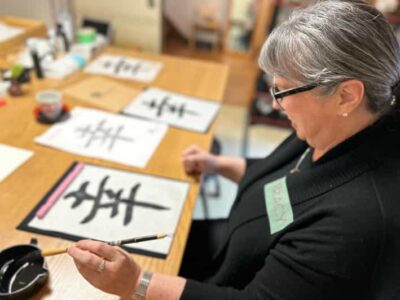
Also filed under