
Reviewed · FUSHIMI INARI SHRINE WALKS
Kyoto Guided Walking Tour: Secret Zen Garden and Fushimi Inari
Kyoto has a way of making you slow down fast. This small-group 4-hour walk links Tofuku-ji-area Zen with lesser-known stops at Fushimi Inari, so you get Kyoto highlights without the map panic. You also get real context for what you are seeing, including how people use these spaces for meditation, reflection, and everyday prayer.
I especially like the small-group size (max 8). In the best reviews, guides such as Kenta, Mika, and Naomi are praised for clear English, careful route choices, and pacing that lets you move uphill without feeling rushed. I also like the mix of famous and off-the-radar places, including a “secret” Zen garden moment at Komyo-in that many visitors miss.
One thing to consider: this is a moderate walking tour with uphill stretches. If you do not love climbs, bring your patience and comfortable shoes, because the day is built around walking and short hiking-style segments.
In This Review
- Key highlights that make this tour work
- From Nakai Tofukuji to Fushimi Inari, in one smooth half-day
- The route starts with Tofuku-ji area calm, not Fushimi Inari chaos
- Gaun-kyo Bridge, a quick viewpoint with a bigger story in your head
- Komyo-in Temple: the Zen garden stop many people miss
- Araki Shrine: a short prayer stop with a very human focus
- Fushimi Inari Yotsuji: a viewpoint break inside the torii world
- Kumataka Shrine: secluded energy when you want a quieter moment
- Okusha Worship Center (Nosatsusho) at Fushimi Inari: where people do the shrine stuff
- Fushimi Inari Taisha Honden: quieter shrine space after the torii tunnel
- What I think you get for the $78.83 price
- Who should book this Kyoto guided walking tour
- Booking vibe and what to expect on the day
- Should you book this Kyoto walking tour?
- FAQ
- How long is the Kyoto guided walking tour?
- What is the tour price per person?
- How many people are in the group?
- Where do I meet the guide, and where does the tour end?
- What time does the tour start?
- Is the tour mostly uphill, and what should I wear?
- Does it run in the rain?
- What about tickets and entry fees?
- Can I cancel and get a full refund?
Key highlights that make this tour work
- Komyo-in Zen garden: the calm, quieter garden stop with a real chance to take your time
- Gaun-kyo Bridge views: a quick photo break over a valley with maple color
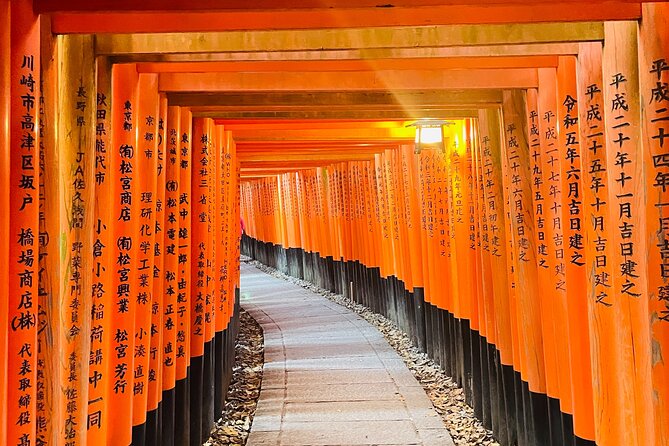
- Fushimi Inari viewpoints beyond the main crush: stops like Yotsuji help you catch the panorama without only standing in a tunnel of people
- Smaller shrines with specific purposes: Araki Shrine (love and relationships) and Kumataka Shrine (spiritual energy) add variety to the day
- Inari shrine details that many skip: you can stop at the worship center for ofuda, omamori, and goshuin
- Guides who manage flow: small groups and flexible timing help you avoid the worst crowd moments
From Nakai Tofukuji to Fushimi Inari, in one smooth half-day
This tour is built like a “Kyoto greatest hits” sampler, but with a Zen brain. You start near Tofuku-ji (the meeting point is by FamilyMart Nakai Tofukuji), then move through a sequence of spiritual sites that feel connected, not random.
The best part is the pacing. At 4 hours, you get enough time to actually look at gardens, read plaques, and notice details like the way torii gates change the sound of a path. A few stops are very short, like bridge and viewpoint breaks. Others, like Komyo-in, take time for walking in and sitting with the garden atmosphere.
And because it is a small group of up to 8, you are not shuffled like luggage. Reviews repeatedly mention that guides keep things moving, yet let you stop when you want photos or quiet time. That matters at places like Fushimi Inari, where speed can turn a spiritual walk into a sprint.
The route starts with Tofuku-ji area calm, not Fushimi Inari chaos
You kick things off at 9:00 am, at the FamilyMart Nakai Tofukuji meeting point. Starting here gives you a big advantage: you are not heading straight into the famous torii tunnel when it is at full peak.
You also end on the Fushimi Inari side, at the Outer Oratory area. That is practical. It helps you roll into more exploring without backtracking across town, especially if you want to keep the day going for dinner nearby.
Also, the tour is rain or shine. Kyoto weather can be moody, but this format keeps the plan intact, so you are not stuck trying to reinvent a half-day itinerary.
Moss, stone, and raked gravel gardens
- Kyoto Arashiyama Walking Tour: Bamboo, Monkeys, Gardens & Secrets
★ 5.0 · 1,216 reviews - Kyoto Zen Meditation & Garden Tour at a Zen Temple with Lunch
★ 5.0 · 441 reviews - Kyoto Arashiyama Bamboo forest & Garden Half-Day Walking Tour
★ 5.0 · 413 reviews - Kyoto: Zen Garden, Zen Mind (Private)
★ 5.0 · 126 reviews
Gaun-kyo Bridge, a quick viewpoint with a bigger story in your head
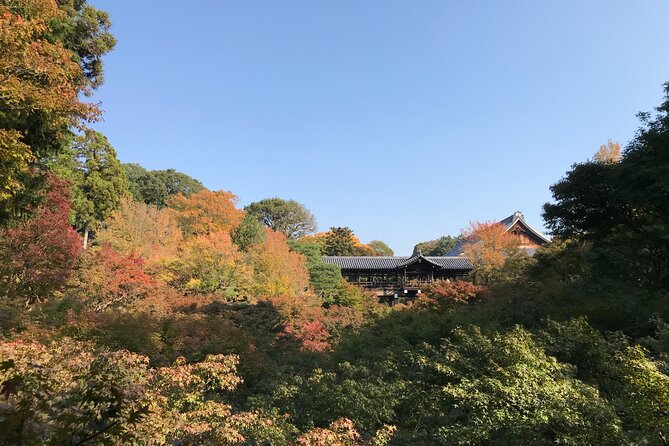
Stop 1 is Gaun-kyo Bridge, a wooden bridge spanning a lush valley. It is not a long stop, about 5 minutes, but it sets the tone. You get a mesmerizing view looking toward Tsutenkyo Bridge and the sea of maple color below.
Even in a brief visit, this works because it frames Kyoto in layers. You are not just taking a single photo. You are learning how these gardens and temple areas are composed, with sightlines and depth. You feel why people slow down here, even when they are only stopping briefly.
Practical tip: since the bridge stop is short, decide your photo angles quickly. Use the moment to get one wide view and then one close-up detail shot, like the bridge texture or the valley lines, before you move on.
Komyo-in Temple: the Zen garden stop many people miss
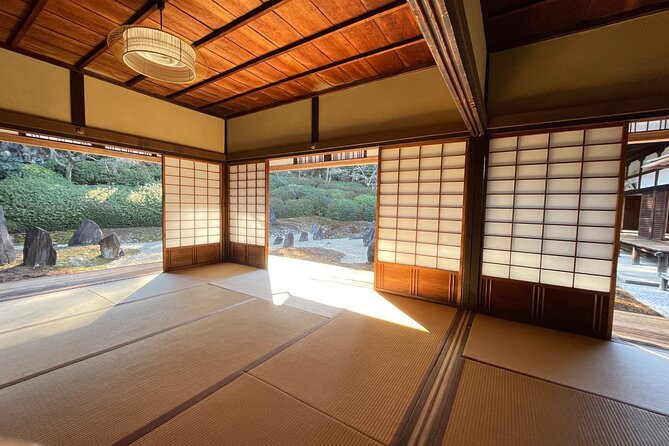
Stop 2 is Komyo-in Temple, around 25 minutes, and the garden admission is included. This is the “secret Zen garden” highlight of the walk, the one that gives you a different Kyoto flavor than torii gates and photo lines.
The key here is time. A lot of Kyoto temple visits become photo-to-photo travel. Komyo-in is designed to let you do something slower: walk the garden lines, look for subtle design cues, and connect the space to meditation and Zen philosophy.
From reviews, one theme stands out: guides explain what you are seeing in plain language, including historical and religious context. That makes the garden feel less like scenery and more like a place with a purpose.
What to watch for during your time there
- How the garden layout creates quiet viewpoints
- How people move through the space, with less rushing than at more famous photo stops
- The way the atmosphere changes once you are inside the garden area
A possible drawback: if you go into this stop expecting only dramatic views, you might feel it is calmer than you hoped. But if you like Zen spaces, it is exactly the point.
Araki Shrine: a short prayer stop with a very human focus
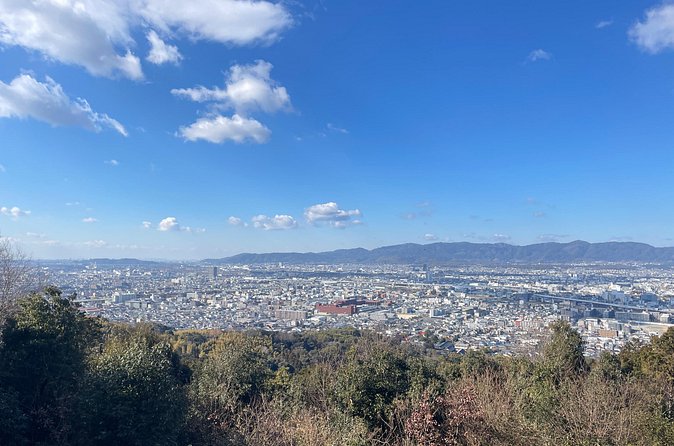
Stop 3 is Araki Shrine, about 10 minutes, free to enter. This is one of those places that gives your day emotional texture. Many people visit Araki Shrine to pray for love, strong relationships, and general well-being.
That matters because it balances the more contemplative Zen garden with something more everyday. Kyoto is not only temples and philosophy. It is also people asking for help and guidance in the middle of regular life.
This is also a good break for your legs. After some walking, a shorter shrine stop keeps your momentum without requiring a big energy investment.
Fushimi Inari Yotsuji: a viewpoint break inside the torii world
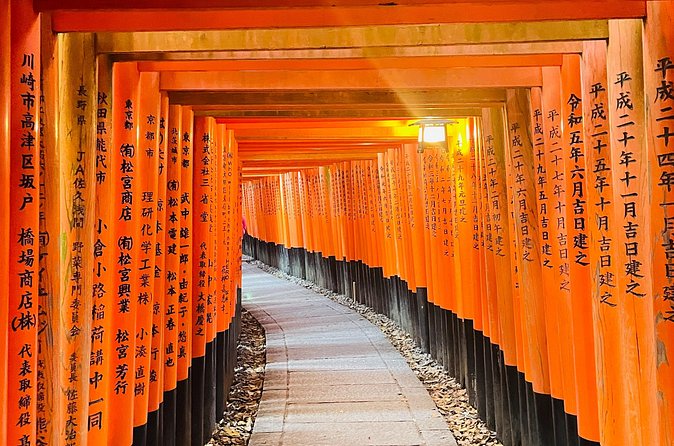
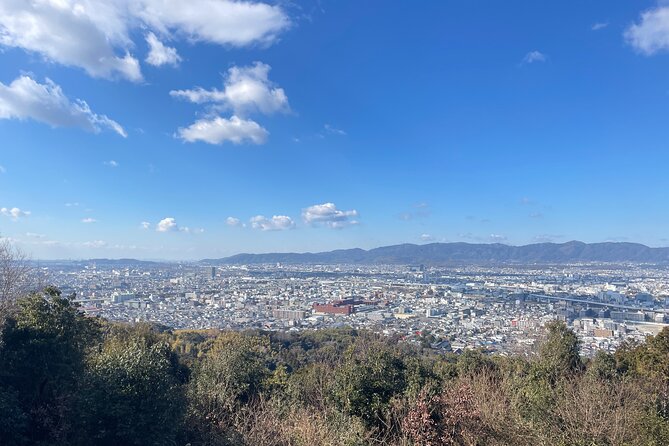
Stop 4 is Fushimi Inari Yotsuji, the Four-Way Crossroad viewpoint on the Fushimi Inari trail. Expect about 20 minutes, free.
The tour frames this stop as a must-visit scenic panorama where you can catch your breath and absorb the surroundings. Yotsuji is especially useful for photo and mood because you are not just staring down a long tunnel of torii. You get a pause point with a broader sense of the site.
In practice, this is where the tour design shows its value. Instead of forcing everyone into the most crowded corridors, it builds in viewpoints and smaller stops that still keep you on the Fushimi Inari story track.
Still climbing through the orange gates?

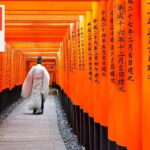
Kumataka Shrine: secluded energy when you want a quieter moment
Stop 5 is Kumataka Shrine, about 15 minutes, free. This shrine is described as secluded and mystical, believed to be a place with strong spiritual energy.
The practical reason to love this stop is simple: it is away from the busy torii gate paths. When Fushimi Inari starts to feel like a long line and a crowd chorus, Kumataka Shrine gives you a calmer pocket.
It also adds variety. A day that is only torii gates can start to blur together. This stop helps you remember that Fushimi Inari is an entire spiritual complex with multiple meanings, not just one famous photo scene.
Okusha Worship Center (Nosatsusho) at Fushimi Inari: where people do the shrine stuff
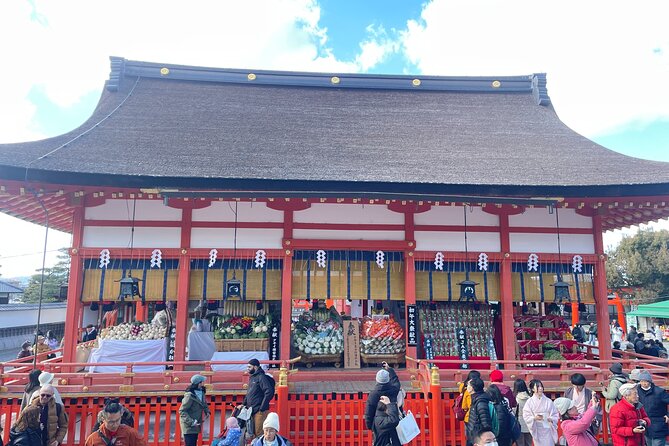
Stop 6 is Okusha Worship Center of Fushimi Inari Shrine, also identified as Nosatsusho, about 10 minutes and free. This is the functional core for many shrine visitors.
This is where you can obtain sacred ofuda (amulets), omamori (charms), and goshuin (shrine stamps). It is not the flashiest part of the day on camera, but it is one of the most meaningful pieces if you want to participate rather than just observe.
If you collect goshuin, this stop is the one to pay attention to. It is the kind of place where your guide’s timing helps, because everyone wants the stamp moment but you do not want to scramble when the line and flow get busy.
Also, this stop tells you something important about why guides matter. Knowing what to look for and where to go inside a large complex saves time and reduces confusion.
Fushimi Inari Taisha Honden: quieter shrine space after the torii tunnel
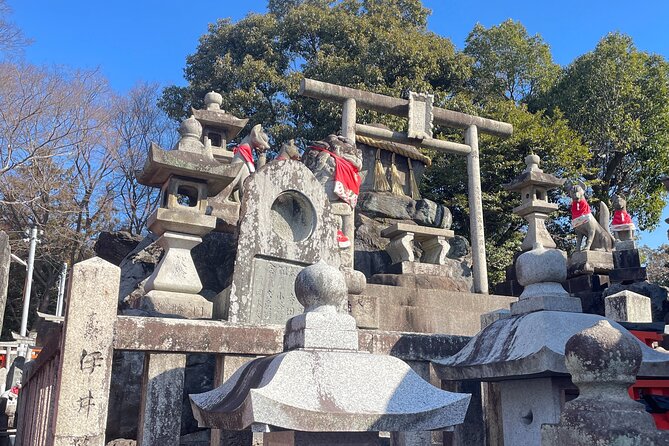
Stop 7 is Fushimi Inari Taisha Honden (Sanctuary), the main shrine area, about 10 minutes, free. While Senbon Torii (the thousand torii gates) and the fox statues steal most attention, the Hon-den gives a different experience.
This is the quieter, more intimate part of the worship complex. You are still in the Inari world, but the focus shifts from spectacle to ceremony and devotion.
Done well, this ending works because it helps you process the whole day. You started with Zen garden calm, moved through prayer spots, then returned to the heart of the shrine area in a less frantic mood.
What I think you get for the $78.83 price
At $78.83 per person for about 4 hours, this tour is not a bargain deal. It is priced like a guided experience with entry value and problem-solving.
Here is the value logic I see:
- Guide time matters at Fushimi Inari, where routes and crowd levels can change fast. The small group cap of 8 also adds cost.
- Time efficiency is real. Instead of building your own route across temples and shrines, you follow a planned flow that includes viewpoint stops and a Zen garden stop.
- Admission value: Komyo-in garden admission is included, while many other stops are free. Even if you only care about one paid admission, you are still getting structure.
- Mobile ticket makes arrival easier, especially when you are moving between areas.
If you like freedom more than planning, you might prefer self-guided exploration. But if your goal is to see a lot of Kyoto spiritual sites in one half-day without wasting time, this price can feel fair.
Who should book this Kyoto guided walking tour
This is a strong fit if you want:
- A first-timer friendly introduction to Zen temple spaces and how meditation relates to design and quiet
- A guided walk that helps you avoid getting lost across multiple Kyoto highlights
- A balance of famous places (Fushimi Inari) and smaller stops that add meaning
It is also a good choice for couples who want a less chaotic route with specific prayer stops, like Araki Shrine for love and relationships.
I would be more cautious if you:
- Struggle with moderate walking and uphill segments
- Prefer to spend most of your time only in one landmark area, like only Senbon Torii
Booking vibe and what to expect on the day
This tour often sells with decent lead time, with an average booking window of about 37 days. If your dates are tight, booking earlier helps.
You will also get confirmation at booking time, and the experience uses a mobile ticket. The tour runs rain or shine, so plan for the weather.
Most importantly, think of it as a guided walk with a spiritual purpose. The best reviews consistently praise how guides explain what you are seeing and adjust to your pace. If you show up with comfortable shoes and an open mindset for quiet places, you will likely feel the same payoff.
Should you book this Kyoto walking tour?
Yes, if you want a half-day plan that connects Zen garden calm with a smarter way to experience Fushimi Inari. The tour’s biggest strength is not just the list of stops. It is the way the route blends viewpoints, smaller shrines, and one longer garden moment at Komyo-in.
Book it if you value:
- Small-group attention
- Crowd-aware routing
- Clear explanations of how these places function for worship and meditation
Skip it if you hate hills or want a fully self-paced day with no structure. This walk has a rhythm. If you match that rhythm, it is a very good use of time in Kyoto.
FAQ
How long is the Kyoto guided walking tour?
The tour is about 4 hours.
What is the tour price per person?
The price is $78.83 per person.
How many people are in the group?
The group size has a maximum of 8 travelers.
Where do I meet the guide, and where does the tour end?
You start at FamilyMart Nakai Tofukuji, 12-chōme-232 Honmachi, Higashiyama Ward, Kyoto. The tour ends at the Outer Oratory, 58 Fukakusa Yabunouchichō, Fushimi Ward, Kyoto.
What time does the tour start?
The start time is 9:00 am.
Is the tour mostly uphill, and what should I wear?
You should have a moderate physical fitness level. A moderate amount of walking and hiking is involved, so you should wear comfortable walking shoes.
Does it run in the rain?
Yes, the tour takes place rain or shine.
What about tickets and entry fees?
The tour uses a mobile ticket. Admission is listed as free for several stops, and Komyo-in Temple has admission included.
Can I cancel and get a full refund?
Yes. You can cancel up to 24 hours in advance for a full refund. If you cancel less than 24 hours before the start time, the amount paid will not be refunded.
More Walking Tours in Kyoto

New This Season
- Koyasan Day Trip by Private Car from Kyoto
- Old Port Town and Ultimate Sake Tasting Private Tour From Kyoto
- Kyoto’s Timeless Charm: 3hr Exploration of History and Peace
- Kyoto: 5 Types of Sushi Making
- Sacred Peak & Ancient Paths: Kurama-Kibune Hiking Experience
- Kyoto: Exclusive ZEN practice at Manpukuji temple in Uji
- Kyoto: Private Seasonal Aroma Yoga Class
- Traversing Kyoto’s Scenic West – Arashiyama to Kinkakuji
Fushimi Inari Shrine Walks, compared.

Fushimi Inari, Kinkakuji, Bamboo Grove 1 Day Bus Tour
Read our review →
Fushimi Inari Hidden Hiking Tour (Private Option Available)
Read our review →
Kinkakuji,Arashiyama,FushimiInariShrine,NaraPark
Read our review →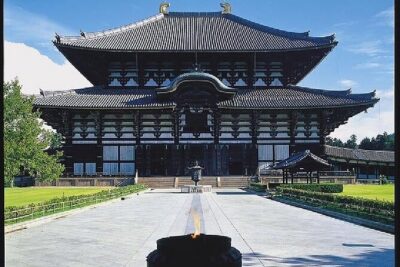
Nara, Fushimi Inari Taisha, Arashiyama Bus Tour
Read our review →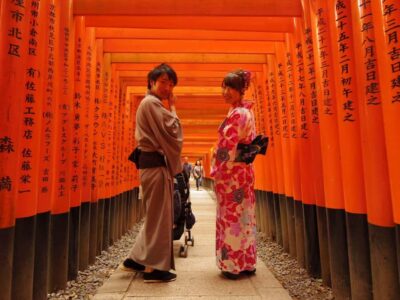
Arashiyama, Nara & Fushimi Inari Shrine w/Lunch
Read our review →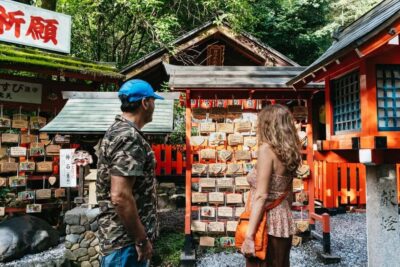
Nijo Castle, Kiyomizu & Fushimi Inari Guided Tour
Read our review →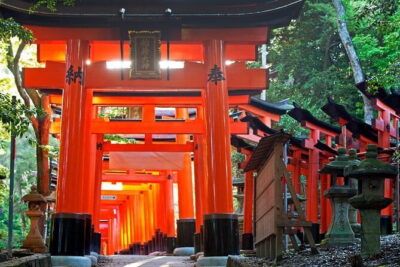
Nijo, Kinkaku-ji, Arashiyama, Kiyomizu & Fushimi Inari
Read our review →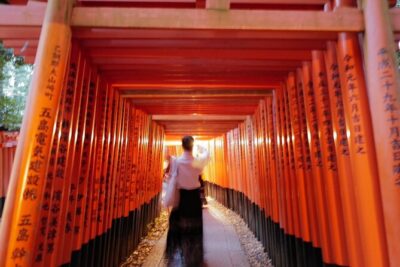
Also filed under