
Reviewed · ARTISAN CRAFT WORKSHOPS
Kyoto : Japanese Calligraphy Workshop with a calligrapher
Brush strokes, big payoff, in Kyoto. This Japanese calligraphy workshop puts you in front of a real calligrapher as you learn Kanji fundamentals and make a finished souvenir you can bring home.
I like that it starts with the basics, including five representative strokes that form the foundation of Kanji writing, plus time for guided practice at your pace. You also get to pick a character or word and work from a personalized model, so your final piece actually looks like you worked on it, not like you just copied a blur.
One thing to consider: the session runs about 1 hour to 90 minutes, so if you fall in love with the brush, you may want more time. Also, the meeting spot can be a little tricky to find, so build in a few minutes and watch for the sign board by the entrance.
In This Review
- Key Points That Matter Before You Go
- A Kyoto Workshop That Actually Lets You Create
- Tools, Ink, and the First Five Kanji Strokes
- Choose Your Kanji or Word, Then Get a Personalized Model
- Making the Final Piece: Fan, Shikishi Board, or Washi Postcard
- Price and Time: Is It Worth $51?
- Logistics That Can Trip You Up (And How to Beat Them)
- What You’ll Walk Away With (Beyond the Pretty Keepsake)
- Who This Workshop Suits Best
- Should You Book This Kyoto Calligraphy Workshop?
- FAQ
- How long is the Japanese calligraphy workshop in Kyoto?
- Do I need prior calligraphy experience?
- What materials are provided?
- Can I choose what I want to write?
- What can I take home?
- Is the instructor fluent in English?
- What should I wear?
- What is not included in the price?
Key Points That Matter Before You Go
- Five-stroke Kanji foundation to build confidence fast
- English instruction with patient, supportive coaching
- Personalized model for the exact Kanji or word you choose
- Pick your take-home format, like a fan, shikishi board, or washi postcard
- Optional Japanese name writing on your final piece
- Commemorative photo taken together with your finished artwork
A Kyoto Workshop That Actually Lets You Create
Kyoto can be a lot of temples, a lot of crowds, and a lot of “look but don’t touch.” This experience flips that. You get hands-on training with brush and ink, right in the workshop setting, with an instructor who teaches in English.
The class runs in private or small groups, which matters more than you might think. With fewer people, you can get closer coaching on posture, brush control, and stroke rhythm. If your goal is to leave with something you truly made, that small-group feel helps.
Also, no prior calligraphy experience is required. You bring yourself, and the materials are provided. Just expect a simple, focused lesson built around doing, not just watching.
Tools, Ink, and the First Five Kanji Strokes
You begin by learning how to use the tools and how to approach Japanese characters. Expect a quick orientation, then a lot of practical practice. The instructor shows the techniques right in front of you, and you follow along, stroke by stroke.
You’ll spend most of your time on Kanji, starting with five representative strokes that form the foundation of Kanji writing. That’s a smart way to learn because it gives you a small set of building blocks. Instead of trying to copy whole characters from the start, you train the motion behind them.
Along the way, you’ll also explore Japanese characters, including Kanji and Katakana. Even if the lesson emphasizes Kanji, it helps to understand the basic character landscape you’re working within.
Two small practical notes from the real world:
- Ink can stain, so wear comfortable clothing you do not mind getting a little messy.
- Because you’re working with ink and paper products, slow down and let your hands follow the lesson. Rushing makes the strokes shaky.
Make something with a Kyoto craftsman
- Authentic knife making experience at a blacksmith in Kyoto
★ 4.8 · 350 reviews - Kyoto: Calligraphy class at Buddhist temple in city center
★ 5.0 · 167 reviews - Roketsu dyeing experience: M course Roketsu Dyeing Experience
★ 5.0 · 163 reviews - Kyoto: Japanese Calligraphy Class
★ 4.8 · 89 reviews
Choose Your Kanji or Word, Then Get a Personalized Model
After the stroke practice, you get to choose what you want to write. This is the moment where the workshop stops being generic and becomes personal.
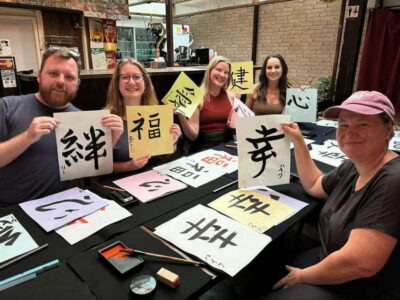
You’ll select a word or a Kanji character to try. Common picks include 愛 (Love), 幸 (Happiness), and 忍者 (Ninja). You can also choose other Kanji you’re curious about, including characters people often request like tree or samurai. The point is simple: choose something that feels fun for you, not something you think you should pick.
Once you decide, the calligrapher provides a personalized model for your chosen Kanji. That model is your guide, and you get key points on how to write it beautifully. It is hands-on coaching, not just a worksheet.
If you’re learning from scratch, this is one of the best parts of the format. A personalized model helps you see what “good” looks like for the exact character you chose. You can focus your effort, instead of guessing.
And yes, you can also write your name in Japanese on your final piece. That turns the souvenir into something more personal than a random craft.
Making the Final Piece: Fan, Shikishi Board, or Washi Postcard
Now comes the payoff. You create your final artwork using one of the available formats, and you pick what you want from the options.
Your choices include:
- a folding fan
- a shikishi board
- a washi postcard
Each one changes the feel of what you make. A fan is more playful and portable. A shikishi board looks more like a traditional display piece. A postcard is great if you want something that feels lighter and easier to send or keep.
You’ll produce your finished artwork following the instruction and the model you were given. This is where your early stroke practice shows up. If you took the time to practice the foundation strokes, your final character will look more controlled.
If you’re writing your name in Japanese, this is also where it fits in. Plan a bit of calm focus here. Names are personal, so it feels more meaningful when you write it carefully rather than quickly.
When you finish, you get a commemorative photo taken together with your completed artwork. It is a small touch, but it helps you remember the moment, not just the souvenir.
Price and Time: Is It Worth $51?
For $51 per person, you’re paying for more than “someone showing you how to do it.” You’re getting instruction from an English-speaking calligrapher, basic brush and ink training, Kanji stroke practice, a personalized model, and the materials to make a take-home piece.
The workshop duration runs about 1 hour to 90 minutes, so it is not a half-day project. That’s also part of the value. You get a real skill moment without demanding a big chunk of your day in Kyoto.
Where the shorter timing can feel tight is if you get fully hooked. Calligraphy is one of those crafts where every extra minute lets you improve, refine, and try again. If you want repetition and lots of variations, this might leave you wanting more.
Still, for the money and time, it’s a solid trade: you come in with no experience, you leave with a finished artwork format you chose, and you get a photo to mark the occasion.
Also note what’s not included: meals and drinks, plus transportation to the venue. Build your schedule accordingly. If you’re pairing this with other Kyoto sights, aim to avoid rushing from one place to another, since you’ll want a calm start with ink and paper in hand.
Logistics That Can Trip You Up (And How to Beat Them)
This is easy to overlook until it’s your own problem: the meeting point is described as having a sign board in front of the entrance.
That sounds simple, but in Kyoto, entrances can be subtle. One practical move: arrive a few minutes early. Give yourself time to locate the sign board and get settled before the class starts. You’ll also want to use that time to check how your clothing feels for ink work, because once you begin, it’s paint, not performance.
As for group size, it can be private or small groups. If you care about personal guidance, that’s a good sign. Smaller groups usually mean more direct support when your strokes need adjusting.
A quieter way to spend a day in Kyoto

What You’ll Walk Away With (Beyond the Pretty Keepsake)
The obvious takeaway is your final calligraphy piece, made on your chosen format: fan, shikishi board, or washi postcard. But there’s a second, less obvious win.
You learn the building blocks behind Kanji writing, starting from basic strokes. That means you’re not just copying a character. You leave knowing how to think about stroke formation, which makes it easier to recognize and write other Kanji later.
You also get practical familiarity with tools and ink use. That confidence matters if you want to try calligraphy again, buy related supplies, or even just appreciate what you see in Kyoto cultural spaces.
And because you can include your name in Japanese, the piece becomes a personal memory. It’s harder to forget something you wrote yourself, carefully, with real guidance.
Who This Workshop Suits Best
This workshop is a great fit if:
- you want a hands-on activity in Kyoto that is not dependent on weather
- you like taking home something made by you
- you enjoy learning a skill in a short, structured session
- you want English instruction and support, not a silent demo
It may not be the best fit if:
- you want a long, multi-session course
- you’re looking for a big cultural walking route or temple stop
- you are extremely sensitive to ink mess, since stain risk is real
For most people, though, it lands in a sweet spot: short enough to fit your schedule, focused enough to feel satisfying.
Should You Book This Kyoto Calligraphy Workshop?
I’d book it if you want a meaningful souvenir and a real skill moment in under two hours. The value is strong because you get instruction, tools guidance, practice time, a personalized model for your chosen Kanji, and materials for your final piece.
If you like crafts, calligraphy, or Japanese characters, it’s an easy yes. If you hate the idea of ink stains or you need lots of free time to keep working, you might feel the class is short. But if you show up ready to learn the basics, you’ll leave with a piece you can proudly display, plus the satisfaction of having made it with your own brush.
FAQ
How long is the Japanese calligraphy workshop in Kyoto?
The workshop lasts about 1 hour to 90 minutes. Exact timing depends on availability and the starting time.
Do I need prior calligraphy experience?
No. The workshop is designed for beginners, and no prior calligraphy experience is required.
What materials are provided?
All materials are provided, and you receive instruction on brush and ink usage. You also create your souvenir using the provided format options.
Can I choose what I want to write?
Yes. You can choose a word or a Kanji character for your artwork, and you can also write your name in Japanese.
What can I take home?
You can choose a final piece format such as a folding fan, a shikishi board, or a washi postcard.
Is the instructor fluent in English?
Yes. The instructor provides instruction in English.
What should I wear?
Wear comfortable clothing. Ink may stain, so dress like you might get a little messy.
What is not included in the price?
Transportation to the venue and meals and drinks are not included.
New This Season
- Koyasan Day Trip by Private Car from Kyoto
- Old Port Town and Ultimate Sake Tasting Private Tour From Kyoto
- Sacred Peak & Ancient Paths: Kurama-Kibune Hiking Experience
- Kyoto’s Timeless Charm: 3hr Exploration of History and Peace
- Kyoto: 5 Types of Sushi Making
- Kyoto: Exclusive ZEN practice at Manpukuji temple in Uji
- Kyoto: Private Seasonal Aroma Yoga Class
- Traversing Kyoto’s Scenic West – Arashiyama to Kinkakuji
Artisan Craft Workshops, compared.
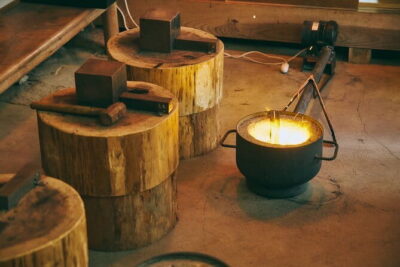
Authentic knife making experience at a blacksmith in Kyoto
Read our review →
Calligraphy class at Buddhist temple in city center
Read our review →
Roketsu dyeing experience: M course Roketsu Dyeing Experience
Read our review →

Traditional Japanese Washi Papermaking- Kyoto morning
Read our review →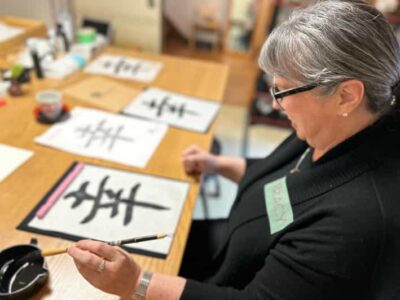
Also filed under