
Reviewed · ARTISAN CRAFT WORKSHOPS
Kyoto: Kintsugi Jewelry Workshop with Natural Stones
Gold, lacquer, and broken pottery, all in Kyoto.
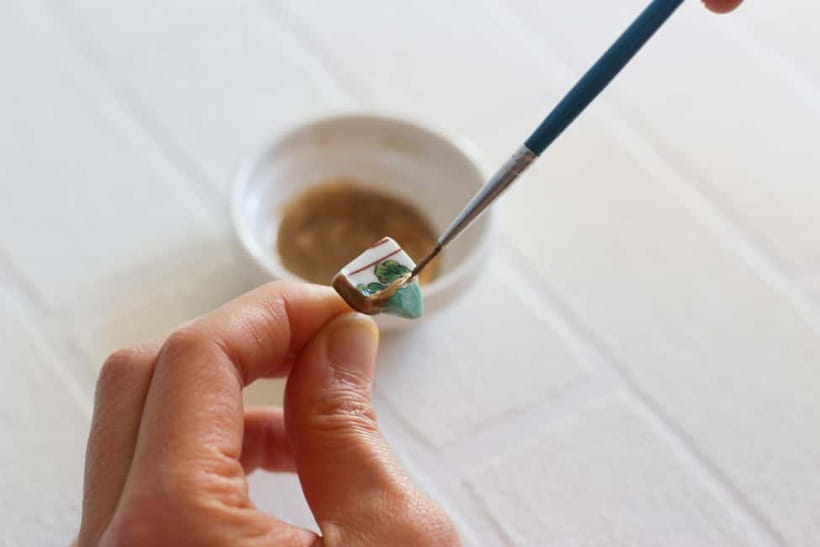
This kintsugi jewelry workshop turns repairs into wearable art, set in a 100-year-old townhouse just a few minutes on foot from Fushimi Inari Taisha. I love that it feels calm and hands-on, not like a rush-through craft stop.
My favorite part for you: you get to choose your own pottery fragments and natural stones, plus optional pearls and shells, then assemble them into jewelry you actually want to wear. There’s also step-by-step guidance from the host, Natsuka, with time to slow down.
One consideration: the workshop is not suitable for wheelchair users, and the atelier is down a narrow alley where vehicles cannot access the spot. Plan on walking those last minutes, even if you are carrying bags.
In This Review
- Key things to know before you go
- Kyoto’s quiet craft moment near Fushimi Inari Taisha
- Getting there without stress
- Kintsugi jewelry: what you’re actually learning
- Choosing pottery shards and natural stones like a personal art palette
- One-on-one style guidance
- The 150-minute flow: synthetic lacquer, gold powder, then your finished piece
- What happens during your hands-on time
- A “rainy day Kyoto” kind of activity
- Price and value: why $106 feels fair here
- Who this workshop is best for, and who should skip it
- When to be careful
- Pair it with your Kyoto day plan
- Should you book this kintsugi jewelry workshop?
- FAQ
- How long is the Kyoto Kintsugi Jewelry Workshop?
- How much does it cost?
- Where does the workshop take place?
- Is there parking available at the atelier?
- What is included in the workshop price?
- What materials can I choose for my jewelry?
- What types of jewelry accessories can I make?
- Does the workshop work for allergy concerns?
- Can I take my jewelry home the same day?
- What languages are the instructors?
Key things to know before you go
- Small group size (up to 10), so you get real attention while working on delicate details
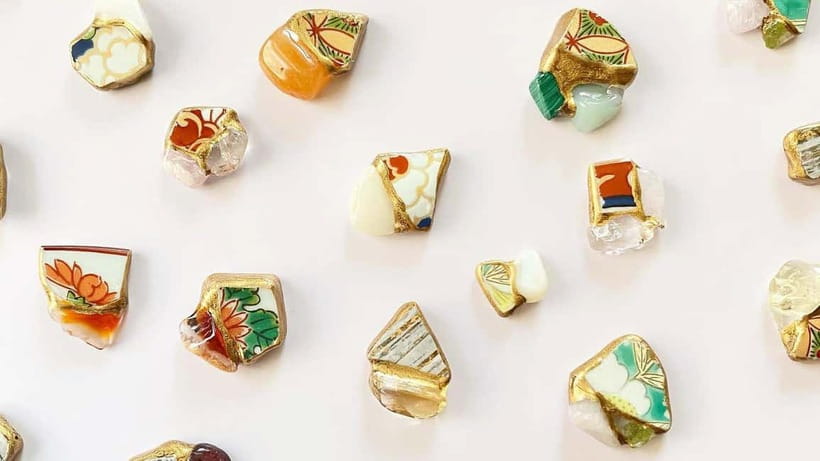
- You mix materials: pottery shards with natural stones, shells, pearls, and stained glass options
- Kintsugi using synthetic lacquer and gold powder for comfort and allergy-friendly handling
- You can take your jewelry home the same day, so it feels like a real souvenir, not a store purchase
- Natsuka’s pace is unhurried, and the class is built for learning and finishing, not rushing you out the door
Kyoto’s quiet craft moment near Fushimi Inari Taisha
Kyoto can be loud in the obvious places. This workshop gives you a different tone: a cozy session in a traditional space, with your hands busy and your brain finally off sightseeing mode.
The setting matters. It happens in a 100-year-old Kyoto townhouse, a one-story home with a noticeable white engrace curtain at the entrance. You are also close to one of Kyoto’s most famous sights, with the atelier described as about a 3-minute walk from Fushimi Inari Taisha. That makes the day easy to build: do shrine time before, or do it after, then come back to a quieter corner to create.
Group size is capped at 10 participants, and that changes the whole feel. In a small class, you do not have to guess what to do next. You can ask questions, compare choices, and get help aligning pieces so your final jewelry looks intentional.
Getting there without stress
The meeting point is conveniently near transit: it’s about a 5-minute walk from Keihan Ryukoku Daimae-Fukakusa Station or JR Inari Station. There is no parking at the atelier, and the street in front is a narrow alley unsuitable for vehicles, so do not plan on driving up.
If you are using navigation, follow the provided photo map route from your nearest station. When a place is inside an alley, a map pin can send you 30 seconds in the wrong direction, and you do not want to start your class annoyed.
Make something with a Kyoto craftsman
- Authentic knife making experience at a blacksmith in Kyoto
★ 4.8 · 350 reviews - Kyoto: Calligraphy class at Buddhist temple in city center
★ 5.0 · 167 reviews - Roketsu dyeing experience: M course Roketsu Dyeing Experience
★ 5.0 · 163 reviews - Kyoto: Japanese Calligraphy Class
★ 4.8 · 89 reviews
Kintsugi jewelry: what you’re actually learning
Kintsugi is famous, but it is often treated like a trend. Here, you get the meaning behind it, which is the part that makes the jewelry feel personal.
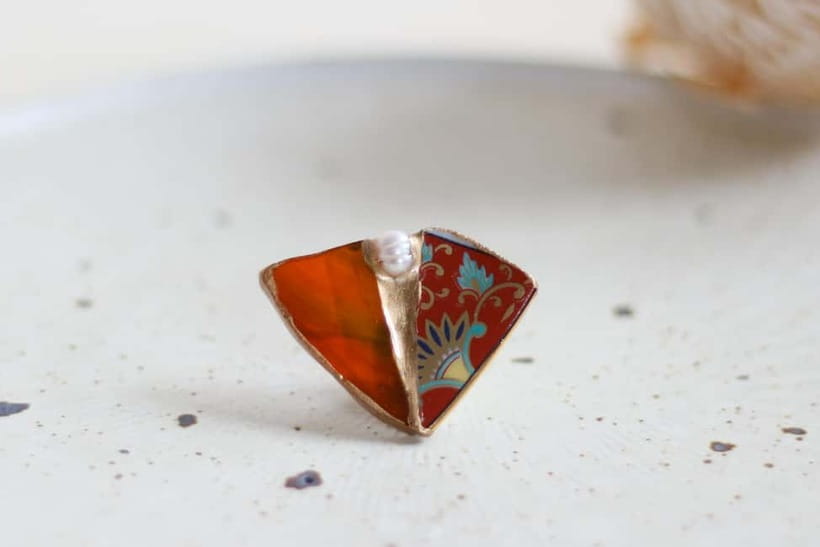
You start with the core idea: kintsugi repairs broken ceramics using lacquer mixed with precious-metal style finishing. Instead of hiding cracks, the technique highlights them. In Japanese culture, that’s tied to ideas like wabi-sabi, where imperfection is not a problem to erase. It is part of the object’s story.
In this workshop, you learn not just the steps, but also why the process matters. You’ll hear about the history and significance of kintsugi, and how that thinking connects to ceramics from different regions of Japan. That context turns your final piece into more than a pretty accessory. It becomes a wearable reminder of care, repair, and second chances.
And yes, you are still making jewelry. You are just doing it with a mindset that respects the material instead of treating it like something disposable.
Choosing pottery shards and natural stones like a personal art palette
This is where your piece becomes yours.
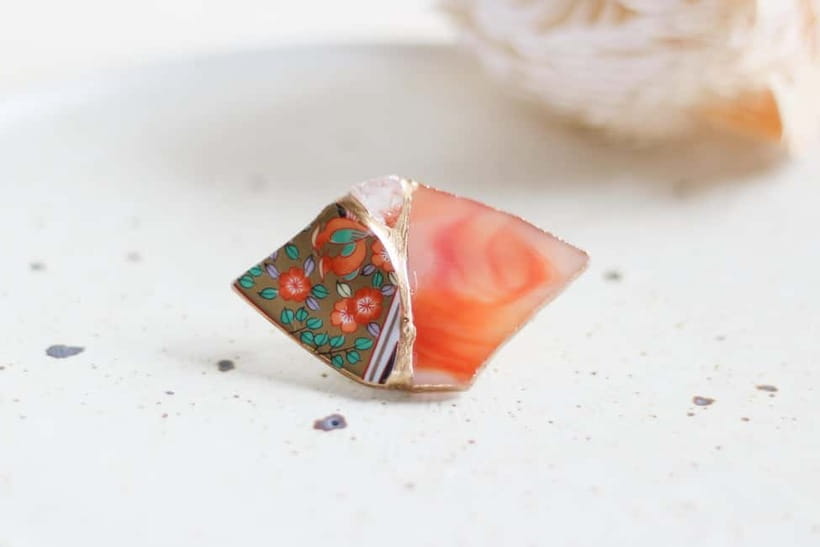
You get to pick from pottery fragments and materials with names that sound like a tour of Japan’s craft regions: Arita, Karatsu, Oribe, Kyoto, Shigaraki, and Hagi. Even if you are not a ceramics expert, you can choose based on color and pattern. The whole point is that you can build a combination that feels harmonious to you.
On top of pottery, you can select natural stones, and the workshop also includes options like shells and pearls, plus stained glass. That range matters because it lets you go beyond the “gold line on a single tile” look. You can make something that feels minimal and modern, or something more decorative and sparkly.
Then you choose what you want to wear. The accessory list is broad: earrings, rings, necklaces, brooches, tie pins, cufflinks, and more. That variety is great if your style runs anywhere from everyday simple to formal little details.
One-on-one style guidance
The instructor, Natsuka, guides you step by step. The class is designed for you to plan your layout and then build it carefully. With a small group, you can get help when a piece feels tricky or when you are unsure which fragment will look best.
What I like about this setup is that it protects your creative choices. You are not forced into a single template. You are choosing from real materials and shaping the final result.
The 150-minute flow: synthetic lacquer, gold powder, then your finished piece
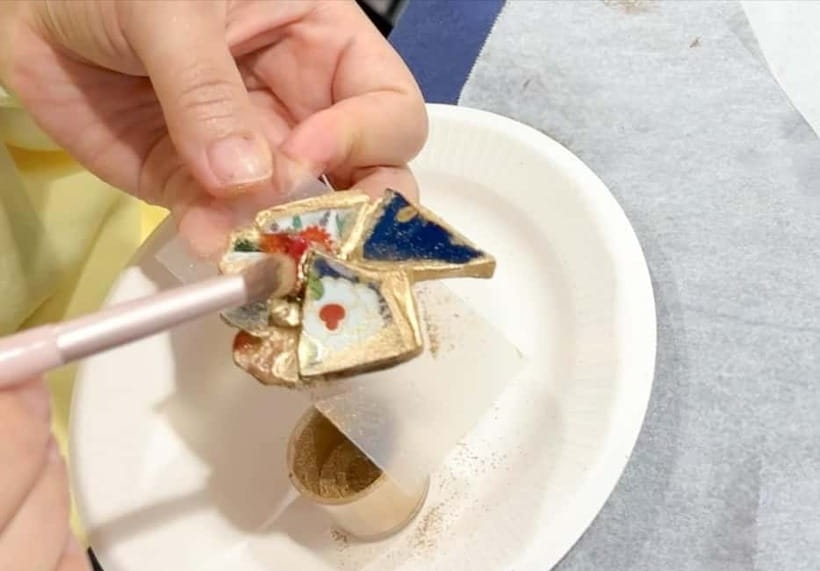
A lot of craft classes end with you leaving with something pretty, but unclear. This one is more structured, so you know what you are doing and why each step matters.
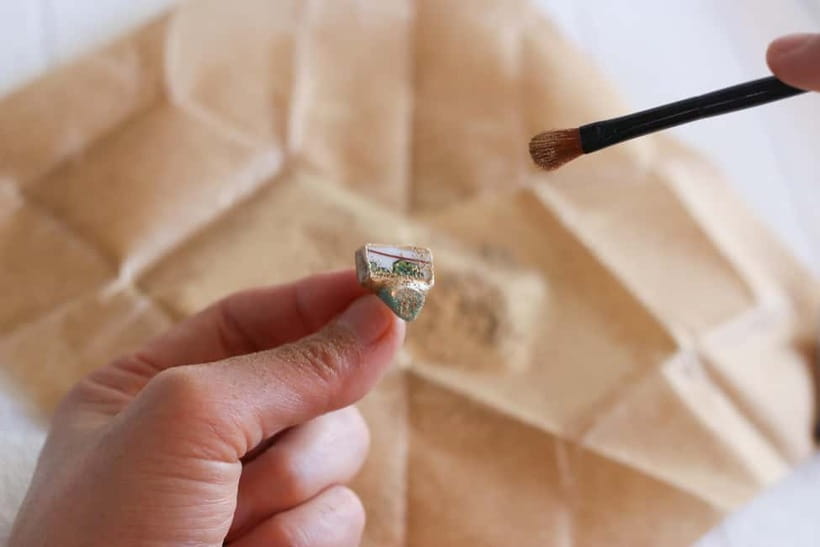
The workshop uses synthetic lacquer along with gold powder. Synthetic lacquer is specifically mentioned as a way to help avoid allergic reactions, which is a smart detail for a hands-on setting where you are working closely with materials.
A quieter way to spend a day in Kyoto

What happens during your hands-on time
You start by assembling your design using the selected pottery shards and stones. Then you apply the lacquer-based kintsugi technique, where the gold-toned lines become part of the structure and decoration.
One practical plus: the pace is relaxed, and you have time to design. People consistently highlight that they did not feel rushed, even when they wanted to take longer on details. So if you tend to get perfectionist with crafts, you are in the right place.
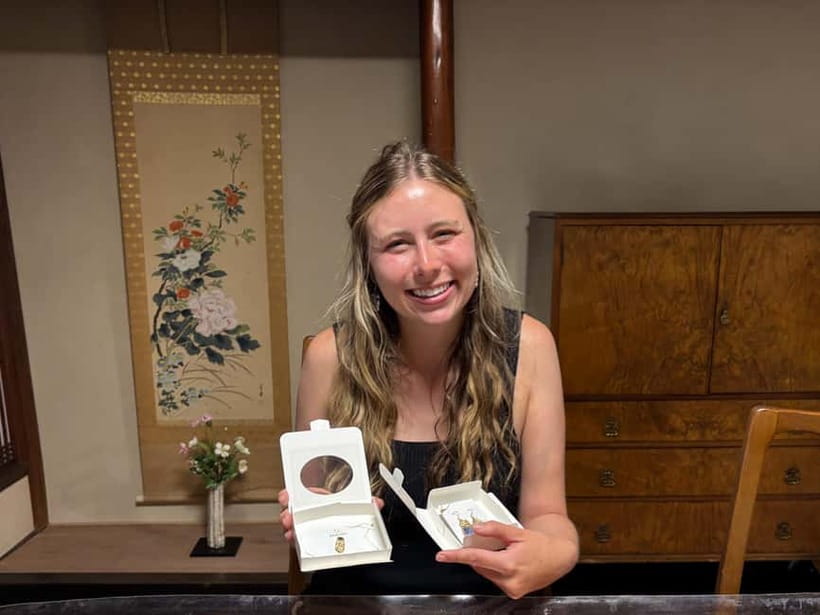
By the end, you leave with the jewelry that you make, and you can take it home the same day. That means you are not waiting for shipping or a follow-up photo. You finish your souvenir in the same session, which is perfect for a trip that has a tight schedule.
A “rainy day Kyoto” kind of activity
If the weather turns or you need a break from shrine lines and transit, this fits beautifully. It is not a long, exhausting day. It’s focused, creative, and mostly seated or table-based, so it’s a mental reset.
And because you are near Fushimi Inari, you can treat it like a planned quiet break in between bigger sights.
Price and value: why $106 feels fair here
At $106 per person, this sounds like a craft splurge until you look at what you actually get for it.
You receive:
- the kintsugi workshop instruction
- materials including synthetic lacquer and gold powder
- access to pottery shard choices plus natural stones and other decorative elements like pearls or shells
- help from the instructor during the process
You also have a session length of 150 minutes with a small group, which is not just “time in a room.” It is enough time to design, apply, and finish properly.
One review note you should take seriously for budgeting: the class format is set up so you can plan to make more than one finished item, and one person specifically called out making two pieces of jewelry. Even without counting exactly how many you finish, the structure clearly supports a real output, not a half-start craft.
For many Kyoto souvenirs, you pay for something made elsewhere. Here, you are paying for a taught technique, access to quality-looking materials, and the satisfaction of walking out with a piece that matches your own choices.
Who this workshop is best for, and who should skip it
This experience is ideal if you want:
- a meaningful craft tied to Japanese culture, not just a generic souvenir making class
- a calmer break from busy sightseeing, in a traditional Kyoto townhouse
- a small-group setting where you can actually ask for help
- the chance to build a one-of-a-kind design using real pottery fragments and stones
It is also a nice fit if you like taking home something you will wear. The choice of accessories like earrings, rings, necklaces, and brooches means you are not stuck with one item format.
When to be careful
It is not suitable for wheelchair users, so if mobility access is part of your planning, you’ll need another option.
If you are traveling with kids, pay attention to your child’s comfort with delicate materials and table work. One parent shared that they did it with an 8-year-old and had a great time, which suggests it can work when everyone is patient and engaged, not when someone is rushing.
Pair it with your Kyoto day plan
Because the atelier is near Fushimi Inari Taisha, you can easily pair this with shrine time without turning your day into a transportation puzzle.
A simple approach:
- If you like mornings, visit Fushimi Inari early, then come for the workshop later when crowds can feel heavier.
- If you prefer avoiding the hottest or most crowded hours, flip it: workshop first, then shrine after when your creative brain is already in a better mood.
Either way, you get a balanced day: iconic Kyoto outside, quiet craft inside.
Should you book this kintsugi jewelry workshop?
Book it if you want a souvenir with a story, and you like the idea of taking Japanese kintsugi beyond photos and into a personal object you helped create. I think it’s especially worth it for people who enjoy detail work, thoughtful making, and learning the cultural meaning behind the craft.
Skip it if mobility access is needed, since it is not suitable for wheelchair users. Also skip if you want a very fast, hands-on experience with minimal guidance. This class is guided and step-by-step, and the best results come when you’re willing to slow down.
If you are on the fence, use this quick checklist: small group, meaningful technique, materials you can choose, and take-home jewelry the same day. That combination is exactly what makes this kind of workshop feel like a Kyoto highlight instead of just a “nice activity.”
FAQ
How long is the Kyoto Kintsugi Jewelry Workshop?
The workshop lasts 150 minutes.
How much does it cost?
The price is $106 per person.
Where does the workshop take place?
It takes place in a 100-year-old Kyoto townhouse near Fushimi Inari Taisha.
Is there parking available at the atelier?
No. There is no parking available, and the street in front is a narrow alley that is not suitable for vehicles.
What is included in the workshop price?
It includes the kintsugi jewelry workshop, materials such as synthetic lacquer and gold powder, and assistance from an instructor.
What materials can I choose for my jewelry?
You can choose from pottery fragments and natural stones, including options such as shells and pearls, and also stained glass. Pottery types available include Arita, Karatsu, Oribe, Kyoto, Shigaraki, and Hagi.
What types of jewelry accessories can I make?
You can choose from items such as earrings, rings, necklaces, brooches, tie pins, cufflinks, and more.
Does the workshop work for allergy concerns?
The workshop uses synthetic lacquer to help avoid allergic reactions.
Can I take my jewelry home the same day?
Yes. Participants can take their creations home on the same day.
What languages are the instructors?
The workshop is taught by an instructor who speaks English and Japanese.
New This Season
- Koyasan Day Trip by Private Car from Kyoto
- Old Port Town and Ultimate Sake Tasting Private Tour From Kyoto
- Kyoto’s Timeless Charm: 3hr Exploration of History and Peace
- Kyoto: 5 Types of Sushi Making
- Sacred Peak & Ancient Paths: Kurama-Kibune Hiking Experience
- Kyoto: Exclusive ZEN practice at Manpukuji temple in Uji
- Kyoto: Private Seasonal Aroma Yoga Class
- Traversing Kyoto’s Scenic West – Arashiyama to Kinkakuji
Artisan Craft Workshops, compared.
Authentic knife making experience at a blacksmith in Kyoto
Read our review →
Calligraphy class at Buddhist temple in city center
Read our review →
Roketsu dyeing experience: M course Roketsu Dyeing Experience
Read our review →

Traditional Japanese Washi Papermaking- Kyoto morning
Read our review →
Also filed under