
Reviewed · FUSHIMI INARI SHRINE WALKS
Kyoto near Fushimiinari Wagashi making&Small Group Tea Ceremony
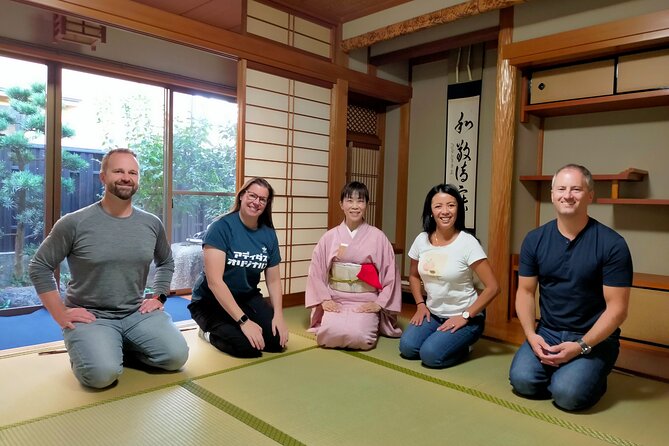
A quiet tea room in Kyoto beats the big-ticket tours every time. This one combines a hands-on wagashi class with a proper matcha ceremony in an authentic house setting. I like that it is truly small, max 8 people, and led by English-speaking instructors who can explain the why behind the ritual, not just the how. I also like that you get to make and drink matcha yourself, so you leave with something real to recreate at home. One consideration: you must wear socks in the room (bare feet are not allowed), and it is not recommended if you avoid caffeine.
The vibe feels more like being invited over than queued up. You start in the kitchen, learn wagashi step-by-step, then move through a small garden into a tatami room for the ceremony. You can even request seating with chairs instead of tatami, which helps if your knees are not feeling flexible.
In This Review
- Key Points I Think You’ll Care About
- Kyoto Tea Ceremony Near Fushimi Inari, Done the Practical Way
- The Local House Tea Room, Tatami Seating, and the Sock Rule
- Wagashi Making in the Kitchen, Step-by-Step and Hands-On
- The Tea Ceremony Flow, Including the Scroll and How You Attend
- Matcha Preparation You Do Yourself, Not Just Watch
- Timing in Fushimi, and How It Fits Into a Kyoto Day
- Price and Value: What You Get for $52.26
- Who This Kyoto Tea Ceremony Suits Best
- Should You Book This Kyoto Tea Ceremony?
- FAQ
- How long is the Kyoto tea ceremony session?
- How much does it cost, and what is included?
- How big is the group?
- Do I need socks or special footwear?
- Is tatami seating mandatory?
- What are the age limits for children?
Key Points I Think You’ll Care About
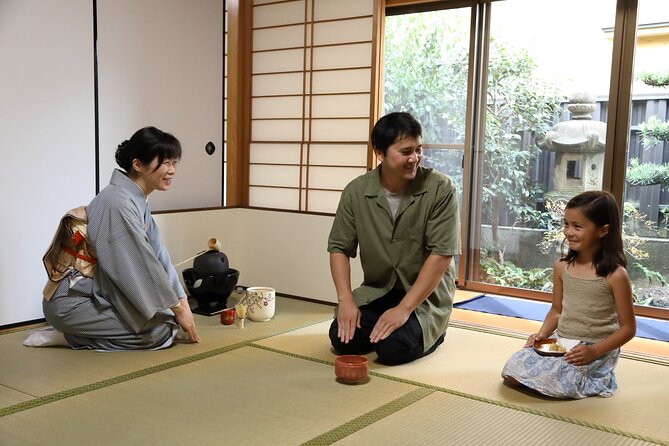
- Small group (up to 8) means you can ask questions and get personal coaching.
- Hands-on wagashi making, not a quick demo, so yes, it can get a bit sticky.
- Licenced guide interpreters with English support, so the meaning behind the scroll, gestures, and sequence lands clearly.
- Tatami tea room with sock rule, with an optional chair setup if you request it.
- You make matcha yourself and enjoy multiple bowls during the session, not just a single tasting.
Kyoto Tea Ceremony Near Fushimi Inari, Done the Practical Way
If Kyoto is on your list, you will likely schedule tea at some point. The tricky part is finding one that feels genuine, and not like a performance built for photos. This experience leans into the real flow of tea ceremony, with a small group and English guidance that explains what you are doing and why.
The setting matters. You meet at a local house, and the ceremony happens inside an authentic Japanese-style room. That changes everything. You are not starting your experience with a lecture hall vibe, you are starting in a lived-in place, then stepping into the quiet rhythm of tea.
Also, the timing works. The session runs about 1 hour 15 minutes and starts at 9:45 am, which is perfect for a morning in Kyoto before crowds build. And because it is around Fushimi, you can often plan it so you are not stuck feeling rushed elsewhere right after.
The Local House Tea Room, Tatami Seating, and the Sock Rule
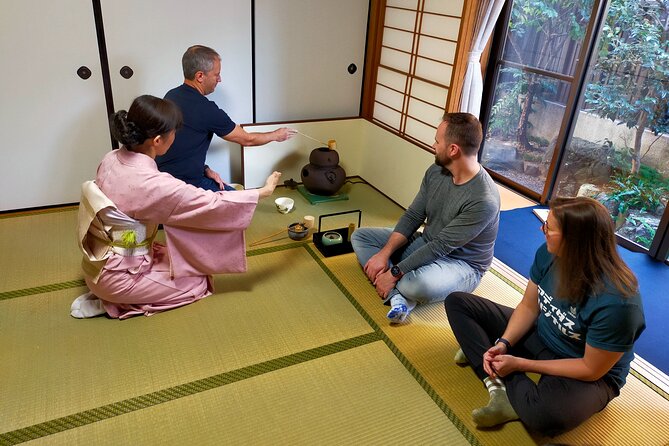
You arrive and get guided through the house, starting in the kitchen area. Then, when it is not raining, you step outside and walk through a tiny little garden before entering the tea room. That short transition adds a lot. It signals a change of mode, from everyday street Kyoto to the slower tea space.
Inside, you seat on tatami. Here is the part that can catch people: you must bring or wear socks, and bare feet are not allowed in the room. I always tell people, plan for comfort. Choose easy shoes you can slip on and off without drama, and wear socks you are happy to keep on for the duration.
If tatami is not your thing, there is a backup. They can prepare chairs instead of sitting on the floor, but you need to request the number of chairs when you book. That is worth doing early if you have any mobility concerns, because it is far easier for staff to plan ahead than to improvise once you arrive.
Still climbing through the orange gates?
- Kyoto: Fushimi Inari, Kinkakuji, Bamboo Grove 1 Day Bus Tour
★ 4.8 · 4,316 reviews - Fushimi Inari Hidden Hiking Tour (Private Option Available)
★ 5.0 · 1,750 reviews - Osaka/Kyoto:Kinkakuji,Arashiyama,FushimiInariShrine,NaraPark
★ 4.1 · 1,596 reviews - Kyoto/Osaka: Nara, Fushimi Inari Taisha, Arashiyama Bus Tour
★ 4.7 · 1,275 reviews
Wagashi Making in the Kitchen, Step-by-Step and Hands-On
The experience starts with the wagashi portion in the kitchen. This is a hands-on class where you learn to make one type of Japanese sweet. You are not just watching someone else work, you are doing the motions, shaping the sweet, and learning what to aim for as you go.
This is one of the best parts because wagashi is often misunderstood by first-timers. People think it is just candy or a cute dessert for aesthetics. In tea culture, wagashi has a job. It fits the season, it balances flavors, and it sets the tone for the matcha. Even if you never become a wagashi chef, learning how it is made helps you understand why it shows up alongside tea.
One practical note: wagashi can get a bit messy. One review described it as fun, but a little sticky. If you are the type who hates feeling sticky, bring a calm attitude. Your host and instructor will guide you, and you will get the hang of it quickly.
The Tea Ceremony Flow, Including the Scroll and How You Attend
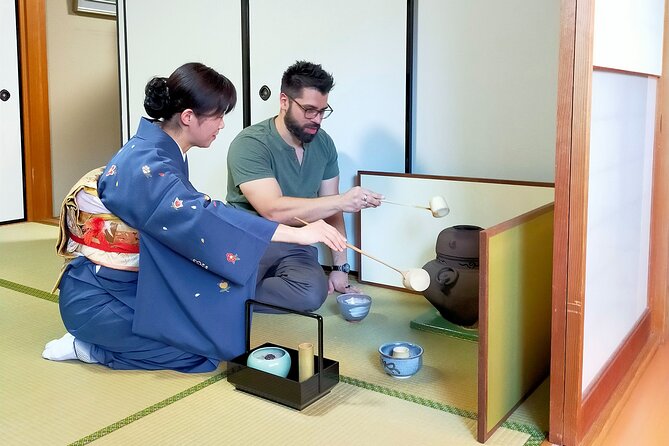
Once the wagashi class finishes, it shifts into ceremony mode. First, the host explains how to attend tea ceremony, so you know what to do with your hands, when to pause, and how to follow the sequence. That matters. Even small etiquette mistakes can make you feel self-conscious, and you want to stay present.
Then you move into the tea room and seat on tatami. The instructor explains:
- the history of tea ceremony
- the meaning of the hanging scroll on the wall
That scroll piece is a small detail that carries weight. Tea ceremony uses simple objects to communicate big ideas like the season, a seasonal message, or a specific theme for the gathering. When you know what to look for, the room stops being just a pretty set and starts being a meaningful space.
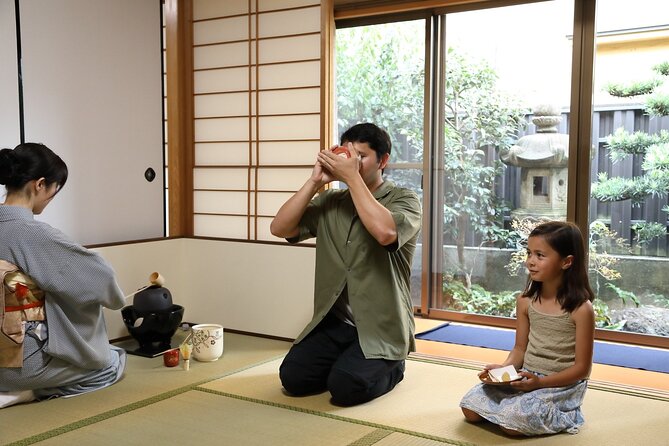
Finally, you will savor the Japanese sweets you made. Your instructor also demonstrates how to drink a bowl of matcha properly. This is not just posture coaching. It helps you understand the rhythm of the ritual, how to take a sip, and what to focus on while you taste.
Matcha Preparation You Do Yourself, Not Just Watch
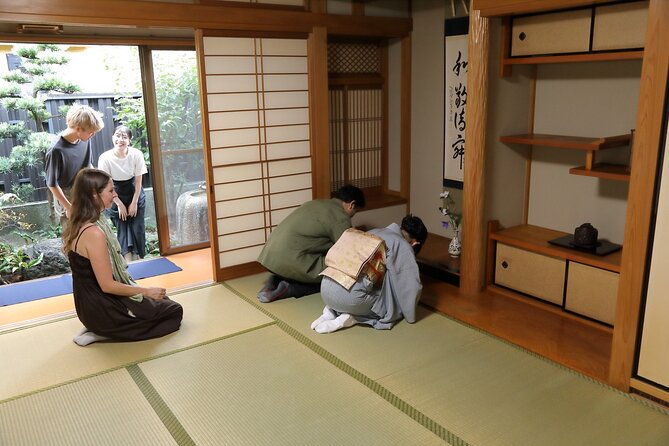
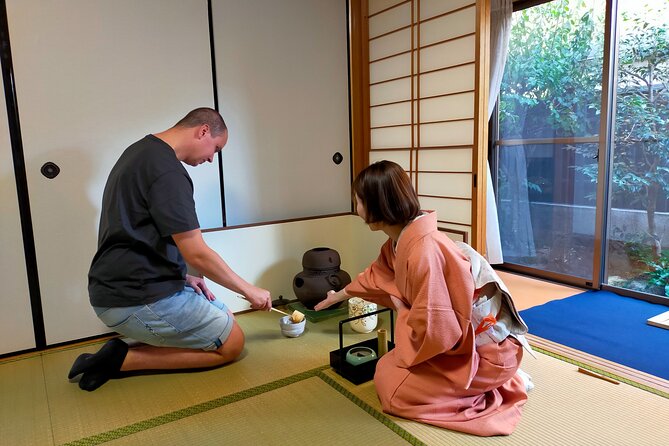
Many tea experiences stop at tasting. This one gives you the chance to make matcha yourself. After the demonstration and tasting, you get to prepare it, so you experience the work behind the calm.
The ceremony itself includes ceremonial preparation, and you get to enjoy drinking it more than once during the session. Coffee and/or tea are also included, along with the matcha bowls and Japanese traditional confectionaries.
I like that this combination gives you a full arc:
1) you make the wagashi
2) you see how matcha is prepared and served
3) you learn the routine and etiquette
4) you actually do the matcha part yourself
That is the difference between a neat souvenir experience and one that leaves a skill in your hands.
Also, the staff matters. The instructors are described as friendly, and they are licensed guide interpreters. That means you should not be stuck guessing. You will get clear explanations in English, which helps you enjoy the ceremony rather than just sit there wondering what you are missing.
Timing in Fushimi, and How It Fits Into a Kyoto Day
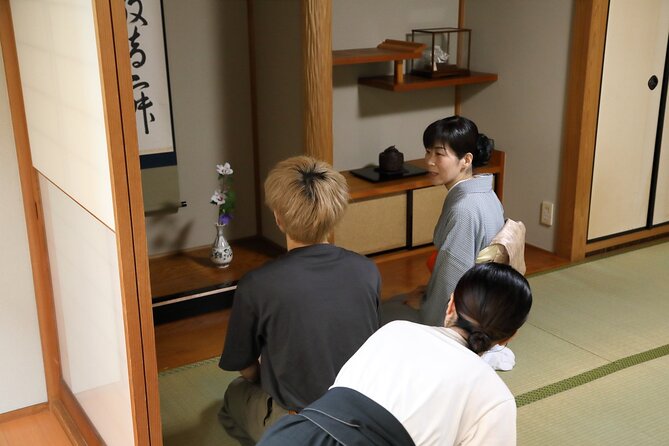
This starts at 9:45 am, so it works well as an early cultural stop. If you are planning around Fushimi-Inari Taisha, you may like that the location is close. One review specifically noted it is about a 10-minute walk to Fushimi-Inari-Taisha shrine.
That matters if you are trying to reduce stress. Kyoto can feel like a constant sprint. Pairing this with a nearby shrine makes the day feel connected instead of scattered.
A simple rhythm that works: do tea in the morning, then head out for Fushimi-Inari at a time when you might still have some breathing room. Then you can come back later for other neighborhoods and food stops.
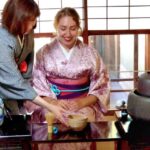
More bowls, poured the traditional way
Price and Value: What You Get for $52.26
At $52.26 per person, the price is not the cheapest thing in Kyoto. But it is also not priced like a luxury show. The value is in what is included and what you actively do.
You are paying for:
- an English-speaking instructor
- all fees and taxes
- at least two bowls of matcha
- Japanese traditional confectionaries
- time to learn wagashi by doing it
- instruction on the ceremony basics, including the scroll meaning and how to drink matcha
The group size is also a value factor. With a maximum of 8 people, you get more attention than you would in a larger group setup. And because the teaching is hands-on, you get more than a quick tasting, you get a learning experience you can replay at home.
If you are the kind of traveler who hates paying for things you only watch, this is a strong fit. You will be working with your hands, asking questions, and producing something you can take the memory of, even if you do not bring home every item.
One more value point: there is no hotel pickup or drop-off included. That can be a drawback if you dislike navigating, but it also keeps the experience streamlined and focused once you arrive. You just meet at the address, settle in, and enjoy the session.
Who This Kyoto Tea Ceremony Suits Best
This is a great match if you want an authentic-feeling tea experience without needing to already know tea etiquette. The English explanations help first-timers follow along, and the small group keeps it friendly.
It is also a good fit if you like crafts and food learning. Wagashi making is not only educational, it is tactile. You leave with a clearer sense of how sweets fit into tea ceremony culture.
It may be less ideal if:
- you do not drink caffeine, since it is not recommended if you avoid caffeine
- you have strong limitations around foot comfort, because socks are required and the default seating is tatami (chairs can be arranged if you request them)
- you want a long sightseeing add-on, because the total time is about 1 hour 15 minutes
Should You Book This Kyoto Tea Ceremony?
If you want Kyoto culture that feels real, this is a smart booking. The combination of hands-on wagashi, guided tea ceremony context, and making matcha yourself is exactly what makes the experience worth your time. Plus, the small group size and English instruction make it easier to enjoy the ritual rather than worry about doing it wrong.
I would book it if you are already planning around Fushimi Inari and want a calm morning activity. I would also book it if you enjoy learning through your hands, not just watching demonstrations.
Pass on it if caffeine is a hard no for you, or if you dislike the idea of tatami seating without chair accommodations. If that is your situation, just request chairs during booking and you will likely be much happier.
FAQ
How long is the Kyoto tea ceremony session?
The experience lasts about 1 hour 15 minutes.
How much does it cost, and what is included?
It costs $52.26 per person. The price includes an English-speaking instructor, all fees and taxes, coffee and/or tea, two bowls of matcha, and Japanese traditional confectionaries.
How big is the group?
The class is limited to a maximum of 8 travelers.
Do I need socks or special footwear?
Yes. You must bring or wear socks, because bare feet are not allowed in the room. You should also wear easy shoes you can take on and off.
Is tatami seating mandatory?
You will sit on tatami by default, but it is possible to prepare chairs instead if you prefer. You need to let them know how many chairs you want when you make the reservation.
What are the age limits for children?
Children aged 8 to 12 need at least one adult to participate. Children aged 7 or under are not able to participate in this session.
More Cooking Classes in Kyoto
New This Season
- Koyasan Day Trip by Private Car from Kyoto
- Old Port Town and Ultimate Sake Tasting Private Tour From Kyoto
- Kyoto’s Timeless Charm: 3hr Exploration of History and Peace
- Kyoto: 5 Types of Sushi Making
- Sacred Peak & Ancient Paths: Kurama-Kibune Hiking Experience
- Kyoto: Exclusive ZEN practice at Manpukuji temple in Uji
- Kyoto: Private Seasonal Aroma Yoga Class
- Traversing Kyoto’s Scenic West – Arashiyama to Kinkakuji
Fushimi Inari Shrine Walks, compared.
Fushimi Inari, Kinkakuji, Bamboo Grove 1 Day Bus Tour
Read our review →
Fushimi Inari Hidden Hiking Tour (Private Option Available)
Read our review →
Kinkakuji,Arashiyama,FushimiInariShrine,NaraPark
Read our review →
Nara, Fushimi Inari Taisha, Arashiyama Bus Tour
Read our review →
Arashiyama, Nara & Fushimi Inari Shrine w/Lunch
Read our review →
Nijo Castle, Kiyomizu & Fushimi Inari Guided Tour
Read our review →
Nijo, Kinkaku-ji, Arashiyama, Kiyomizu & Fushimi Inari
Read our review →
Also filed under