Reviewed · TEA CEREMONIES
Kyoto Tea Ceremony and Samurai Photo Session
Kyoto can feel like a scroll of traditions. This matcha class brings the calm indoors, then ends with armor photos that look like you stepped into another era. You get to make your own matcha and a Kyoto-style matcha latte, plus seasonal wagashi and great photo chances.
Two things I especially liked: first, the setting. The 100-year-old machiya townhouse gives you that real Kyoto mood, not a generic studio feel. Second, the experience is hands-on, from whisking matcha to tasting what you made, and the instructor, Maya, explains everything in clear English and keeps it fun.
One possible drawback to consider: it is short. At about 1 hour 20 minutes total, you will learn the essentials and make a latte, but it is not a long, multi-course tea journey. If you want slow-paced ceremony practice with lots of quiet time, you might prefer a longer class.
In This Review
- Key Highlights You Should Know Before Going
- Kyoto Machiya Tea Ceremony: Why This Feels Like the Real Thing
- The 1 Hour 20 Minute Flow: Matcha, Wagashi, and Latte in Sequence
- Maya’s Teaching Style: Clear Steps, History, and Mindfulness
- Seasonal Wagashi: What You Gain Beyond the Drinks
- Matcha Latte Making: A Kyoto Twist You Can Recreate at Home
- Samurai Armor Photo Session: Quick Fun With a Big Wow Factor
- Price and Value: Is $71.74 Worth It?
- Location and Getting There: Easy Start at Samurai Gyoza Factory
- Who This Works Best For (And Who Might Skip It)
- Should You Book This Kyoto Tea Ceremony and Samurai Photo Session?
- FAQ
- How long is the Kyoto Tea Ceremony and Samurai Photo Session?
- Where do I meet for the activity?
- Is this a small-group experience?
- What will I do during the tea ceremony?
- Do I need prior experience with tea ceremonies?
- Is a mobile ticket provided?
- How much does it cost per person?
- Will I receive confirmation after booking?
- What is the cancellation policy?
Key Highlights You Should Know Before Going
- 100-year-old Kyoto machiya setting: you learn tea culture in an authentic traditional townhouse.
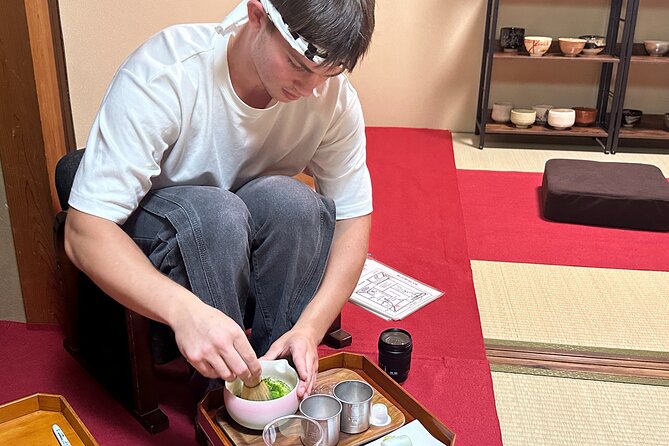
- Make matcha and a matcha latte: you are not just watching, you are doing the steps.
- Seasonal wagashi included: you get to taste the sweets matched to the season.
- Photos in real samurai armor: the session ends with high-energy, memorable picture time.
- Small group limit (max 10): easier interaction and more time for questions.
- Maya’s clear English and humor: many people specifically call out her teaching style and friendliness.
Kyoto Machiya Tea Ceremony: Why This Feels Like the Real Thing
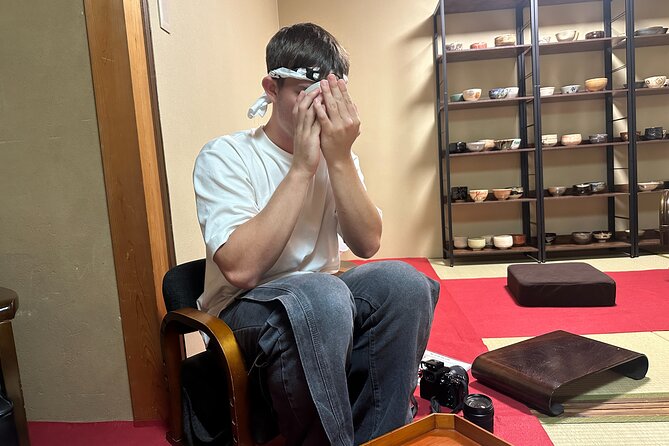
If you want Kyoto to feel personal, you have to step inside places that still carry their original bones. This class starts in a 100-year-old Kyoto machiya, a traditional townhouse style home. You are not only learning matcha, you are absorbing the atmosphere that made tea culture take root in everyday life.
What I like is the balance. You get a structured lesson on how matcha is made and how the ceremony is approached, but the mood stays light and welcoming. The whole point is to make you feel comfortable using the tools and tasting the result, even if it is your first time.
Also, the class is built for modern travelers who want substance fast. In about 50 minutes inside the machiya, you go from basics to your own drinks, then you cap it off with a samurai armor photo moment. It is a smart way to pack a meaningful Kyoto activity into a realistic schedule.
The 1 Hour 20 Minute Flow: Matcha, Wagashi, and Latte in Sequence
The total time is about 1 hour 20 minutes. A big chunk is the tea ceremony portion, described as about 50 minutes in the machiya, which is where the instruction and hands-on practice happen.
Here is the practical flow you can expect:
- You start with a walkthrough of what the ceremony is about, including the history and purpose of the ritual.
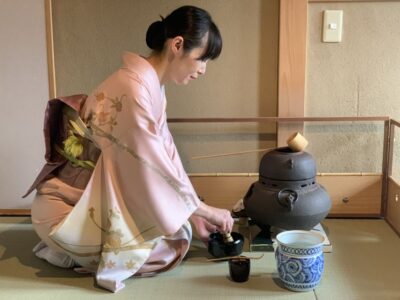
- You learn how to prepare matcha in a traditional way.
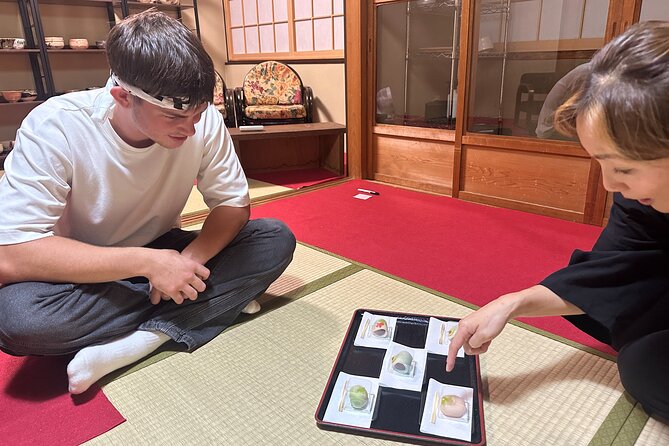
- You taste seasonal wagashi alongside the tea.
- You then shift into making a creamy Kyoto-style matcha latte.
- You finish with photo time in samurai armor.
That order matters. Learning the traditional matcha first helps your latte taste make sense, because you understand the base tea before you change it with milk and turning it into a modern drink. The wagashi break also keeps things grounded, since sweets in tea culture are meant to balance flavors and pace your experience.
Pick up a sword for an afternoon
- Kyoto Samurai Experience
★ 5.0 · 1,294 reviews - Kyoto: Kendo and Samurai Experience with Uniform and Gear
★ 4.9 · 815 reviews - Kyoto: Samurai Sword Class by Experts in Traditional Arts
★ 4.9 · 657 reviews - Skip the lines Basic Ticket at SAMURAI NINJA MUSEUM KYOTO
★ 4.5 · 632 reviews
Maya’s Teaching Style: Clear Steps, History, and Mindfulness
The star of the show, at least based on what people consistently mention, is Maya. Her English gets praised as excellent, and she tends to mix clarity with humor. That combination matters, especially if you are a beginner and you worry you will feel lost.
Maya’s instruction is not just technical. She also talks about the history of the tea ceremony and the mindset behind it. In the reviews, people specifically bring up mindfulness, which is a big part of how Japanese tea is framed: slow attention, calm breathing, and respect for the moment.
I like how that shows up in the teaching. You are not being lectured. Instead, you are being coached, step by step, so you can actually do the motions correctly. And because the group is small, you can ask questions without feeling rushed.
Seasonal Wagashi: What You Gain Beyond the Drinks
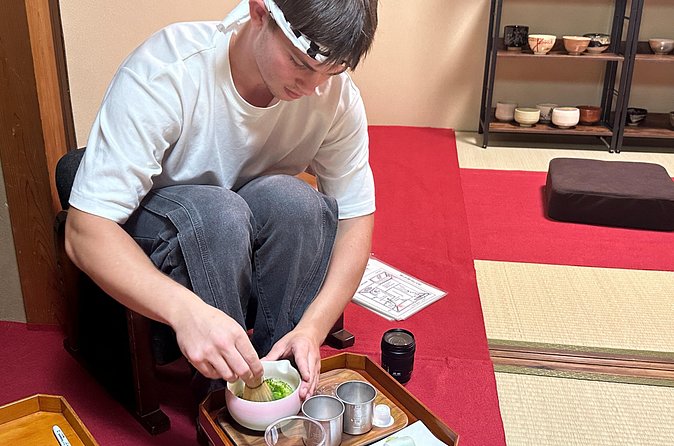
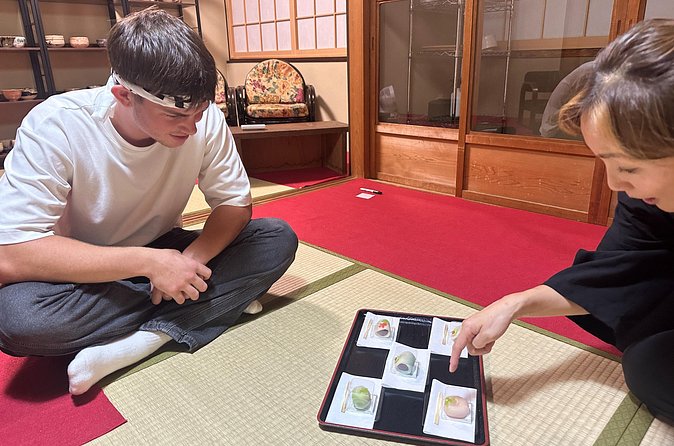
Wagashi are more than a sweet finish. They are seasonal and designed to fit the tea and the time of year. In this class, you get to enjoy seasonal wagashi during the ceremony portion.
Why this is worth caring about: matcha can taste intense and a little grassy on its own. The wagashi and the way they are served help you experience matcha as part of a whole ritual, not just a beverage.
You also get to slow down. After you learn the tools and make matcha, tasting wagashi gives you a moment to notice texture, sweetness, and how the flavors interact with tea. It is one reason short classes still feel complete: you are not only performing steps, you are sampling the cultural pairing.
Matcha Latte Making: A Kyoto Twist You Can Recreate at Home
A lot of tea experiences stop at the classic bowl of matcha. This one goes further. After the traditional matcha portion, you make a Kyoto-style matcha latte, which turns your tea knowledge into a drink style you will actually want to order back home.
People specifically mention that the instructor explains everything clearly and encourages participation. They also mention getting a recipe at the end, which is a practical bonus. If you are the kind of person who hates buying something and never using it again, this is a good way to leave with more than photos and memories.
Value-wise, this is where the experience justifies its price. You are paying for instruction plus ingredients plus a hands-on transformation from matcha into a latte. That is more useful than tasting only, because you leave with a repeatable routine.
One small note to keep your expectations realistic: you are learning in a short timeframe. You will get the core process right, but it is not the kind of class where you would expect multiple variations or advanced techniques.
Samurai Armor Photo Session: Quick Fun With a Big Wow Factor
The ending is pure fun, and it is also surprisingly smart for photo value. You have the chance to wear authentic samurai armor and take pictures in that role.
In the reviews, people bring up photo opportunities, and they usually sound genuinely excited about it. That makes sense. Even if you know nothing about samurai history, the visual payoff is instant. It is also a nice contrast to the calm of the tea portion. You shift from hands and posture for tea to a more dramatic pose and moment.
How to get good results:
- Wear the expression you would in a movie poster, not a tourist face.
- Listen to the directions quickly, then relax your shoulders before the photos.
- If you have more than one person in your group, take a few shots with you seated or standing, then switch to portraits.
This part is also a good choice for mixed groups, since tea is relaxing but not everyone loves strict food rituals. The armor photos give you an energetic end that appeals broadly.
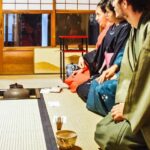
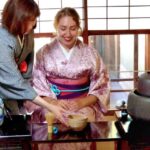
More bowls, poured the traditional way
Price and Value: Is $71.74 Worth It?
The price is $71.74 per person. That is not budget pricing, but it is not boutique luxury pricing either, especially when you break down what is included.
What you are getting in one sitting:
- A small-group tea ceremony format (max 10).
- A hands-on matcha experience.
- Seasonal wagashi.
- A Kyoto-style matcha latte that you help make.
- Photo time in real samurai armor.
- Mobile ticket convenience.
For many people, the value is strongest because you do things, not just watch. You come away knowing the process well enough to practice at home, and you leave with a story that is clearly Kyoto, not a generic cooking class.
One practical point: the class is popular enough that booking happens in advance. The average booking window is about 72 days, so if you are traveling in a busy season or on a tight schedule, book early to avoid missing your preferred times.
Location and Getting There: Easy Start at Samurai Gyoza Factory
The meeting point is Samurai Gyoza Factory Kyoto, 230-1 Kamimyōkakujichō, Nakagyo Ward, Kyoto 604-0025, Japan. The activity ends back at the meeting point.
The good news is that it is near public transportation, and that matters in Kyoto where streets can be a puzzle when you are tired. Also, the mobile ticket format helps you avoid scrambling for paper tickets right before a start time.
Since the class is in a machiya, you might not have an obvious storefront feel. Keep your eyes on the specific meeting location so you can find the group quickly. If you are arriving from downtown, give yourself extra time to check directions once you are within a few blocks.
Who This Works Best For (And Who Might Skip It)
This experience fits best if you want three things in one package:
- A hands-on introduction to matcha and tea culture.
- A drink you will actually reproduce, especially the latte.
- A fun, memorable photo ending in samurai armor.
It also suits beginners. The class format and the teaching style described in the reviews make it clear that you do not need prior tea knowledge to participate. If you like interactive lessons where you can ask questions, this is a solid choice.
You might consider something else if:
- You prefer long, slow ceremony pacing with less hands-on rushing.
- You want advanced culinary depth rather than a first-time guided experience.
- You hate any photo component at all, since the session is designed to end with picture time.
Should You Book This Kyoto Tea Ceremony and Samurai Photo Session?
If you want one highly “Kyoto” activity that is calm, hands-on, and photo-worthy, I think this is a very reasonable booking. You get a real 100-year-old machiya setting, a guided matcha process you can learn from, seasonal wagashi, and a Kyoto-style latte that turns tradition into something practical. The samurai armor photos are the fun finish that makes the whole evening feel like more than a lesson.
Book it if you:
- Like small groups and interactive classes.
- Want a practical takeaway for making matcha latte at home.
- Plan to spend your Kyoto time moving between highlights and want an efficient, meaningful stop.
Skip it if you want a longer, deeper tea immersion or if your schedule cannot spare about 1 hour 20 minutes.
If you do book, my best advice is simple: arrive a little early, go in as a beginner, and let Maya’s instructions guide you. When you treat matcha like a hands-on ritual instead of a performance, the whole experience clicks.
FAQ
How long is the Kyoto Tea Ceremony and Samurai Photo Session?
It lasts about 1 hour 20 minutes (approx.), including the tea ceremony portion and the samurai armor photo session.
Where do I meet for the activity?
You start at Samurai Gyoza Factory Kyoto, 230-1 Kamimyōkakujichō, Nakagyo Ward, Kyoto 604-0025, Japan, and you end back at the same meeting point.
Is this a small-group experience?
Yes. The tour/activity has a maximum of 10 travelers.
What will I do during the tea ceremony?
You learn matcha-making in a traditional way, you enjoy seasonal wagashi, and you make a Kyoto-style matcha latte. The experience also includes photos while wearing authentic samurai armor.
Do I need prior experience with tea ceremonies?
No. It is designed for beginners and people who are curious about the experience.
Is a mobile ticket provided?
Yes. The tour uses a mobile ticket.
How much does it cost per person?
The price is $71.74 per person.
Will I receive confirmation after booking?
Yes. Confirmation is received at the time of booking.
What is the cancellation policy?
Free cancellation is available. You can cancel up to 24 hours in advance of the experience for a full refund, with cut-off times based on local time.
Photography Sessions in Kyoto

New This Season
- Koyasan Day Trip by Private Car from Kyoto
- Old Port Town and Ultimate Sake Tasting Private Tour From Kyoto
- Kyoto’s Timeless Charm: 3hr Exploration of History and Peace
- Kyoto: 5 Types of Sushi Making
- Sacred Peak & Ancient Paths: Kurama-Kibune Hiking Experience
- Kyoto: Exclusive ZEN practice at Manpukuji temple in Uji
- Kyoto: Private Seasonal Aroma Yoga Class
- Traversing Kyoto’s Scenic West – Arashiyama to Kinkakuji
Tea Ceremonies, compared.
Tea Ceremony in a Traditional Tea House in Kiyomizu
Read our review →
Kimono Tea Ceremony at Kyoto Maikoya, NISHIKI
Read our review →
Tea Ceremony in 100-year-old Kyo-Machiya Townhouse
Read our review →