
Reviewed · TEA CEREMONIES
Traditional Tea Ceremony with Matcha and Sweets in Kyoto
Kyoto has a way of making small moments feel important. This tea ceremony brings chanoyu into a modern, welcoming format, then turns you loose to make your own matcha. You also get the stories behind it, including Zen ideas and Japan’s hospitality spirit.
I love that the whole experience is done seated on chairs, not on the floor. I also love the hands-on pacing, where you watch authentic techniques up close and then whisk your own bowl, followed by a Q&A that helps it all click.
One possible drawback: it’s about one hour, so this is a taste of tea culture, not a long, slow, formal deep training.
In This Review
- Key Highlights Worth Planning For
- Where You’ll Meet in Kyoto’s Gion (and Why That Matters)
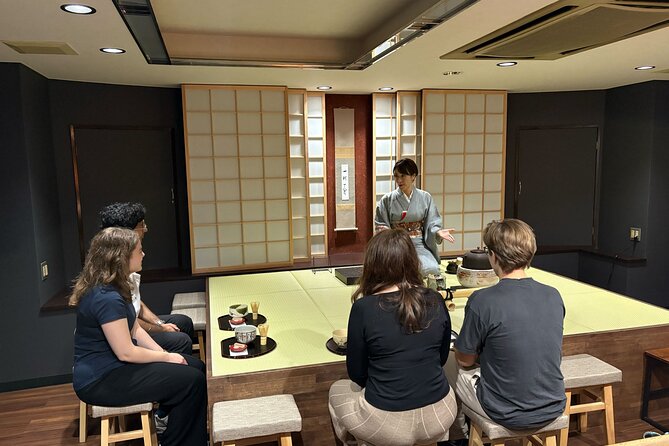
- Chair Seating That Makes Chanoyu Feel Possible
- What You Learn First: Tea History, Zen, and Omotenashi
- Watching the Ritual Up Close, Then Getting Hands-On
- Your Matcha Session: Premium Tea and Practical Technique
- Traditional Sweets in the Middle of the Ceremony
- The Q&A That Helps It Actually Mean Something
- How Long It Takes, and How to Fit It Into Your Day
- Group Size and the Feeling of Personal Attention
- Price and Value: Is $22.86 a Fair Deal?
- Who This Tea Ceremony Is Best For
- Should You Book This Kyoto Matcha Ceremony?
- FAQ
- How long is the traditional tea ceremony experience?
- How much does it cost?
- Where do I meet for the tour?
- What is included in the experience?
- Will I be seated on the floor?
- How big is the group?
- Is the ticket mobile?
Key Highlights Worth Planning For
- Gion location that keeps the experience tied to Kyoto’s everyday heritage
- Chair seating so you can participate without floor worries
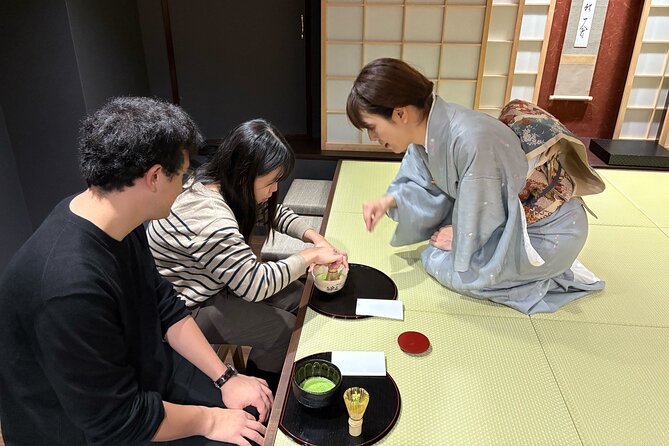
- Tea master techniques up close, then you try them yourself
- Premium matcha and traditional sweets included as part of the flow
- Q&A at the end to connect the ritual to real meaning
- Small group size with a maximum of 13 people for a more personal feel
Where You’ll Meet in Kyoto’s Gion (and Why That Matters)
This ceremony starts in Kyoto’s Gion area, in the Higashiyama Ward around Yamatocho. The meeting point is listed at Japan, 605-0802 Kyoto, Higashiyama Ward, Yamatochō, 1 祇園田中屋ビル. It’s a convenient base because you’re near public transportation, so you can plug it into a day without turning it into a logistics puzzle.
Why location matters: Gion can feel like a postcard, but stepping into a small tea space there makes the culture feel less staged. You are not just passing through Kyoto, you’re pausing in the neighborhood where traditions are still part of the rhythm.
Chair Seating That Makes Chanoyu Feel Possible
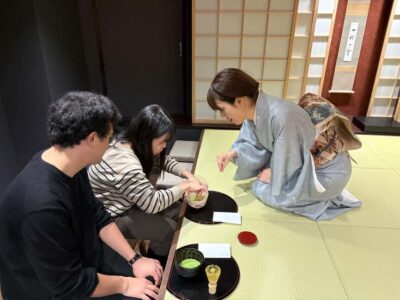
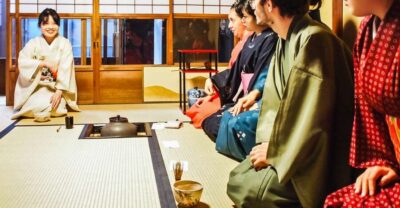
Traditional tea ceremonies can look intimidating, especially if you are not used to floor seating or you have limited mobility. This version solves that. You sit on chairs, which changes the whole vibe from strict formality to approachable attention.
I like this for two reasons. First, it lowers the stress level, so you can actually focus on what the tea master is doing. Second, you can watch closely without shifting uncomfortably. The ritual still feels intentional, but you’re not fighting your own body the entire time.
Whisk your own bowl of matcha
- Kyoto: Arashiyama Bamboo Forest, Monkeys, Matcha & Temple Tour
★ 5.0 · 759 reviews - Kyoto: Tea Ceremony Meditation – Make Matcha with Tea Master
★ 4.8 · 406 reviews - Kyoto: Arashiyama Bamboo, Matcha, Monkeys & Temple Tour
★ 4.9 · 291 reviews - Kyoto: Kimono Tea Ceremony with Matcha and Sweet
★ 4.9 · 249 reviews
What You Learn First: Tea History, Zen, and Omotenashi
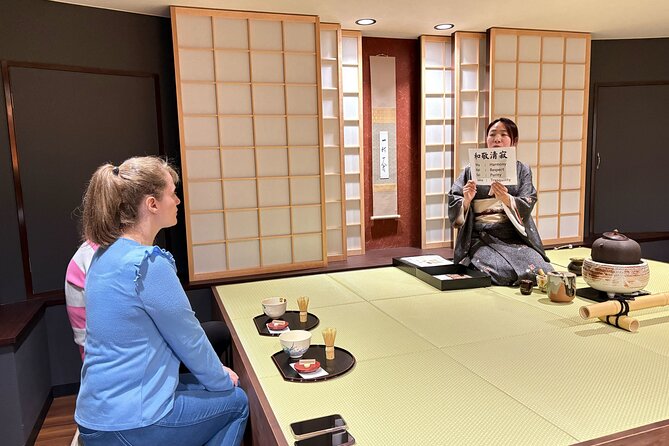
You start by learning about the history of tea in Japan and how Zen philosophy shaped what tea ceremony aims to express. That framing matters. Tea is not just a drink here, it is a way of practicing presence and respect.
During this first part, you observe authentic techniques performed up close by a tea master with experience in the tea ceremony tradition (Sa do). You also hear stories about omotenashi, which is hospitality, the habit of caring for others with thoughtful care. You’ll hear this concept explained in a way that connects to what you are seeing in real time, not as a vague cultural slogan.
If you like learning while you watch, this is a good structure. You get context while your senses are already engaged, so the ritual makes more sense when you later try matcha yourself.
Watching the Ritual Up Close, Then Getting Hands-On
The ceremony is designed so you do not just sit and listen. You watch techniques up close, then you participate. That shift is the secret sauce.
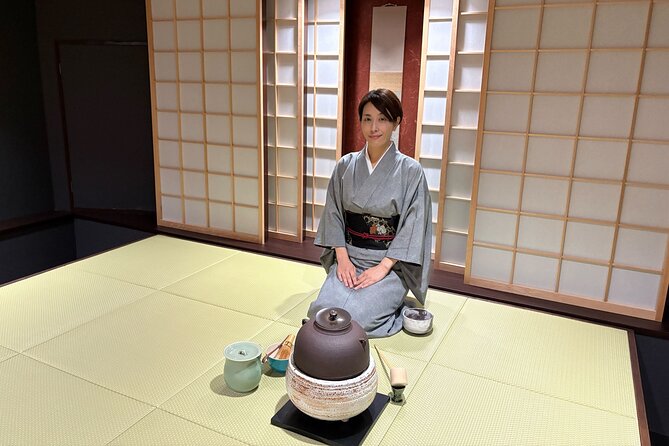
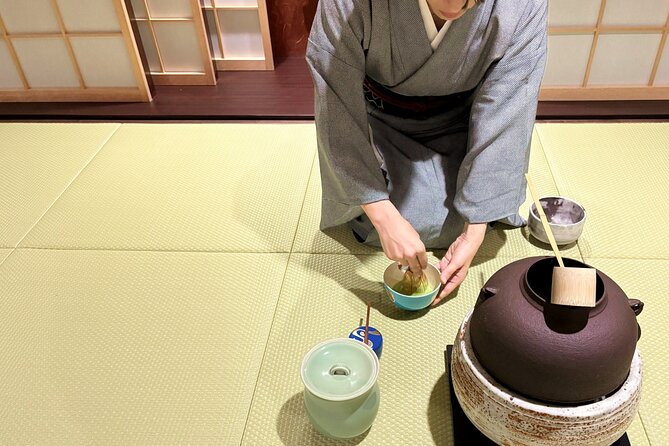
You’ll see the way the tea master handles the tools and performs the sequence, then you’ll move into making your own bowl of matcha. There’s something satisfying about switching from observing to doing, especially with something as specific as whisking matcha.
You should go in with a simple goal: follow the steps carefully, not perfectly. The point is understanding the process and why it’s done that way.
Your Matcha Session: Premium Tea and Practical Technique
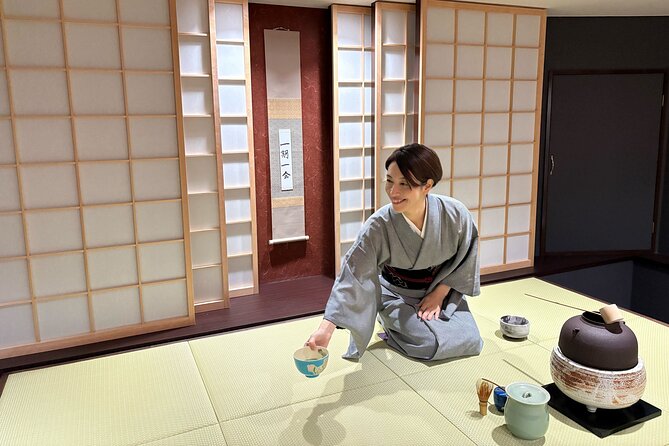
In the second half, the focus turns to matcha and sweets. The matcha is described as premium, sourced from a family-run farm. That matters because matcha quality is not a small detail. When the tea is higher quality, the flavor and texture you experience are part of the lesson.
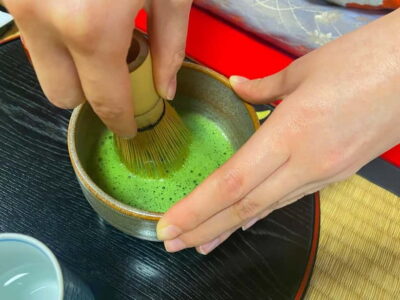
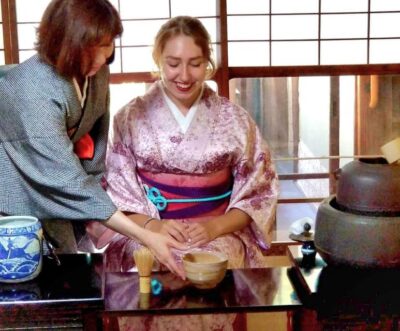
During your hands-on portion, you whisk your own bowl. Even if you have made matcha before, I recommend treating this as a reset. Slow down and pay attention to what the tea master shows you about mixing and finishing.
Also, because the session is short (about an hour), it’s built to be efficient. You don’t lose your attention waiting around. You get the key steps, you practice once, and you get feedback through the flow of the ceremony and the later Q&A.
Traditional Sweets in the Middle of the Ceremony
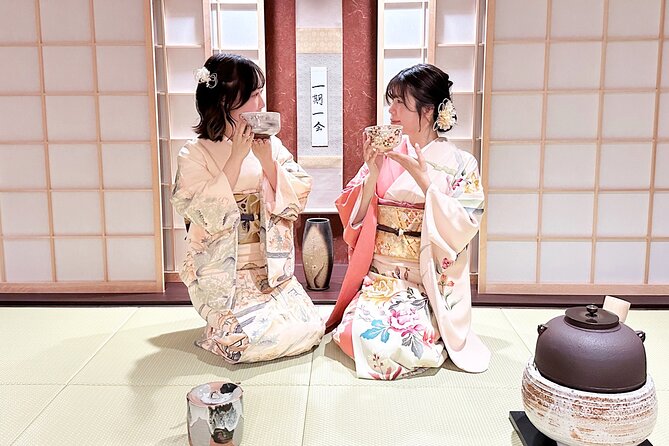
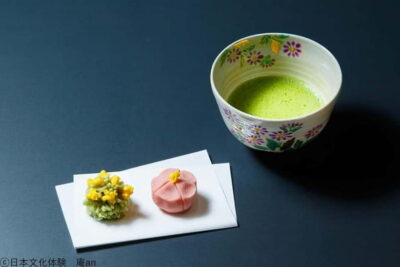
After the ritual groundwork and the matcha build-up, you savor carefully selected traditional sweets from long-established artisans. This is not just an add-on snack. In tea culture, sweets help balance the experience, giving you a pause point so the matcha is easier to appreciate fully.
I like that the sweets are tied to tradition and linked to established makers, because it keeps the experience grounded in Kyoto rather than turning it into a generic tasting. Expect the sweetness to set the tone for what comes next.
If you are the type who likes food that is part of a cultural practice, you’ll probably enjoy the pacing here. You get to taste without rushing, then you return to tea with your senses warmed up.
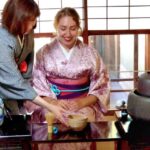
More bowls, poured the traditional way
The Q&A That Helps It Actually Mean Something
A Q&A session wraps up the experience, and that is a smart choice. Tea ceremony can be full of symbolism and small motions that people miss if they only watch once.
Use the Q&A to ask practical questions like what the key ideas behind the motions are, or what a certain etiquette detail is trying to communicate. This is also where your own experience of whisking matcha can turn into understanding. If something felt confusing, now is the time to ask.
Recent feedback highlights that the hosts connect teaching to philosophy, which is exactly what makes this type of session memorable. Instructors such as Mitsune and Yuki are specifically praised for clear explanations and for showing how their understanding connects to the spirit of the ritual.
How Long It Takes, and How to Fit It Into Your Day
The ceremony runs about one hour. That’s a real advantage if you’re sightseeing in Kyoto. You’re not taking up half your day, and you can still do other nearby sights afterward.
Practical tip: if you have a full schedule, aim to place this when you’re not starving. The sweets and matcha happen during the experience, but arriving too hungry can make the flavors feel intense. Arriving a little hungry is fine, just don’t stack it right next to a giant meal.
Because the tour has a mobile ticket, you can usually manage it without a lot of paperwork. Just make sure you have your ticket ready before you go, since the meeting point is a specific building in Gion.
Group Size and the Feeling of Personal Attention
This session caps at 13 travelers. In a ritual like this, smaller groups are a big deal. You get clearer sight lines, and the host can keep the session calm rather than turning it into a production.
It also affects the Q&A. With fewer people, you are more likely to get your question answered in a way that actually relates to what you saw and did.
Price and Value: Is $22.86 a Fair Deal?
At $22.86 per person, this lands in the range where you should ask: what are you actually getting?
You’re paying for:
- Guided instruction from a tea master with experience in Sa do
- Up-close viewing of authentic techniques
- Hands-on matcha whisking with premium tea
- Traditional sweets from long-established artisans
- A finishing Q&A so you leave with meaning, not just a memory photo
For me, the chair seating is part of the value too. You’re not excluded from the experience because of floor seating norms. That makes it a strong choice for mixed groups, including older visitors or anyone who wants a calmer cultural activity.
One caution: it’s only about an hour. If you’re looking for a long, step-by-step training course, you might want something more extensive. But if you want a focused, guided taste of tea culture in Kyoto’s most famous neighborhood, this is priced like a thoughtful introduction.
Who This Tea Ceremony Is Best For
This is a great fit if:
- You want a first-time-friendly introduction to Japanese tea culture
- You like hands-on activities, not just watching
- You want a calm break in the middle of a busy Kyoto day
- You prefer chair seating over formal floor posture
- You want stories that connect technique to meaning, like Zen philosophy and omotenashi
It’s less ideal if:
- You want a very long, highly detailed ceremony training
- You hate structured activities and would rather wander freely
Should You Book This Kyoto Matcha Ceremony?
If you want a short, high-quality cultural experience that stays true to tea ceremony while making it easy to participate, I’d book it. The combination of chair seating, a tea master teaching close-up, and a hands-on matcha bowl is the rare kind of tour that feels both respectful and practical.
Book it especially if your Kyoto trip needs one grounded, quiet moment. This is one of those activities that can change the way you taste things afterward, and the Q&A helps you carry that understanding with you.
If you’re on the fence, choose it when you can give yourself enough time to arrive unrushed. Then you’ll get the full benefit of the ritual, the sweets, and the matcha you whisk yourself.
FAQ
How long is the traditional tea ceremony experience?
It lasts about 1 hour.
How much does it cost?
The price is $22.86 per person.
Where do I meet for the tour?
You meet at Japan, 605-0802 Kyoto, Higashiyama Ward, Yamatochō, 1 祇園田中屋ビル. The experience ends back at the meeting point.
What is included in the experience?
You watch authentic tea ceremony techniques up close, learn about the history of tea in Japan and Zen philosophy, enjoy traditional sweets, and make your own matcha. There is also a Q&A session.
Will I be seated on the floor?
No. You are seated on chairs, which makes it easier to join even if you are not used to floor seating or have limited mobility.
How big is the group?
The maximum group size is 13 travelers.
Is the ticket mobile?
Yes, it uses a mobile ticket.
More Dessert Tours in Kyoto
New This Season
- Koyasan Day Trip by Private Car from Kyoto
- Old Port Town and Ultimate Sake Tasting Private Tour From Kyoto
- Kyoto’s Timeless Charm: 3hr Exploration of History and Peace
- Kyoto: 5 Types of Sushi Making
- Sacred Peak & Ancient Paths: Kurama-Kibune Hiking Experience
- Kyoto: Exclusive ZEN practice at Manpukuji temple in Uji
- Kyoto: Private Seasonal Aroma Yoga Class
- Traversing Kyoto’s Scenic West – Arashiyama to Kinkakuji
Tea Ceremonies, compared.
Tea Ceremony in a Traditional Tea House in Kiyomizu
Read our review →
Kimono Tea Ceremony at Kyoto Maikoya, NISHIKI
Read our review →
Tea Ceremony in 100-year-old Kyo-Machiya Townhouse
Read our review →
Also filed under