
Reviewed · KIMONO & YUKATA RENTALS
Men’s Kimono Lesson and Shopping in Kyoto
A kimono lesson in Kyoto that actually teaches. This hands-on session with Shogo from Let’s Ask Shogo shows you how to wear men’s kimono with confidence, right inside a real shop. You also get cultural context, and you can shop afterward if you want your own set.
I especially like how the lesson is practical, not just a photo stop. You learn the proper order for putting on layers like the juban, and you get taught steps you can repeat later.
One consideration: this is a lesson inside a shop, so if you mainly want quick sightseeing or only a simple rental-style experience, you may find the learning portion takes more time than you expected.
In This Review
- Key Points to Know Before You Go
- Why Shogo’s Men’s Kimono Class Feels Different
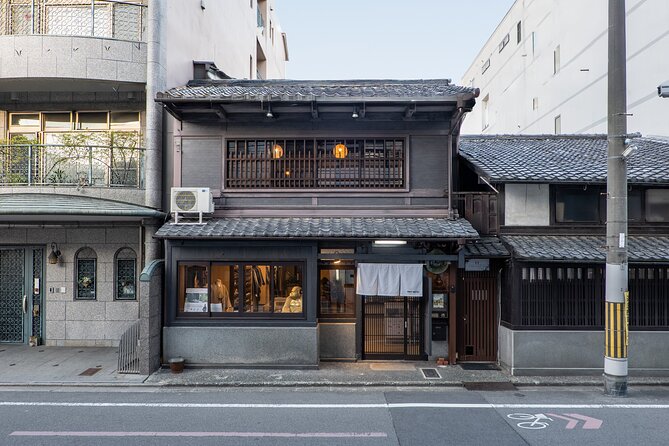
- Where You Start: A Real Store in Shimogyo Ward
- The 2-Hour Lesson Flow, From Juban Basics to Wearing Confidently
- What You Learn Beyond the Mirror: Cultural Meaning and Practical Context
- Kimono Shopping Without Pressure: How the Store Portion Works
- Small Group Format and the Pace That Keeps It Fun
- Price and Value: Paying for Education, Not Just Fabric
- Who Should Book This Men’s Kimono Lesson
- Practical Tips to Make the Most of Your Session
- Should You Book This Men’s Kimono Lesson in Kyoto?
- FAQ
- How long is the Men’s Kimono Lesson and Shopping experience?
- Where does the experience take place?
- Who teaches the lesson?
- Is this a group experience?
- Is it held inside a store?
- Do I get a mobile ticket?
- Can I purchase a kimono during or after the lesson?
- What if I’m traveling with a female partner or friend?
- How soon will I get confirmation after booking?
- What is the cancellation policy?
Key Points to Know Before You Go
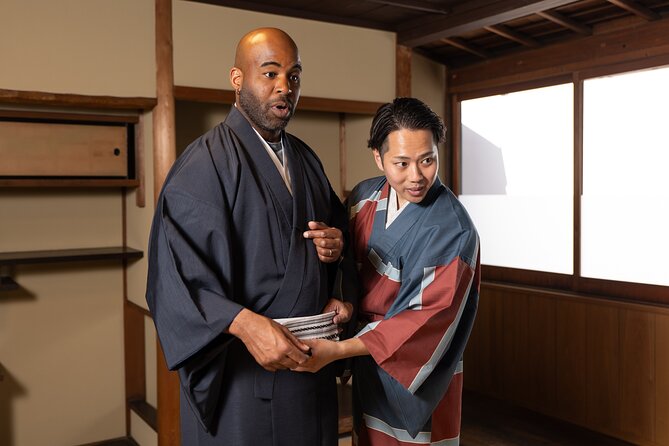
- Shogo teaches in person: creator of Let’s Ask Shogo (1.8 million+ subscribers) and a longtime daily kimono wearer
- Real men’s kimono store setting: you practice and see items in the same space where purchases happen
- Beginner-friendly, hands-on flow: guidance focuses on how to wear correctly and confidently
- Shop support if you want to buy: help with sizing and choosing pieces, without a hard sell
- Tiny group size: maximum of 4 travelers, so questions get answered
- Option for female companions: one guest can watch for free, and Shogo’s wife Harumi can dress or teach women for an extra fee
Why Shogo’s Men’s Kimono Class Feels Different
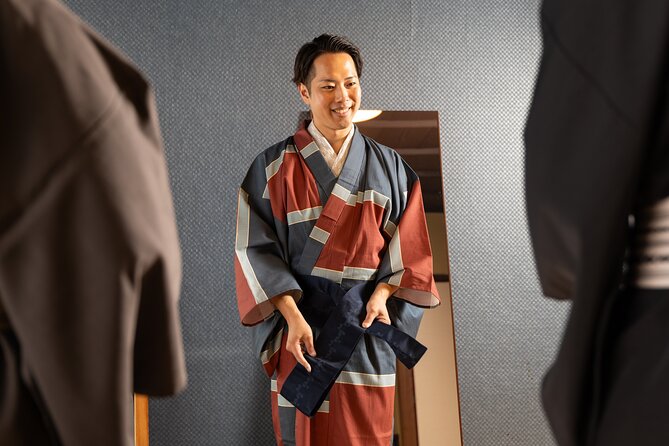
Kyoto is full of kimono experiences, but many are aimed at quick renting and easy photos. This one is built around teaching you how men’s kimono works on a real body, in a real shop environment.
Shogo is the star here. He’s the face behind Let’s Ask Shogo, and the format leans on nearly 10 years of wearing kimono daily. That matters because the goal is confidence, not just looking like you understand what you’re wearing.
I also like that the experience connects clothing to meaning. You’re not only shown what to do, you’re given reasons, so the details make sense when you look at patterns, layers, and how everything comes together.
Where You Start: A Real Store in Shimogyo Ward
Your meeting point is at 432 Iwatoyamachō, Shimogyo Ward, Kyoto, 600-8445. The activity starts and ends back there, so you’re not juggling transfers or hopping between multiple sites.
The location is near public transportation, which is a big deal in Kyoto. You can plan it alongside other neighborhoods without turning the day into logistics.
Another practical plus: the lesson happens in a shop that is set up for visitors. One review specifically called out that the shop/classroom setup was easy to find and air conditioned, which is worth keeping in mind if you’re going during hot or humid months.
Walk the old streets in kimono
- Kimono Tea Ceremony at Kyoto Maikoya, NISHIKI
★ 5.0 · 911 reviews - Kyoto: Kimono Rental with Hairstyling and Accessories
★ 4.8 · 653 reviews - Kyoto: Kimono Tea Ceremony at Orizuruya Gion
★ 4.9 · 618 reviews - KYOTO Tea Ceremony with kimono near by Imamiya Jinjya Shrine
★ 5.0 · 343 reviews
The 2-Hour Lesson Flow, From Juban Basics to Wearing Confidently
This experience runs about 2 hours. The time is tight enough to keep things moving, but long enough for proper instruction and for you to get comfortable with the process.
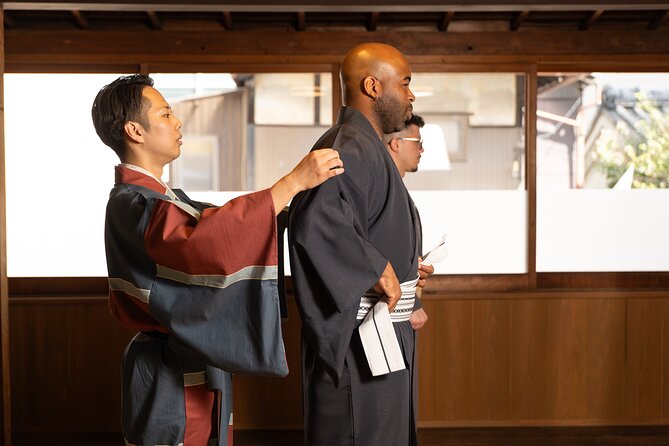
The lesson centers on how to put on men’s kimono the correct way. You’ll be guided through the order of layers, including donning the juban. The juban is the base layer, and getting it right is key because it affects how the kimono sits and how comfortable it feels.
Then the focus shifts to the outer pieces and the steps you need to dress yourself. Multiple reviews emphasized Shogo’s step-by-step teaching style and his patience. If you worry that you’ll feel awkward in front of others, this format is designed to reduce that stress by keeping you on a clear sequence.
You’ll also learn what the kimono pieces represent and how the clothing fits into Japanese tradition. Think of it as practical clothing education plus cultural background, not one or the other.
Near the end, you’ll generally have time to ask questions. In a small group of up to 4 travelers, that Q and A time matters because you can get answers that match your specific concerns, like fit, where to adjust, or what parts matter most for looking right and feeling right.
What You Learn Beyond the Mirror: Cultural Meaning and Practical Context
Clothes are easy to treat like costumes. Kimono is harder to reduce that way, because the structure and styling carry context.
Shogo explains cultural meaning behind the pieces, and that’s what makes this feel more like learning than performing. You’re not only trying on fabric. You’re learning what different components do, how they work together as a set, and why the process is taken seriously.
A standout theme from the experience is clarity. Reviews described Shogo’s explanations as clear and accurate, with examples that help you connect the steps to the result. That’s the kind of teaching that sticks, especially if you plan to wear kimono again in the future.
Even folding came up in feedback. If you’ve ever tried to figure out how to pack a kimono after wearing it, you know it can be confusing. Getting shown the basics directly helps you avoid that end-of-day frustration.
Kimono Shopping Without Pressure: How the Store Portion Works
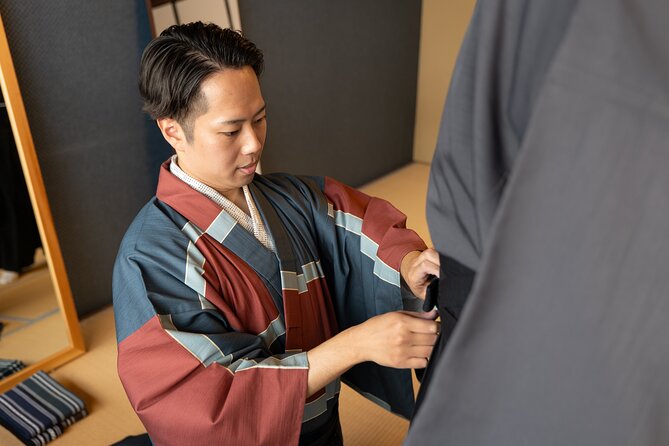
After the lesson portion, you get support if you want to purchase your own kimono. That’s one reason this experience is valuable even if you are not sure you want to buy anything yet.
The shop environment helps because you’re not guessing sizes from a rack. The store team and Shogo can help with choosing correct size and color for the pieces in your set. This is the sort of help that’s hard to get if you walk in on your own without knowing what to look for.
One review highlighted that the experience allowed a purchase right after learning, and that it felt priceless because there was no pressure to buy something you don’t need. Another person mentioned leaving with a new haori to go with a kimono they already had. Even if you don’t buy a full set, the shop guidance can still help you add the right layer for the look you want.
Important reality check: this is a shopping-enabled experience, not a museum talk. If you’re hoping for a pure lesson with zero shopping temptation, it helps to be clear about your intentions in advance. The good news is that the teaching comes first, so you’re not spending your whole session browsing.
Small Group Format and the Pace That Keeps It Fun
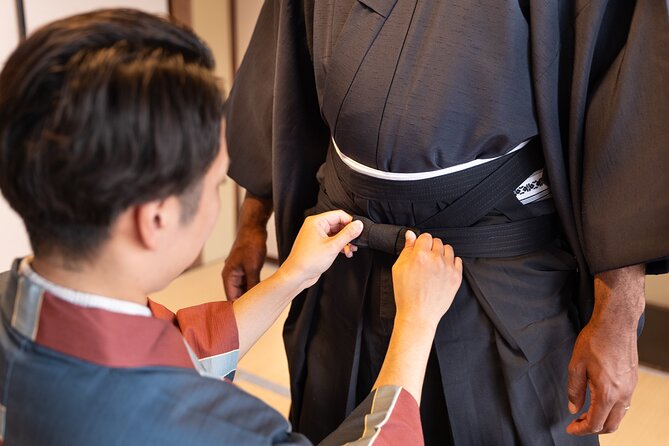
The maximum group size is 4 travelers. That changes the whole feel. You’re not waiting your turn for fitting steps, and you’re more likely to get personal attention.
This also affects pacing. Shogo can slow down when someone needs an extra pass at a step, and you can ask questions without feeling rushed. Reviews specifically mentioned his patience and the fact that explanations were fluid, which matters because kimono dressing is detail-heavy.
There’s another quiet benefit to small groups: you can focus. In larger groups, people spend energy worrying about making mistakes and about being in the background. Here, the setup makes it easier to focus on learning your own routine.
Also, you get a mobile ticket, which keeps the check-in simple.
Pottery, paper, and tea to bring home



Price and Value: Paying for Education, Not Just Fabric
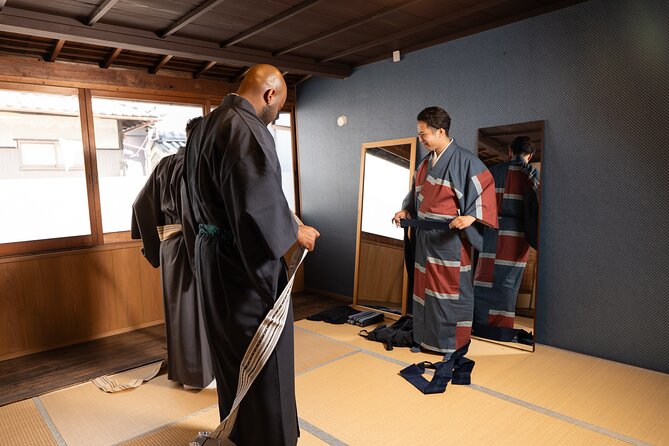
The price is $65.15 per person, with an approximate duration of 2 hours. On paper, that might sound like a lot compared to a basic rental. But this isn’t just renting, it’s training.
Here’s the value logic. You’re paying for:
- In-person instruction from a known kimono educator, Shogo
- Hands-on practice in the right order, including the juban basics
- Cultural explanations that help you understand what you’re wearing
- Store access afterward, with guidance if you want to buy
If your dream is to wear kimono at least once without fear, the instruction piece is the main return. If your dream is to actually buy, the extra value is avoiding common mistakes, like choosing a look that doesn’t match you, doesn’t fit well, or doesn’t fit the set you intended.
And because the shop portion is optional, you can treat the experience as a lesson with a chance to shop, rather than a forced purchase situation. The small group size also helps justify the rate since you’re not competing for attention.
Who Should Book This Men’s Kimono Lesson
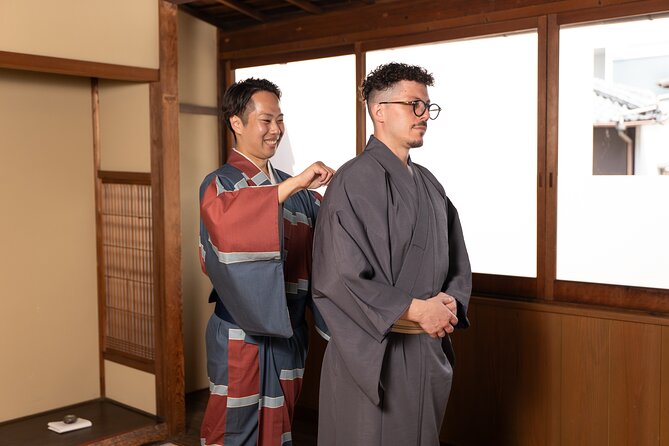
This is a great match if you want more than a costume experience. It works well for:
- Beginners who feel nervous about wearing kimono and want the steps made clear
- Culture lovers who care about meaning, not just appearance
- People who want to shop smarter, with help choosing fit and color
- Anyone who wants a quieter, less touristy style activity inside a local business
If you’re traveling with a female partner or friend, there’s an option too. One guest can watch for free per booking. If you want hands-on dressing or teaching for women, Shogo’s wife Harumi can dress or teach for an extra fee, and you can ask after booking.
That flexibility is useful because not all kimono experiences handle mixed groups well. Here, you at least have a plan.
Practical Tips to Make the Most of Your Session
You’ll get the best results if you arrive ready to learn, not just ready to look. Ask questions while you’re dressing, especially if anything feels confusing.
Also, decide early what you want out of the shopping portion. If you might buy, you can focus your questions on fit and coordination. If you won’t buy, tell the instructor up front so the session stays focused on learning.
Finally, bring curiosity. The experience includes cultural meaning behind pieces, and that part tends to be what makes it more memorable than a simple try-on.
Should You Book This Men’s Kimono Lesson in Kyoto?
Yes, if you want a true skill, not just a souvenir outfit. The hands-on structure, guided teaching on proper wearing steps, and the ability to get shop help afterward make it feel like a complete package.
Book it if you’re the type who hates muddling through instructions alone. The step-by-step approach and small group size are exactly what you want when kimono dressing feels intimidating.
Skip it if you only want quick photos and don’t care about learning how to dress. Since this is a lesson in a working store, the value is in understanding the process and using it later.
If your plan includes a kimono purchase, this is also one of the smarter ways to do it in Kyoto. You get guidance in the same space you’d shop, which saves time and reduces guesswork.
FAQ
How long is the Men’s Kimono Lesson and Shopping experience?
The experience lasts about 2 hours.
Where does the experience take place?
It starts at 432 Iwatoyamachō, Shimogyo Ward, Kyoto, 600-8445, Japan, and ends back at the meeting point.
Who teaches the lesson?
The lesson is taught by Shogo, the face behind the YouTube channel Let’s Ask Shogo.
Is this a group experience?
Yes. The maximum group size is 4 travelers.
Is it held inside a store?
Yes, it takes place inside a real men’s kimono store in Kyoto.
Do I get a mobile ticket?
Yes, the experience includes a mobile ticket.
Can I purchase a kimono during or after the lesson?
You can receive expert guidance if you would like to purchase your own kimono.
What if I’m traveling with a female partner or friend?
One guest can watch for free per booking. For an extra fee, Shogo’s wife Harumi can dress or teach women too, and you can ask after booking.
How soon will I get confirmation after booking?
Confirmation is received within 48 hours of booking, subject to availability.
What is the cancellation policy?
You can cancel for a full refund up to 24 hours in advance of the experience start time. If you cancel less than 24 hours before, the amount paid is not refunded.
More Workshops in Kyoto


New This Season
- Koyasan Day Trip by Private Car from Kyoto
- Old Port Town and Ultimate Sake Tasting Private Tour From Kyoto
- Kyoto’s Timeless Charm: 3hr Exploration of History and Peace
- Kyoto: 5 Types of Sushi Making
- Sacred Peak & Ancient Paths: Kurama-Kibune Hiking Experience
- Kyoto: Exclusive ZEN practice at Manpukuji temple in Uji
- Kyoto: Private Seasonal Aroma Yoga Class
- Traversing Kyoto’s Scenic West – Arashiyama to Kinkakuji
Kimono & Yukata Rentals, compared.

Kimono Tea Ceremony at Kyoto Maikoya, NISHIKI
Read our review →
KYOTO Tea Ceremony with kimono near by Imamiya Jinjya Shrine
Read our review →
Kimono and Tea Ceremony Experience at Cultural Asset
Read our review →
Family-Friendly Kimono & Yukata Experience at WARGO
Read our review →Also filed under